Advanced Ceramics · Technical Guide
Two Forming Processes for Silicon Nitride
How gas-pressure sintering and hot pressing turn Si₃N₄ powder into high-performance ceramic components for demanding industrial and semiconductor environments.
Silicon nitride (Si₃N₄) is an engineering ceramic that combines high hardness, chemical stability, low thermal expansion, useful thermal conductivity, and excellent thermal-shock resistance. For manufacturers, however, these properties depend not only on chemistry but also on powder quality, forming route, sintering additives, furnace atmosphere, temperature profile, and finishing operations.
In semiconductor equipment, strict requirements for dimensional stability, cleanliness, wear resistance, and thermal reliability make process selection especially important. Accordingly, this article explains the material’s core properties and compares two important densification routes: gas-pressure sintering and hot pressing.
1. What Is Silicon Nitride Ceramic?
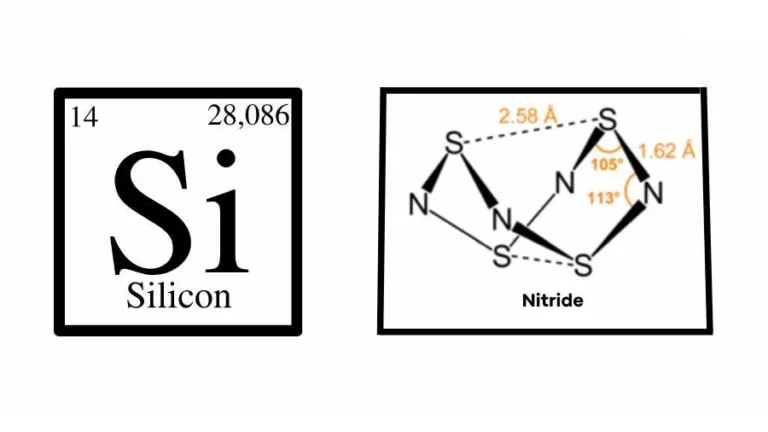
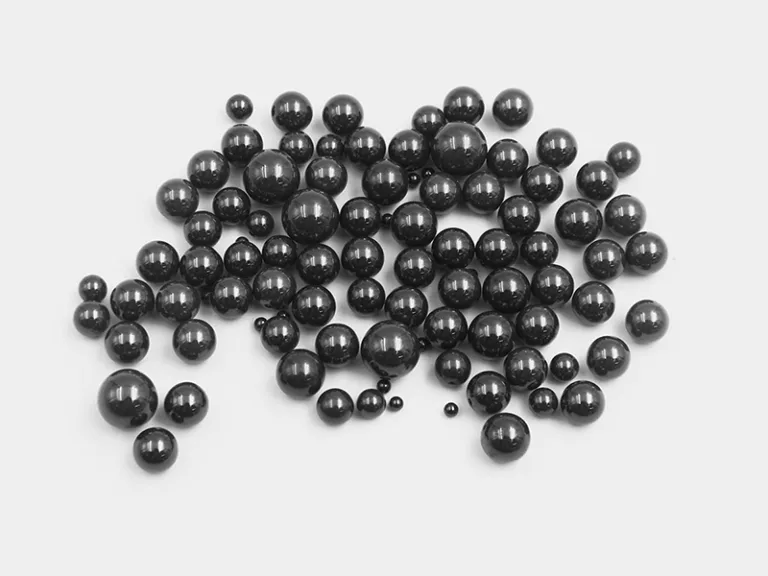
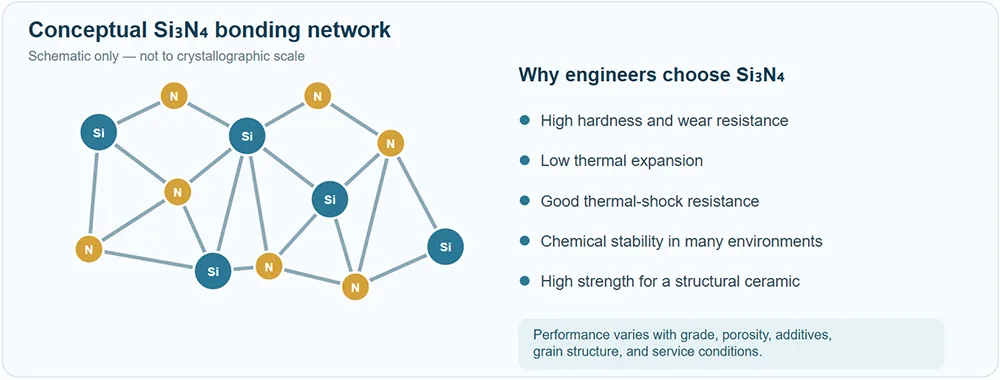
Silicon nitride is a compound of silicon and nitrogen with the chemical formula Si₃N₄. Its strong covalent bonding supports high hardness and strength, while its relatively low density compared with many engineering metals can help reduce component mass.
Commercial grades commonly contain α-Si₃N₄ and β-Si₃N₄ crystalline phases. During liquid-phase sintering, α-phase grains can dissolve and reprecipitate as elongated β-phase grains; consequently, a well-developed interlocking microstructure can improve fracture resistance. Meanwhile, oxide additives such as yttria, magnesia, or alumina can create a transient liquid phase that promotes densification, although the chemistry of the final grain boundaries also affects high-temperature performance and corrosion resistance.
2. Important Material Properties
Hardness, strength, and wear resistance
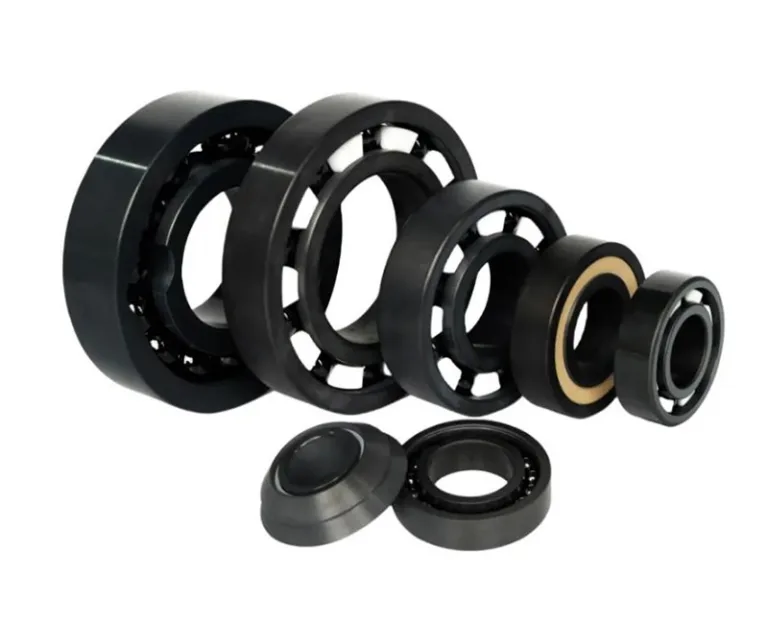
Strong Si–N bonds resist local deformation, so silicon nitride can provide excellent hardness and abrasion resistance. Consequently, engineers consider it for bearing elements, wear inserts, guides, and precision parts exposed to repeated contact. Nevertheless, ceramics tolerate tensile flaws less readily than ductile metals, making edge design, surface finish, and defect control essential.
Thermal stability and thermal shock
Silicon nitride combines relatively low thermal expansion with useful thermal conductivity, which can help it withstand rapid temperature changes when the grade and geometry suit the application. Even so, prolonged service above roughly 1,200°C can reduce strength in some grades as grain-boundary phases evolve and oxidation or creep becomes more significant. Therefore, designers should use grade-specific test data rather than treat one temperature limit as universal.
Chemical stability and insulation
In many industrial environments, Si₃N₄ resists corrosion and maintains dimensional stability. In addition, its electrical insulation can benefit assemblies that require ceramic isolation near moving or heated parts. However, semiconductor compatibility also depends on purity, surface condition, outgassing, plasma chemistry, and contamination limits, so engineers must qualify the finished component against actual process gases and cleaning procedures.
3. Silicon Nitride in Semiconductor Equipment
Semiconductor manufacturing combines thermal cycling, precision motion, vacuum handling, plasma exposure, and strict contamination control. Accordingly, silicon nitride can serve in selected fixtures and structural components when its properties align with the process environment.
- Wafer-handling components: Guides, supports, and selected handling parts can benefit from wear resistance and dimensional stability. Still, engineers must control particle generation and confirm that contact surfaces meet cleanliness requirements.
- Thermal-process fixtures: Selected holders and supports can tolerate repeated heating and cooling when the grade suits the furnace atmosphere, temperature, and loading.
- Precision equipment parts: Guides, wear elements, and insulating components can use the material’s stiffness and damage resistance. Meanwhile, tight-tolerance applications often require diamond grinding and detailed inspection after sintering.
- Power-electronics substrates: Silicon nitride ceramics are also used as candidates for power-module substrates because they can combine thermal conductivity with high mechanical strength. Manufacturers then bond copper layers to the ceramic through a qualified route such as active-metal brazing (AMB); forming the ceramic is only one part of the complete substrate process.
4. Process One: Gas-Pressure Sintering
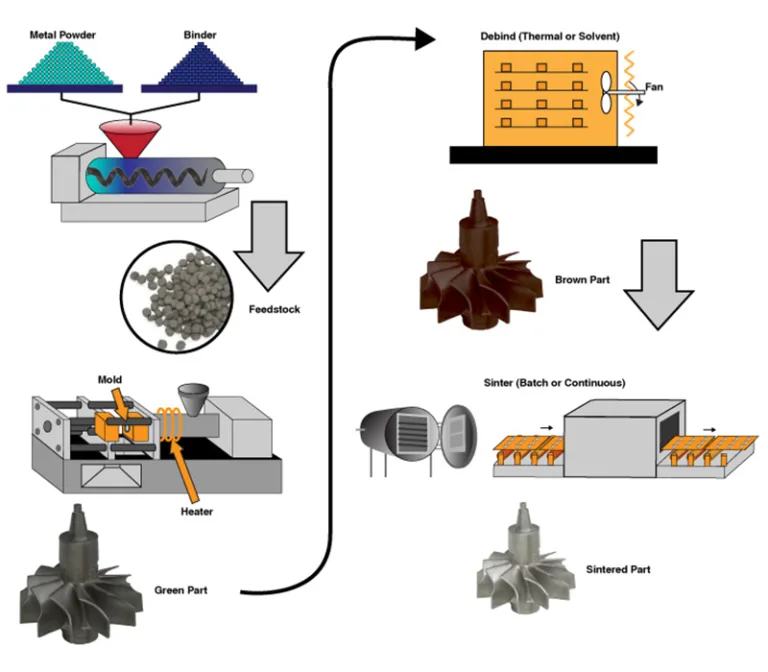
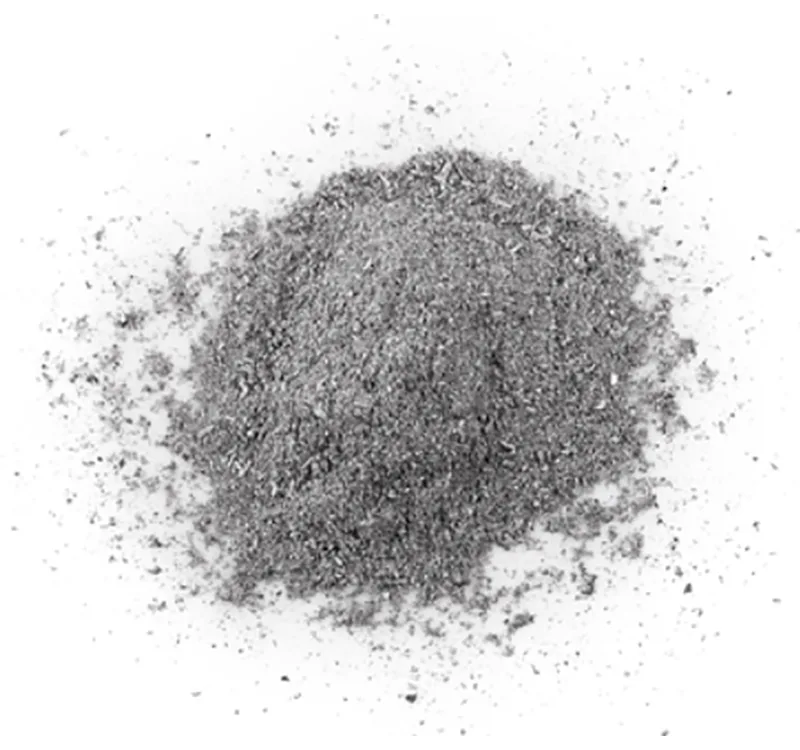
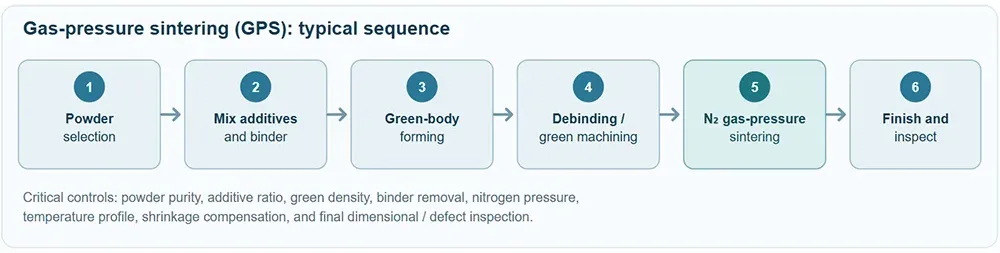
Gas-pressure sintering (GPS) is a widely used route for producing strong silicon nitride parts with comparatively complex shapes. First, manufacturers select suitable Si₃N₄ powder and blend it with controlled sintering additives—often yttria, magnesia, or alumina—plus a binder that supports green-body handling. Next, the mixture enters a forming step such as uniaxial pressing, cold isostatic pressing, or another suitable powder-shaping method.
After forming, technicians remove the binder and machine the green body as required, then load it into a furnace. During the sintering cycle, a nitrogen-rich atmosphere and elevated gas pressure help suppress decomposition and reduce the loss of volatile species while the compact densifies. Meanwhile, additives can form a transient liquid phase that accelerates mass transport and supports grain development. Finally, controlled cooling, finishing, and inspection help deliver the required geometry and performance.
Why choose GPS?
Because gas pressure assists densification without requiring a single-axis pressing die during the sintering stage, GPS can support a broader range of geometries than conventional hot pressing. Furthermore, it can help achieve high density while reducing decomposition risk at elevated temperature. Even so, complex components still need careful control of green density, binder removal, shrinkage, and furnace uniformity.
For semiconductor equipment, GPS may suit structural components, holders, guides, or custom parts that need both geometry flexibility and robust mechanical performance. Nevertheless, suppliers should verify purity, microstructure, surface finish, and process compatibility before a critical tool adopts the part.
5. Process Two: Hot Pressing
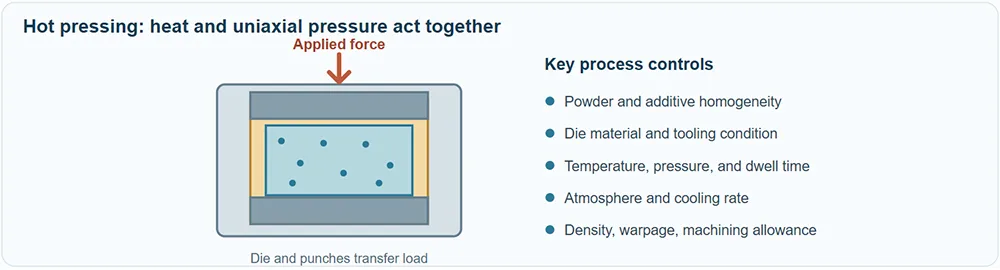
Hot pressing combines heat and uniaxial mechanical pressure in a die to densify silicon nitride powder and sintering additives. Initially, the operator prepares a uniform powder blend and loads it into a suitable high-temperature tooling system. Subsequently, the press applies pressure while the furnace raises the compact to its sintering temperature, encouraging particle rearrangement, diffusion, and liquid-phase-assisted densification when the formulation supports it.
Since the tooling applies pressure along a defined axis, hot pressing works especially well for relatively simple geometries such as plates, discs, and bars. Under suitable conditions, it can produce very high density and strong mechanical properties. However, the die constrains shape, tooling can limit part size, and pressure direction may create property or density differences that designers need to assess.
Why choose hot pressing?
Hot pressing can provide high density and excellent mechanical performance when powder chemistry, tooling, and the thermal cycle work together. Additionally, direct pressure can shorten the densification path compared with some pressureless routes. On the other hand, tooling restricts geometry, while die wear, machining allowance, and throughput affect overall economics.
For semiconductor-related uses, hot-pressed silicon nitride may suit plates, blocks, and other tooling-compatible shapes where density and mechanical performance outweigh geometry constraints. As with GPS, the final part needs dimensional inspection and application-specific qualification.
6. GPS Compared with Hot Pressing
| Factor | Gas-pressure sintering | Hot pressing |
|---|---|---|
| Pressure source | Gas pressure in a controlled furnace atmosphere assists densification. | Uniaxial mechanical pressure acts through punches and a die during heating. |
| Shape flexibility | Generally accommodates a broader range of shapes, subject to green forming and shrinkage control. | Best suited to simple shapes that fit the tooling and pressure direction. |
| Typical advantage | Geometry flexibility with potential for high density. | High density and strong properties in tooling-compatible parts. |
| Main constraint | Requires careful atmosphere, shrinkage, and binder-removal control. | Tooling limits shape and size; die wear and directional effects require review. |
| Potential parts | Custom structural components, guides, holders, and complex parts. | Plates, discs, bars, blocks, and relatively simple geometries. |
| Quality checks | Density, defects, dimensions, microstructure, and process compatibility. | Density, defects, dimensions, warpage, and property uniformity. |
Neither process is universally superior. Instead, the best choice follows component geometry, required density, mechanical load, operating atmosphere, tolerance, production volume, and total cost. Moreover, a reliable supplier should provide traceable material data and agreed acceptance criteria rather than relying on the process name alone.
7. From Ceramic Powder to a Semiconductor-Ready Part
Forming and sintering create the ceramic body, yet semiconductor applications often need additional steps. First, manufacturers may diamond-grind critical faces and reference surfaces to meet flatness, parallelism, and dimensional requirements. Next, technicians inspect for cracks, pores, inclusions, and edge damage using appropriate metrology and non-destructive methods. Finally, controlled cleaning, packaging, and traceability help protect the finished component from contamination during delivery and installation.
For power-electronics substrates, the workflow may continue with surface preparation and copper bonding—often through active-metal brazing—followed by patterning and inspection. Importantly, a silicon nitride ceramic plate is not the same as a finished copper-clad substrate: the ceramic supplies the structural and thermal foundation, while bonding and metallization create the electrical interconnect architecture.
- Define the environment: Specify temperature, atmosphere, load, contact conditions, insulation needs, and contamination limits.
- Set material targets: Agree on density, strength, thermal conductivity, surface finish, and dimensional tolerance.
- Select the route: Match GPS or hot pressing to geometry, volume, and performance needs.
- Plan shrinkage and finishing: Account for sintering shrinkage and precision grinding where required.
- Validate the component: Confirm dimensions, surface quality, traceability, and performance under representative service conditions.
8. Common Manufacturing Challenges
Even a well-designed process can struggle when powder batches vary in particle size, oxygen content, or agglomeration. Therefore, incoming-powder inspection and consistent mixing help reduce density gradients and abnormal grain growth. Likewise, incomplete binder removal can leave pores or residues, whereas an unsuitable sintering cycle may cause warpage, residual porosity, or excessive grain-boundary phases.
Furthermore, machining can introduce subsurface damage or edge chipping if tools, feed rates, or support methods do not suit the ceramic. For semiconductor equipment, manufacturers should also assess particle shedding, surface contamination, cleaning compatibility, and lot-to-lot repeatability. In practice, a robust quality plan links powder records, forming parameters, furnace records, finishing data, and final inspection results to each production lot.
9. Frequently Asked Questions
Which process is better for complex shapes?
Generally, gas-pressure sintering offers greater shape flexibility because it does not require a single-axis pressing die during densification. Nevertheless, achievable geometry still depends on the green-forming method, shrinkage, and machining access.
Does hot pressing always produce a pore-free part?
No. Hot pressing can achieve very high density under suitable conditions, but manufacturers should not assume zero porosity without measurement. Powder quality, additive chemistry, pressure, temperature, and inspection methods all influence the result.
Why can silicon nitride suit semiconductor equipment?
Its combination of strength, wear resistance, low thermal expansion, thermal-shock resistance, and electrical insulation can be valuable in selected equipment environments. However, purity and process compatibility must match the tool’s contamination and chemical-exposure requirements.
Can one Si₃N₄ grade serve every application?
No. A grade optimized for wear resistance may not offer the same thermal conductivity, dielectric behavior, or chemical compatibility as another formulation. Therefore, engineers should select materials using measured properties and application tests rather than the material name alone.
Conclusion
Silicon nitride remains an important engineering ceramic because it balances hardness, strength, thermal stability, and chemical resistance for demanding industrial systems. Gas-pressure sintering supports geometry flexibility and high-density structural parts, while hot pressing offers a direct route to dense components with tooling-compatible shapes. Ultimately, semiconductor equipment performance depends on more than the forming method: consistent powder, additive design, furnace control, precision finishing, cleanliness, and application-specific qualification must work together.
Note: This article describes general manufacturing principles. Exact properties and processing windows vary by composition, supplier, geometry, and test method; consult grade-specific technical data before engineering use.