Advanced Ceramics · Materials Engineering
Research and Application Progress of Silicon Nitride Ceramics in Four Major Fields
From high-speed bearing elements to aerospace radomes, power-electronic substrates, and biomedical implants, silicon nitride (Si₃N₄) connects structural reliability with carefully engineered functional performance.
At a glance
In engineering practice, silicon nitride ceramics stand out because they combine high specific strength, strong wear resistance, low thermal expansion, thermal-shock tolerance, corrosion resistance, electrical insulation, and relatively low density. However, no single grade delivers every property at its maximum; consequently, engineers tailor powder chemistry, grain structure, porosity, sintering aids, and finishing operations to each product’s service conditions.
Silicon Nitride Structure: Why Microstructure Controls Performance
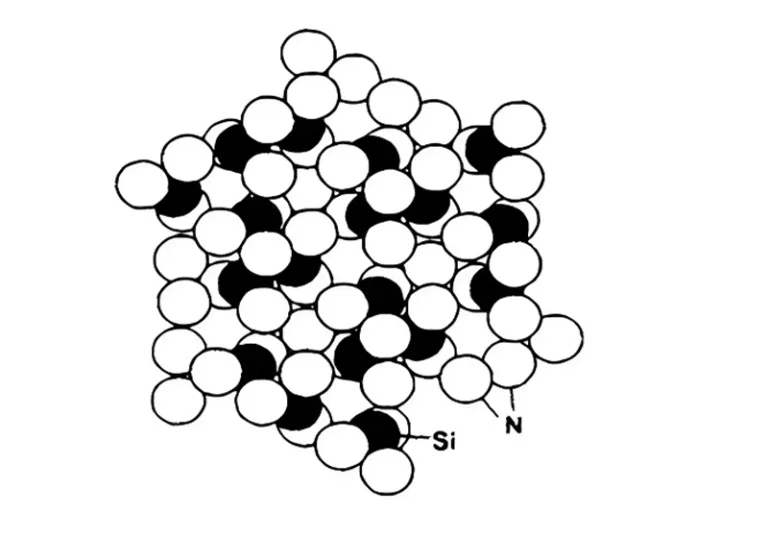
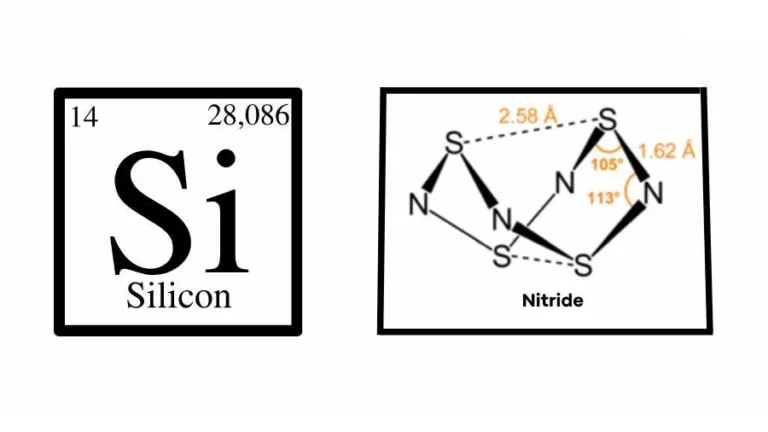
At the atomic scale, silicon nitride is a strongly covalent ceramic in which silicon and nitrogen form a connected network of Si–N bonds. In the common α-Si₃N₄ and β-Si₃N₄ polymorphs, each silicon atom sits near the center of a tetrahedral coordination unit surrounded by four nitrogen atoms. Adjacent tetrahedra share nitrogen atoms, creating a three-dimensional framework that helps explain the material’s high stiffness, hardness, and high-temperature stability. By contrast, γ-Si₃N₄ has a distinct high-pressure structure and remains far less common in conventional engineering products than the α and β forms.
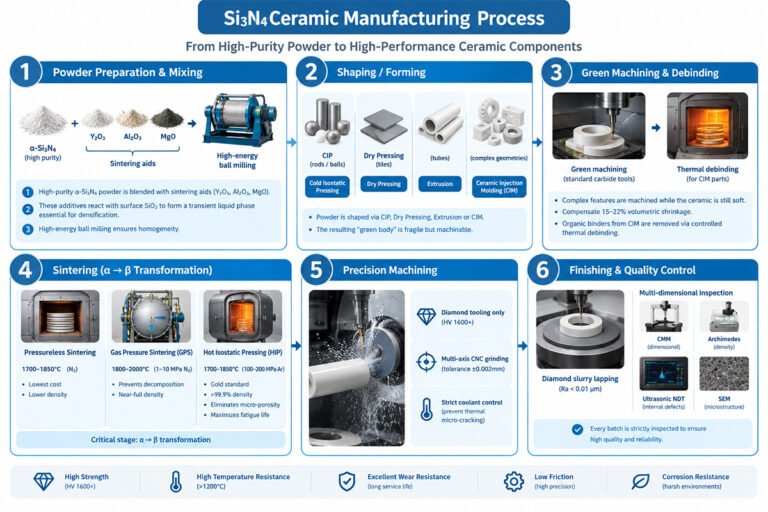
During powder processing, manufacturers often use α-rich silicon nitride powder as a starting material and promote dissolution–reprecipitation during liquid-phase sintering to develop elongated β-Si₃N₄ grains. As these grains grow, they can deflect cracks, bridge crack faces, and pull out from the surrounding microstructure, thereby improving fracture resistance compared with a simple brittle-grain arrangement. Nevertheless, the precise outcome depends on grain size, aspect ratio, grain-boundary phases, residual porosity, and the selected densification route.
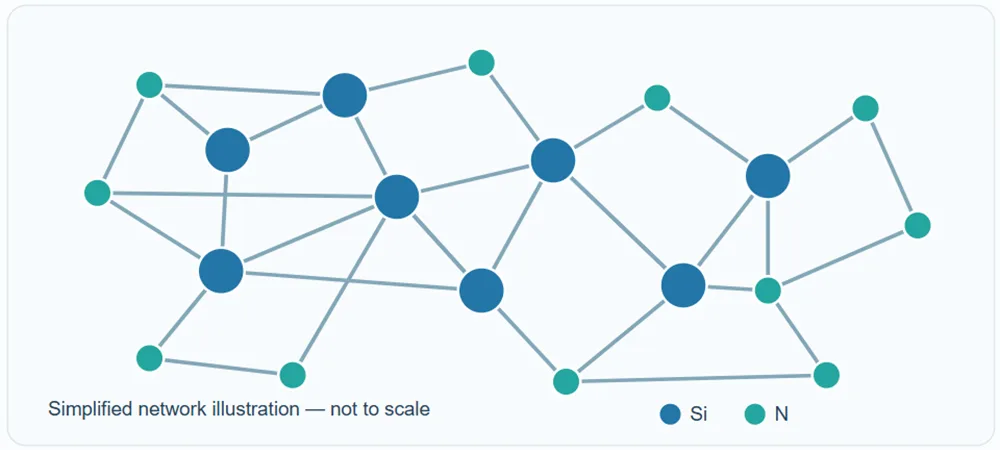
From the product-design perspective, this structure creates both opportunities and constraints. On the positive side, strong covalent bonding supports high-temperature mechanical performance and useful tribological behavior; meanwhile, the comparatively low density reduces moving mass in rotating parts. On the challenging side, covalent bonding makes densification difficult, so manufacturers carefully select pressureless gas-pressure sintering, hot pressing, or hot isostatic pressing (HIP), often alongside sintering aids. Therefore, process control and defect management remain essential because pores, inclusions, and machining damage can initiate failure in a brittle material.
Four Application Fields at a Glance
Across different industries, silicon nitride does not succeed through one isolated property; rather, its value comes from balancing mechanical, thermal, chemical, electrical, and-in selected grades-biological requirements. The following overview links each field to a representative product and its engineering purpose.
| Field | Representative product | Primary design drivers | Typical purpose |
|---|---|---|---|
| Mechanical engineering | Si₃N₄ bearing ball | Low density, hardness, geometry, surface finish | High-speed, low-inertia rolling contact |
| Aerospace | Porous ceramic radome / antenna window | Dielectric loss, strength, thermal shock, erosion | Protect antennas while transmitting electromagnetic signals |
| Power electronics | Active-metal-brazed (AMB) Si₃N₄ substrate | Thermal conduction, bending strength, insulation, bonding reliability | Insulate and remove heat from high-power modules |
| Biomedical engineering | Si₃N₄ spinal interbody spacer / implant component | Biocompatibility, surface response, imaging, mechanical reliability | Support fusion or reconstruction where a cleared device and indication permit |
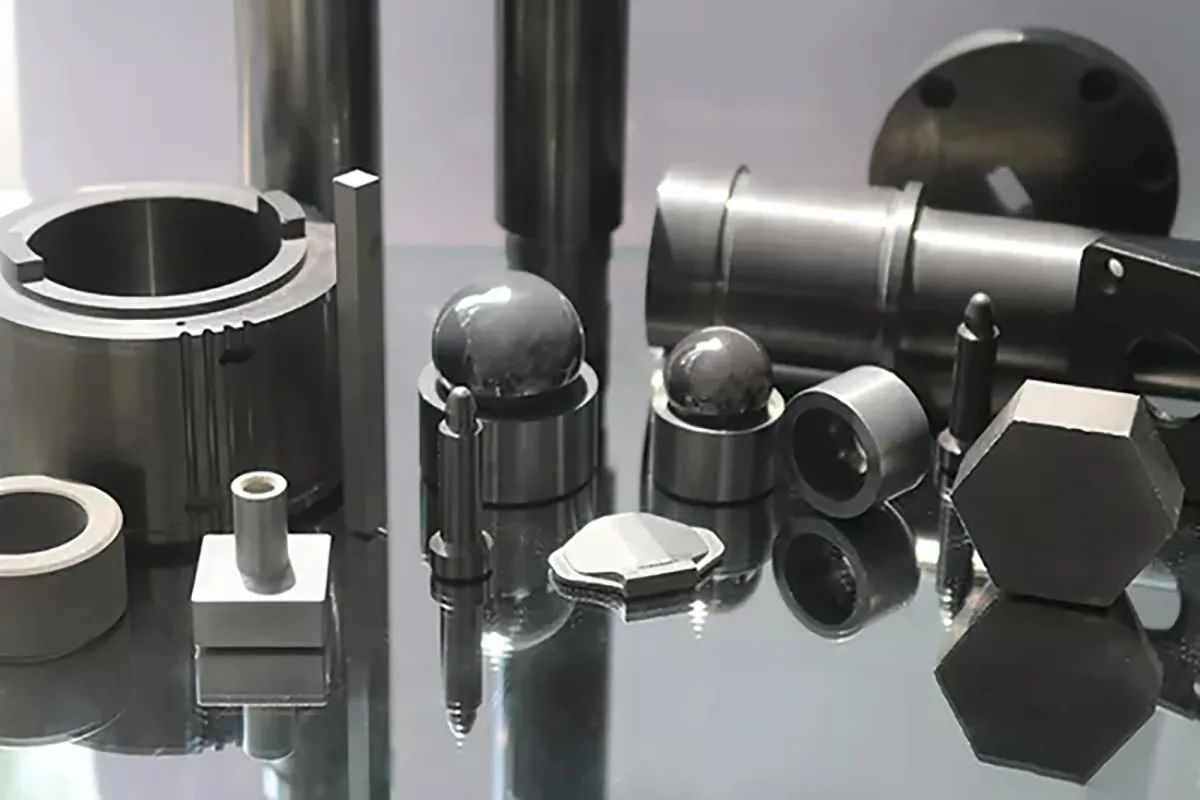
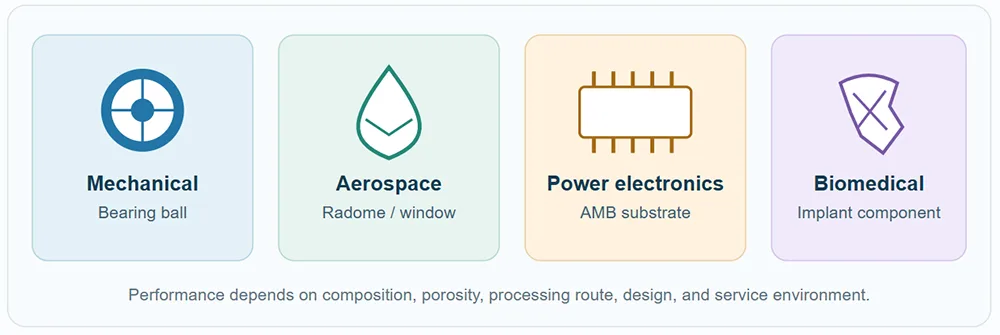 Figure 2. Four major application areas for silicon nitride ceramics and their representative product families.
1. Mechanical Engineering: From Bearing Balls to Wear Components
Representative product: silicon nitride bearing balls
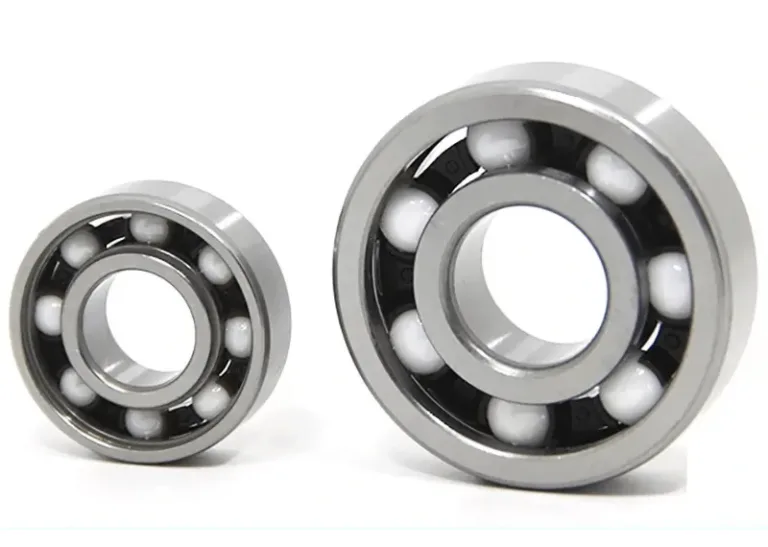
In rotating machinery, silicon nitride bearing balls provide a well-established example of how a ceramic can outperform steel in selected duty cycles. Because silicon nitride has a much lower density than bearing steel, each ball creates less centrifugal force at high speed; consequently, the outer race experiences reduced loading, and designers can potentially raise speed limits or reduce heat generation. Moreover, the material offers high hardness, stiffness, corrosion resistance, electrical insulation, and a smooth finish after precision grinding and lapping. These properties make ceramic rolling elements relevant to machine-tool spindles, dental and medical drills, turbomachinery, pumps, aerospace accessory gearboxes, wind-energy equipment, and some electric-motor systems.
For a hybrid bearing, engineers combine Si₃N₄ balls with steel inner and outer rings, often retaining a polymer, brass, or another engineered cage. This architecture uses ceramic rolling elements to reduce moving mass while preserving steel raceways and familiar bearing designs. By comparison, a full-ceramic bearing uses ceramic rings as well as ceramic rolling elements, which may suit corrosive or electrically insulating environments but normally raises cost and demands careful assembly and system-level verification. According to bearing-component supplier references, ceramic balls can support higher-speed or marginal-lubrication applications, although the actual advantage depends on load, preload, cage design, lubrication, clearances, and operating temperature [1, 2].
During production, manufacturers commonly form a near-net-shape ball blank, densify it through gas-pressure sintering and/or hot isostatic pressing, then grind and lap it to achieve the required diameter, sphericity, and surface roughness. Since ceramics do not yield plastically like metals, a small subsurface flaw or grinding crack can strongly influence rolling-contact life. Therefore, a qualification program should address material grade, density, inclusion control, dimensional class, surface finish, residual damage, batch traceability, and rolling-contact fatigue. A nominal material property alone cannot guarantee bearing life.
Related products: mechanical seals, valve trim, and cutting inserts
Beyond bearings, silicon nitride and silicon-nitride-based materials can serve as wear-resistant valve components, seal rings, guide elements, and selected cutting tools. For example, a ceramic valve seat may resist abrasive slurry and corrosive media better than an unprotected metal part, while a mechanical seal face can benefit from hardness and dimensional stability. Nevertheless, designers must pair ceramic components with suitable counterfaces, surface finishes, sealing loads, and thermal-expansion allowances to prevent localized stress or leakage.
Likewise, cutting-tool performance relies on more than hardness. Silicon-nitride-based ceramics, including SiAlON compositions, can machine cast iron at high cutting speeds because they maintain hot hardness and resist certain wear mechanisms. However, interrupted cuts, impact loading, workpiece chemistry, edge preparation, and coolant strategy may change the result substantially. As a result, the engineer should qualify each combination of workpiece alloy, tool geometry, cutting speed, and feed rate rather than assume that ceramic tools universally exceed carbide tools.
Research direction. Mechanical research increasingly targets reliable powder quality, lower defect populations, optimized β-grain morphology, cost-effective densification, advanced finishing, and data-driven prediction of rolling-contact fatigue. In parallel, ceramic balls for high-speed electric drives and demanding industrial systems have to demonstrate performance within a complete bearing assembly, not just in isolated material tests.
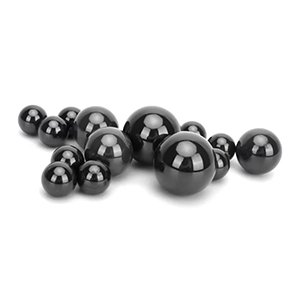 Figure 3. Silicon Nitride Ceramic Bearing Balls
2. Aerospace: Porous Silicon Nitride Radomes and Antenna Windows
Representative product: a porous Si₃N₄ radome
In aerospace systems, a radome protects an antenna from aerodynamic loads, rain, particles, thermal gradients, and the surrounding environment while allowing electromagnetic waves to pass with acceptable attenuation and phase distortion. Silicon nitride attracts research interest because it can combine useful mechanical strength, thermal-shock resistance, erosion resistance, and high-temperature capability. Yet a dense, high-strength grade does not automatically provide the best radar transparency: dielectric constant and dielectric loss tangent also determine whether a radome performs well across the intended frequency band [3, 4].
To balance structural and electromagnetic requirements, engineers investigate porous silicon nitride, reaction-bonded grades, Si₃N₄–Si₂N₂O compositions, SiAlON-based systems, and multilayer or graded-porosity designs. In a porous radome wall, carefully controlled voids can reduce the effective dielectric constant; meanwhile, an optimized pore size and distribution can help limit wave scattering and preserve mechanical continuity. Even so, greater porosity generally reduces strength and can increase permeability or variability, so engineers must optimize porosity, wall thickness, grain-boundary phases, and surface quality together.
As a practical product, a ceramic antenna window may sit in an exposed sensor or communication aperture, while a shaped radome can enclose the antenna assembly at the forward section of a high-speed platform. In either case, designers specify the frequency band, incidence angles, power level, polarization, wall thickness, pressure load, thermal ramp rate, rain-erosion exposure, and allowable transmission loss before choosing the material. Additionally, the ceramic forming route must reproduce the required thin-wall or nose-cone geometry without introducing density gradients, cracks, or warpage.
Near-net-shape manufacturing is particularly important because silicon nitride is hard and brittle, making complex post-sintering machining time-consuming and expensive. Accordingly, gelcasting, slip casting, reaction bonding, additive approaches, and other ceramic forming methods appear in research, while laser-assisted machining or precision grinding may finish selected surfaces. However, every candidate design needs dielectric characterization over the actual frequency and temperature range, followed by mechanical, thermal-shock, and environmental testing. Laboratory transmission measurements alone cannot establish flight readiness or service qualification.
Research direction. Current research themes include controlling porosity without sacrificing strength, reducing dielectric loss at elevated temperature, developing layered or functionally graded structures, improving joining and coating approaches, and achieving repeatable large, thin-walled parts. These goals illustrate a wider materials-engineering principle: radome design optimizes electromagnetic and structural behavior simultaneously rather than maximizing one property in isolation.
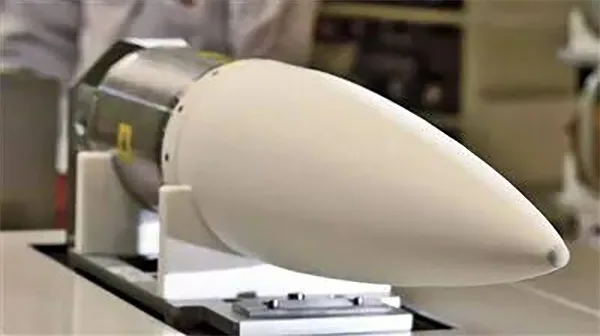 Figure 4. Silicon nitride missile radome
3. Semiconductor and Power Electronics: High-Reliability Si₃N₄ Substrates
Representative product: an active-metal-brazed silicon nitride substrate
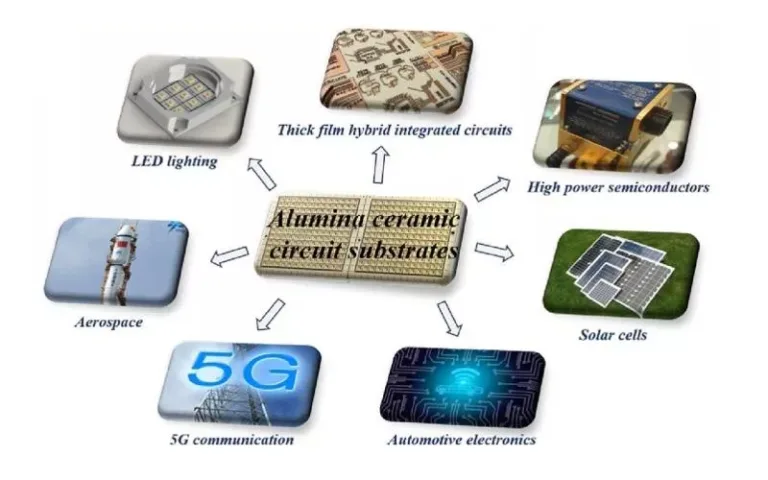
Power modules in electric vehicles, rail traction, renewable-energy converters, industrial drives, and manufacturing equipment generate heat while switching high currents and voltages. A ceramic substrate must electrically isolate conductive circuits from a heat-spreading baseplate, transfer heat away from semiconductor dies, and withstand repeated thermal cycling. Silicon nitride is attractive because it combines useful thermal conductivity with high bending strength and fracture toughness; consequently, it can offer a strong balance for modules that face both concentrated heat and mechanical or thermomechanical stress [5, 6].
For an AMB substrate, a copper circuit layer bonds to the Si₃N₄ ceramic through a controlled active-metal brazing process. The copper provides electrical paths and spreads current, while the ceramic provides isolation and a heat-transfer route to the cooling structure. Compared with a ceramic that focuses almost exclusively on thermal conductivity, Si₃N₄ can provide a more balanced mechanical package in applications that experience thermal cycling, vibration, or high power density. Nevertheless, designers must consider copper thickness, ceramic thickness, bond-layer chemistry, metallization layout, flatness, edge geometry, and the mismatch in thermal expansion between the copper and ceramic.
Commercial data demonstrate why grade and supplier-specific specifications matter. For example, Heraeus Electronics lists Si₃N₄ AMB substrate products with thermal conductivity of at least 80 W/(m·K), bending-strength values of at least 650 MPa or 700 MPa depending on the product, and fracture-toughness values of at least 6 MPa·m1/2. Denka likewise describes its SN Plate silicon nitride substrate as a high-thermal-conductivity, high-toughness ceramic for power-transistor modules, including industrial equipment and electric railways [5, 6]. These manufacturer values apply to named product families and test specifications; therefore, they should not be treated as universal values for all silicon nitride ceramics.
At the microstructural level, thermal conductivity depends on phonon transport through the Si₃N₄ grains. As a result, oxygen impurities, lattice defects, grain-boundary phases, grain size, and sintering additives can materially affect heat flow. Engineers may use carefully controlled compositions and elongated β-grains to improve conductivity, but changing the chemistry can also alter densification, mechanical strength, dielectric behavior, or reliability. Therefore, substrate development requires a coordinated balance across powder purity, forming, sintering, surface finishing, copper bonding, and reliability testing.
Research direction. Ongoing work targets higher thermal conductivity without losing strength, thinner substrates without compromising reliability, larger panel formats, robust copper-to-ceramic bonding, lower defect density, and repeatable thermal-cycling performance. For EV inverters and traction converters in particular, reliability qualification should connect material data with power cycling, thermal shock, partial-discharge behavior, insulation integrity, and the full module architecture.
 Figure 5. Silicon Nitride Substrate
4. Biomedical Engineering: Silicon Nitride Implants and Functional Bioceramics
Representative product: a silicon nitride spinal interbody spacer
Biomedical research explores silicon nitride as a ceramic for selected spinal, orthopedic, dental, and diagnostic applications. A spinal interbody spacer, for example, helps maintain the space between adjacent vertebrae and can provide a scaffold for bone fusion when a surgeon places it under an appropriate clinical indication. In such a product, mechanical strength and wear resistance are essential, but the material must also interact safely with surrounding tissue and meet stringent requirements for manufacturing cleanliness, sterilization, labeling, and regulatory approval.
Unlike many structural ceramics developed mainly for industrial wear, silicon nitride has attracted attention for its surface chemistry and biological response. Researchers have reported favorable cell responses, osteogenic behavior, and antibacterial effects under particular experimental conditions. Depending on the surface state and test method, interactions among the ceramic surface, water, proteins, cells, and microorganisms may influence bacterial attachment and bone-related cell activity. A 2022 review discusses the proposed combination of antibacterial behavior and support for bone healing, while a 2023 review surveys reported applications and the material’s structure–property relationships [7, 8].
However, a responsible engineering article must distinguish between laboratory findings, animal studies, clinical evidence, and an approved commercial device. A lower bacterial count in a specific in-vitro experiment does not prove that every silicon nitride product prevents infection in patients, and favorable results from one animal model cannot establish safety and effectiveness for all anatomical sites. Likewise, antimicrobial activity depends on test strain, inoculum, surface finish, medium, exposure time, and experimental protocol. Therefore, researchers need reproducible test methods and clinical evidence for the specific device and indication.
For an implant spacer, designers also consider imaging, radiographic visibility, geometry, porosity, surface texture, screw interfaces, load transfer, and the risk of brittle fracture. Silicon nitride can provide radiographic characteristics that differ from common metals, but imaging performance needs evaluation under clinically relevant conditions. Additionally, implant production must control powder purity, sintering additives, microstructure, machining damage, surface contamination, and sterilization compatibility. Since a ceramic cannot plastically deform to relieve a sharp stress concentration, rounded transitions and validated design margins are especially important.
Outside permanent implants, research also investigates silicon nitride for selected surgical, dental, and diagnostic components. In every case, the material should match the intended function: a bearing-like ceramic component in a medical instrument may prioritize wear and cleaning resistance, whereas an implant must additionally meet long-term biological and regulatory expectations. As a result, the relevant standard is not simply whether silicon nitride shows promising properties, but whether the finished medical device demonstrates acceptable safety and performance for its labeled use.
Research direction. Biomedical development needs long-term outcome data, clear comparisons with established materials, surface-chemistry control, standardized antibacterial protocols, and robust manufacturing validation. Furthermore, device-specific regulatory status should be checked through the responsible authority and the manufacturer’s current documentation before making clinical or marketing claims.
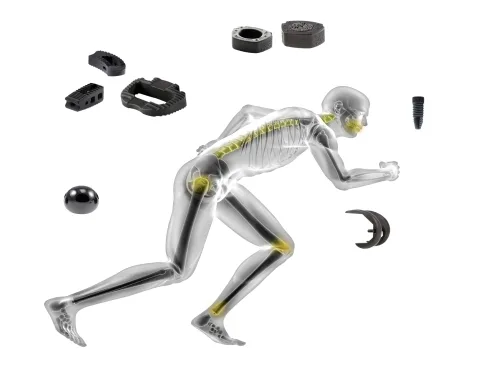 Figure 6. Commonly used silicon nitride implants
How the Four Fields Differ in Their Material Requirements
Although these applications share the same base chemistry, their optimum microstructures can differ significantly. For bearing balls, engineers usually prioritize density, rolling-contact strength, defect control, sphericity, and finish; by contrast, radome design adds dielectric constant, loss tangent, pore architecture, and wave transmission. Meanwhile, a power substrate needs thermal conduction and electrical insulation alongside fracture resistance and durable metallization. Finally, an implant requires biological safety, surface reproducibility, and device-level evidence in addition to mechanical integrity.
| Engineering factor | Bearing ball | Radome | AMB substrate | Implant |
|---|---|---|---|---|
| Primary property | Rolling-contact reliability | Low signal attenuation | Heat transfer and insulation | Biological and mechanical safety |
| Microstructure focus | High density, low flaw population | Controlled porosity / dielectric response | Low defect density and conductivity | Stable phase, surface, and cleanliness |
| Key validation | Geometry and fatigue tests | Dielectric and environmental tests | Thermal cycling and insulation | Biocompatibility and device-specific evidence |
| Typical risk | Subsurface flaw or surface damage | Signal loss or strength trade-off | Bond failure or thermal fatigue | Unverified clinical or regulatory assumptions |
Manufacturing Challenges and Future Research Priorities
Despite its broad promise, silicon nitride remains a demanding material to manufacture. Its strong covalent bonding makes diffusion-based densification difficult, and producers often rely on sintering aids to promote liquid-phase sintering. While these additives can improve density and processability, residual grain-boundary phases may affect high-temperature creep, oxidation behavior, thermal conductivity, corrosion resistance, or electrical properties. Consequently, material design must optimize the complete composition and process rather than focus on a single headline value.
Another challenge is the relationship between strength and reliability. Ceramic strength depends on the distribution of critical flaws, so an average strength number cannot fully describe the probability of failure in a real component. For that reason, manufacturers use statistical approaches such as Weibull analysis, non-destructive inspection where feasible, lot traceability, and application-specific proof or endurance testing. Moreover, finishing operations must avoid introducing cracks and tensile residual stresses that undermine the strength of the sintered body.
For high-end applications, control over silicon nitride powder remains important because oxygen content, particle size distribution, agglomeration, and impurity levels affect sintering and final microstructure. In parallel, energy-efficient sintering, better yield, automated inspection, digital process monitoring, and near-net-shape forming may reduce manufacturing cost. Yet process savings are useful only when they preserve density, geometry, reproducibility, and the relevant service-life requirements.
Across all four fields, future progress will likely depend on tighter links among material modeling, feedstock chemistry, forming, densification, finishing, and qualification. For example, digital microstructure analysis could help connect β-grain morphology with crack resistance; meanwhile, electromagnetic simulation can link radome porosity to signal transmission, and thermal modeling can guide AMB layer design. Biomedical development requires an equally integrated approach, but it must additionally connect materials characterization with biological testing, clinical evidence, and regulatory review.
Ultimately, silicon nitride is not a universal replacement for metals, oxides, polymers, or other ceramics. Instead, it is a high-performance option when its particular balance of low density, strength, thermal stability, wear resistance, and chemical or functional behavior matches the actual duty cycle. Sound product selection therefore starts with a clear service specification, continues through grade and process selection, and ends with validation of the finished component in its intended system.
Frequently Asked Questions
What makes silicon nitride suitable for high-speed bearings?
Primarily, silicon nitride’s low density reduces centrifugal loading, while high hardness, stiffness, wear resistance, and corrosion resistance can support demanding rolling-contact applications. However, the finished bearing’s speed and life still depend on geometry, raceways, lubrication, preload, cage design, manufacturing quality, and the operating environment.
Why do some silicon nitride radomes contain pores?
Controlled porosity can reduce effective dielectric constant and help tune electromagnetic transmission. Nevertheless, too much or poorly controlled porosity can weaken the part, so designers optimize dielectric response and structural integrity together.
Why do power electronics use silicon nitride substrates?
Silicon nitride substrates combine thermal conduction, electrical insulation, bending strength, and fracture resistance. As a result, AMB Si₃N₄ substrates can be useful in power modules exposed to heat and repeated thermal cycling, provided engineers qualify the ceramic, copper bond, and complete module design.
Are all silicon nitride biomedical products antibacterial and approved for implantation?
No. Researchers have reported antibacterial behavior for specified silicon nitride surfaces and laboratory protocols, but results do not automatically apply to every grade or finished device. Clinical use depends on the specific product, intended indication, supporting evidence, and applicable regulatory authorization.
What controls the performance of a silicon nitride ceramic component?
Beyond nominal composition, powder purity, α-to-β phase evolution, grain morphology, porosity, sintering aids, densification route, machining quality, and inspection all affect the final behavior. Therefore, buyers should evaluate grade-specific data and test the component under representative service conditions.
Conclusion
Taken together, mechanical engineering, aerospace, power electronics, and biomedical engineering show the breadth of silicon nitride ceramics, but they also demonstrate why application-specific design matters. A bearing ball benefits from low mass and precise finishing, a radome depends on carefully managed dielectric behavior, an AMB substrate needs both heat transfer and thermomechanical durability, and an implant requires device-specific biological and clinical validation. As powder quality, microstructure control, forming technology, and production consistency continue to improve, silicon nitride will remain an important engineering material for applications in which a balanced set of demanding properties justifies its higher manufacturing complexity.
Technical References
- New Hampshire Ball Bearings, “Ceramic Balls.” Engineering reference on silicon nitride bearing balls, performance benefits, and typical applications.
- CoorsTek, “Silicon Nitride,” and “Cerbec Silicon Nitride Bearing Balls.” Manufacturer material properties and bearing-element applications.
- Kandi, K. K., Thallapalli, N., and Chilakalapalli, S. P. R., “Development of Silicon Nitride-Based Ceramic Radomes – A Review,” International Journal of Applied Ceramic Technology (2015).
- “High temperature ceramic radomes (HTCR) – A review,” Ceramics International (2021).
- Heraeus Electronics, “Silicon Nitride AMB Substrates.” Product-family thermal, mechanical, and bonding information.
- Denka Company Limited, “DENKA SN PLATE.” Manufacturer information for silicon nitride substrates for power-transistor modules.
- “Silicon Nitride as a Biomedical Material: An Overview,” review article (2022).
- Heimann, R. B., “Silicon Nitride Ceramics: Structure, Synthesis, Properties, and Biomedical Applications,” Materials 16(14), 5142 (2023).
Note: Property values and application statements vary by grade, test method, manufacturing route, and product design. Consult current datasheets and applicable standards before using values for design or procurement.