Technical Comparison | Bearing Materials
How to Implement Ceramic Bearings in Medical Equipment
In modern healthcare technology, precision motion control directly affects equipment reliability, operating consistency, and maintenance requirements. Therefore, engineers increasingly evaluate ceramic bearings when designing medical devices that require low friction, dimensional stability, corrosion resistance, or reduced metallic contamination.
Unlike conventional steel bearings, ceramic bearings use advanced ceramic materials in some or all of their rolling elements and raceways. Consequently, their performance depends on the ceramic composition, bearing design, operating conditions, lubrication strategy, and quality of the mating components.
For medical equipment manufacturers, however, selecting a suitable bearing requires more than comparing material hardness. Instead, engineers should evaluate load capacity, rotational speed, sterilization compatibility, noise, wear, biocompatibility where relevant, and the applicable medical-device requirements.
This technical guide explains how to evaluate and implement ceramic bearings in medical equipment, compares three major ceramic materials, and identifies eight application areas where ceramic bearing technology may offer engineering benefits.
Quick Answer: How Do You Implement Ceramic Bearings in Medical Equipment?
In practice, engineers implement ceramic bearings by identifying the motion system’s operating requirements, selecting an appropriate ceramic material, specifying the bearing configuration, validating lubrication and sealing, and testing the complete assembly under representative conditions.
For example, silicon nitride (Si₃N₄) often suits high-speed precision mechanisms, zirconia (ZrO₂) can suit applications requiring high toughness and corrosion resistance, and alumina (Al₂O₃) may suit selected electrically insulating or chemically resistant applications. Nevertheless, the final choice depends on the complete bearing design rather than material properties alone.
1. What Are Ceramic Bearings?
Fundamentally, a ceramic bearing is a mechanical component that supports relative motion between machine parts by reducing friction and controlling the position of a rotating or moving shaft. Unlike a conventional all-steel bearing, a ceramic bearing incorporates advanced ceramic components, such as rolling balls, rollers, or raceways.
Depending on its configuration, a ceramic bearing may use ceramic rolling elements with steel raceways, commonly called a hybrid ceramic bearing, or ceramic rolling elements and ceramic raceways, commonly called a full ceramic bearing. Meanwhile, cages, seals, shields, and other supporting components may use metals, polymers, or additional materials.
Because different designs serve different operating conditions, engineers should distinguish hybrid bearings from full ceramic bearings before making a purchasing decision. A hybrid design may combine the rolling-contact benefits of ceramic elements with the structural characteristics of steel raceways, whereas a full ceramic design may provide greater resistance to selected corrosive environments when the entire assembly uses compatible materials.
Key Components of a Ceramic Bearing
- Rolling elements: Ceramic balls or rollers transfer loads between the bearing rings.
- Inner and outer raceways: These surfaces guide rolling elements and determine contact geometry.
- Cage or separator: This component maintains spacing between rolling elements and helps control their movement.
- Lubrication system: Grease, oil, or a validated low-lubrication design helps control friction, wear, and temperature.
- Seals and shields: These components help manage contamination and lubricant retention when the application requires them.
In medical applications, bearing selection must also account for the device’s intended use. For instance, a bearing in a laboratory centrifuge has different requirements from a bearing in a surgical robot or an implantable medical device.
2. What Materials Are Used to Manufacture Ceramic Bearings?
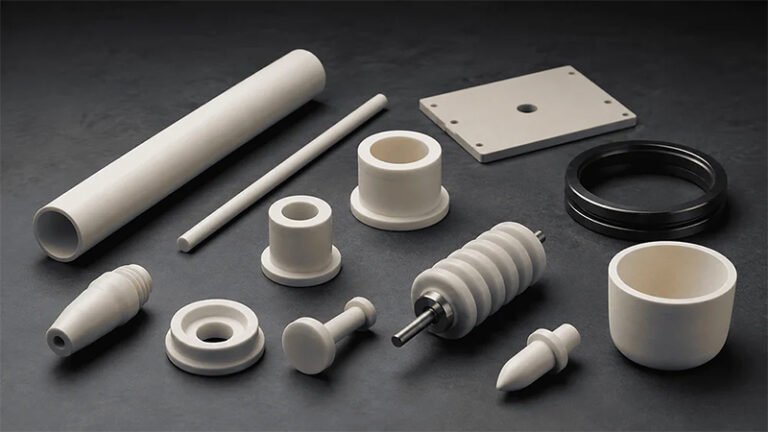
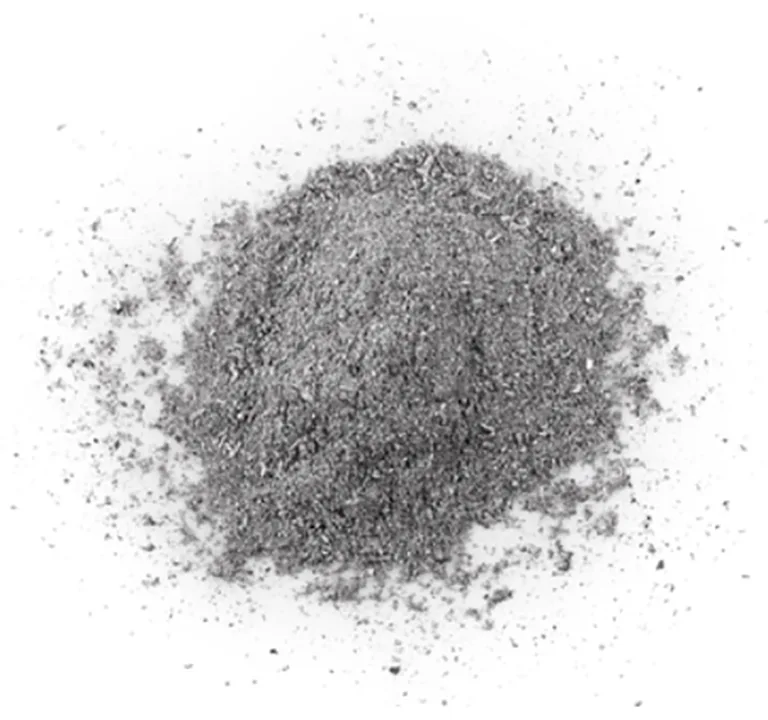
Advanced ceramic bearings typically use engineered ceramic compounds rather than ordinary clay-based ceramics. In particular, silicon nitride, zirconia, and alumina offer different combinations of hardness, toughness, density, thermal behavior, and chemical resistance.
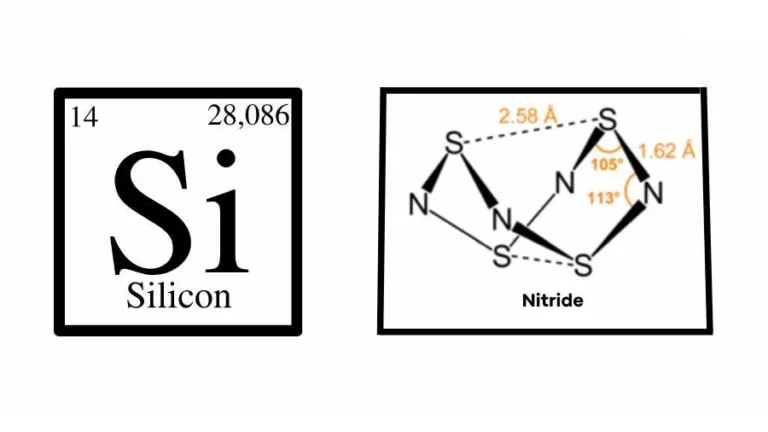
2.1 Silicon Nitride (Si₃N₄)
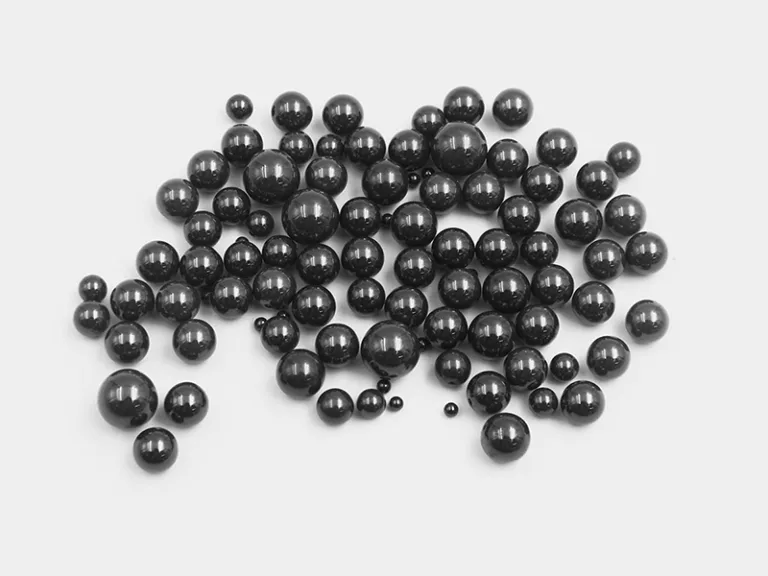
Silicon nitride is a high-performance structural ceramic commonly used in rolling elements for precision and high-speed bearings. Its relatively low density reduces centrifugal forces at elevated rotational speeds, while its hardness and wear resistance support demanding rolling-contact applications.
Additionally, silicon nitride generally offers good thermal-shock resistance and mechanical strength when manufacturers use a suitable composition and manufacturing process. Therefore, engineers often consider Si₃N₄ for precision medical equipment, laboratory instruments, and compact drive mechanisms that require stable rotational performance.
However, silicon nitride remains a brittle ceramic rather than a ductile metal. Consequently, designers must control contact stress, impact loading, edge geometry, surface finish, and installation forces to avoid chipping or fracture.
2.2 Zirconia (ZrO₂)
Zirconia, particularly appropriately stabilized zirconia, offers high toughness relative to many other structural ceramics. Moreover, its corrosion resistance and electrical insulation characteristics can make it useful in selected medical mechanisms and fluid-handling equipment.
Because zirconia grades differ in composition and stabilization, their strength, phase stability, aging behavior, and thermal properties also vary. Accordingly, engineers should specify the exact zirconia grade and verify its suitability for the operating environment instead of treating every zirconia component as interchangeable.
2.3 Alumina (Al₂O₃)
Alumina is a widely used technical ceramic valued for its hardness, electrical insulation, and chemical stability in many environments. Furthermore, its relatively mature manufacturing processes make it suitable for selected precision components, insulating structures, and applications involving controlled sliding or rolling contact.
Nevertheless, alumina generally has lower fracture toughness than silicon nitride and zirconia grades designed for structural applications. Therefore, engineers should evaluate impact loads, stress concentrations, surface defects, and contact geometry carefully before specifying alumina bearing components.
2.4 Ceramic Material Comparison
Although all three materials belong to the advanced ceramics family, their engineering roles differ. The following table provides a qualitative comparison for initial material screening rather than a substitute for grade-specific datasheets.
| Material | Key Characteristics | Potential Medical Equipment Uses | Main Design Consideration |
|---|---|---|---|
| Silicon nitride (Si₃N₄) | Low density, high hardness, high strength, good wear resistance | High-speed instruments, precision drives, selected pump and centrifuge mechanisms | Contact stress, brittle fracture, surface finish, and bearing geometry |
| Zirconia (ZrO₂) | High toughness for a ceramic, electrical insulation, good corrosion resistance in suitable grades | Selected fluid-handling assemblies and precision mechanisms | Grade selection, stabilizer composition, aging, and operating temperature |
| Alumina (Al₂O₃) | High hardness, electrical insulation, chemical stability in suitable environments | Selected insulating assemblies and precision components | Brittleness, impact resistance, and contact-load limits |
In addition to the ceramic material, the complete bearing may contain steel raceways, polymer cages, elastomer seals, and lubricants. Therefore, engineers must evaluate every contacting material when considering sterilization, chemical exposure, cleaning agents, and contamination risks.
3. Which Ceramic Bearing Properties Matter in Medical Applications?
Selecting a ceramic bearing for medical equipment requires engineers to connect measurable material characteristics with the actual operating conditions. In other words, a material property provides value only when it addresses a specific engineering requirement.
| Property | Engineering Significance | Medical Equipment Relevance | Verification Method |
|---|---|---|---|
| Hardness and wear resistance | Help resist surface damage and rolling-contact wear under suitable conditions. | Supports consistent motion in pumps, precision drives, and laboratory instruments. | Hardness testing, surface inspection, and endurance testing. |
| Density and mass | Lower rolling-element mass can reduce centrifugal forces at high speeds. | May benefit high-speed centrifuges and compact drive mechanisms. | Material density measurement and rotational performance testing. |
| Corrosion resistance | Helps resist degradation from compatible chemicals and fluids. | May benefit fluid-handling equipment and selected cleaning environments. | Chemical compatibility assessment and exposure testing. |
| Electrical insulation | Suitable ceramic grades electrically isolate selected components. | May support electrically sensitive mechanisms and selected insulated assemblies. | Electrical resistance and dielectric testing where applicable. |
| Dimensional stability | Accurate geometry and controlled tolerances support repeatable movement. | Important for imaging stages, robotic mechanisms, and precision instruments. | Dimensional metrology, runout checks, and assembly inspection. |
| Thermal behavior | Thermal expansion, conductivity, and temperature stability affect clearances and heat transfer. | Relevant to sterilization-compatible equipment and thermally demanding mechanisms. | Thermal cycling and operating-temperature validation. |
| Friction and lubrication behavior | Depend on surface finish, contact conditions, lubricant, speed, and load. | Influence drive torque, heat generation, noise, and maintenance intervals. | Torque measurement, temperature monitoring, and endurance tests. |
| Biological safety | Depends on material composition, processing residues, surface condition, and exposure route. | Critical for devices that contact patients, tissues, blood, or other biological fluids. | Risk-based biological evaluation and applicable regulatory testing. |
Importantly, ceramic materials do not automatically eliminate lubrication requirements. Although certain designs may operate with reduced lubrication under validated conditions, many precision bearings still require an appropriate lubricant to control friction, temperature, and wear.
Similarly, corrosion resistance does not guarantee compatibility with every disinfectant or sterilization cycle. Therefore, equipment manufacturers should test the complete bearing assembly, including its cage, seals, lubricant, and mating surfaces, under the intended cleaning and operating conditions.
4. Eight Medical Equipment and Tool Applications for Ceramic Bearings
Ceramic bearings can support different medical technologies, but their suitability depends on the mechanical function and the device’s risk profile. The following eight application categories illustrate where engineers may evaluate ceramic bearing solutions.
4.1 Laboratory Centrifuges and Sample Processing Equipment
First, laboratory centrifuges use rotating assemblies to separate biological samples, reagents, or other materials. Because high rotational speeds increase centrifugal forces on rolling elements, lower-density silicon nitride elements may offer an advantage in appropriately designed bearing systems.
Nevertheless, the bearing must meet the centrifuge’s rated speed, radial and axial loads, vibration limits, and temperature requirements. Additionally, engineers should validate rotor balance, bearing preload, lubricant retention, and performance throughout the intended duty cycle.
4.2 Dialysis Machines and Medical Fluid-Handling Equipment
Second, dialysis machines and related fluid-handling systems contain pumps, actuators, and drive mechanisms that require controlled movement. Ceramic bearing components may suit selected assemblies when their material properties match the fluid environment and mechanical loads.
However, engineers must distinguish between a bearing exposed to an external drive mechanism and a bearing that directly contacts blood or dialysate. In the latter case, the complete fluid-contacting assembly requires specific assessment of material compatibility, contamination, cleanability, and applicable medical-device requirements.
4.3 Surgical Power Tools and Operating-Room Equipment
Third, powered surgical instruments and certain operating-room devices use compact rotating mechanisms to drive cutting, drilling, or other controlled movements. In suitable designs, ceramic rolling elements may help reduce rotating mass and resist wear.
Even so, high rotational speed alone does not establish suitability. Instead, engineers should evaluate shock loading, vibration, acoustic performance, lubricant containment, cleaning access, and compatibility with the specified sterilization process.
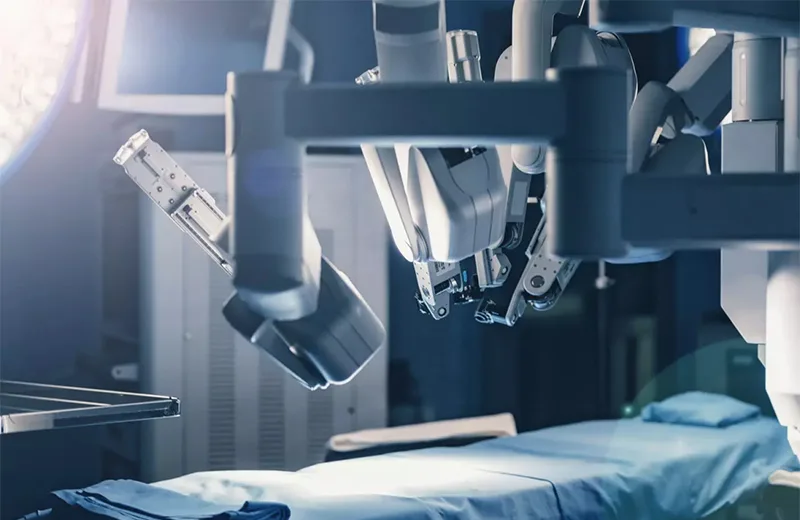
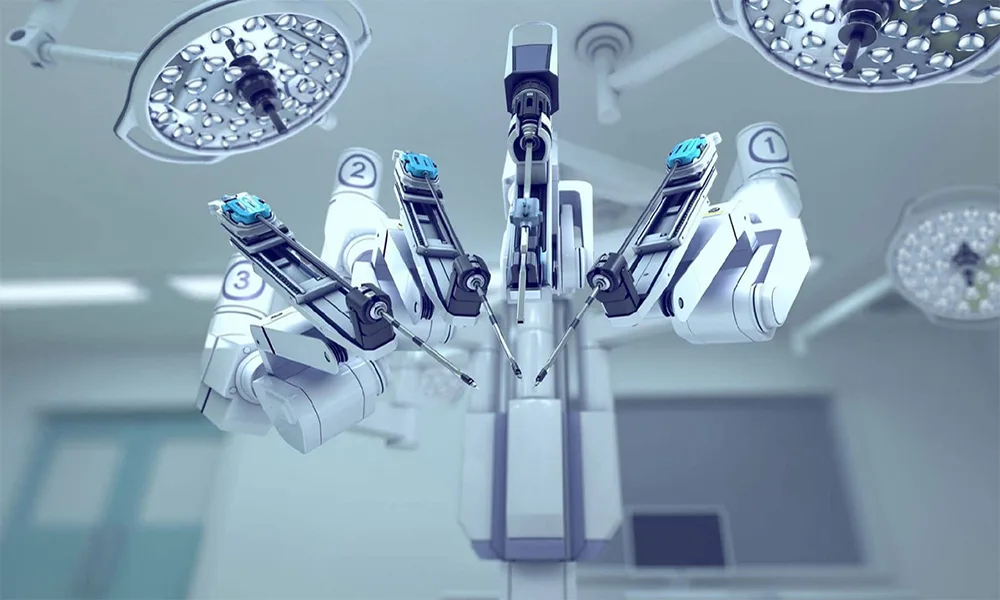
4.4 Surgical Robots and Medical Robotic Systems
Fourth, surgical robots and medical automation systems use bearings in motors, articulated joints, positioning stages, and transmission assemblies. Since these mechanisms require repeatable motion, bearing runout, stiffness, friction torque, and mechanical backlash can affect positioning accuracy.
Accordingly, engineers should evaluate ceramic bearings as part of the complete transmission system rather than as isolated components. For example, the bearing arrangement, shaft tolerances, preload, housing stiffness, and feedback-control system all influence final positioning performance.
4.5 Medical Imaging and Diagnostic Equipment
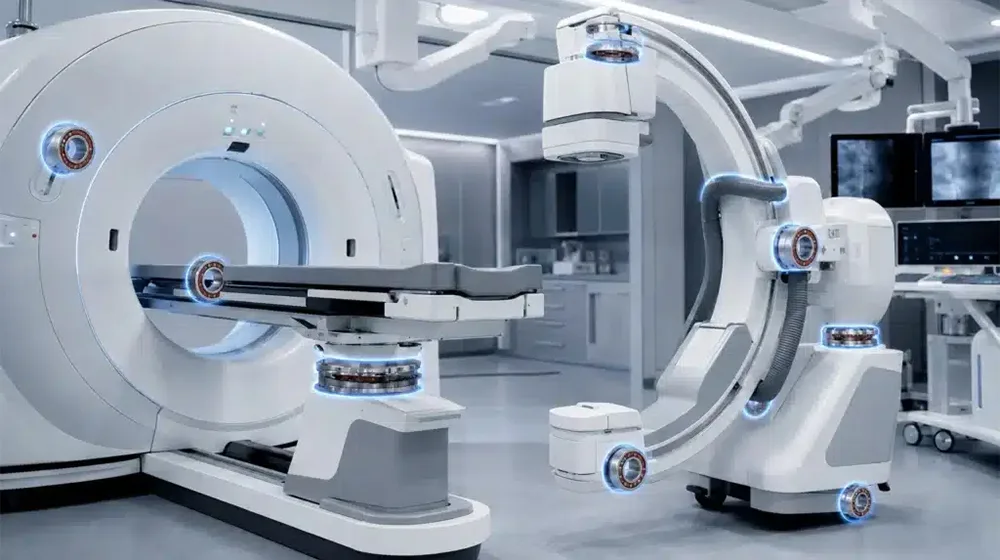
Fifth, medical imaging systems and diagnostic instruments may contain rotating gantries, precision stages, sample-handling mechanisms, or other motion-control assemblies. In these applications, bearing vibration, noise, temperature rise, and dimensional consistency can affect mechanical stability.
However, the optimal bearing depends on the equipment architecture. Engineers should assess electromagnetic compatibility where relevant, rotational accuracy, structural stiffness, serviceability, and any manufacturer-specific requirements before selecting a ceramic or hybrid bearing.
4.6 Dental Handpieces and Dental Laboratory Equipment
Sixth, dental handpieces and dental laboratory equipment use small bearings in high-speed rotary mechanisms. Therefore, designers may consider ceramic rolling elements when the bearing can satisfy the required speed, precision, vibration, and service-life targets.
Furthermore, dental equipment may experience repeated cleaning and sterilization cycles. Consequently, engineers must confirm the compatibility of the entire assembly, including cage materials, seals, lubricants, and bearing fits, with the specified maintenance procedure.
Ceramic bearings should also be distinguished from dental restorative ceramics. Although zirconia and alumina can serve in selected dental restorative applications, a dental crown or filling is not itself a bearing, and its material qualification follows a different intended-use pathway.
4.7 Medical Infusion Pumps and Precision Dispensing Systems
Seventh, infusion pumps and other precision dispensing devices use compact drive mechanisms to control the movement of pumping elements or actuators. In selected designs, ceramic bearings may help maintain consistent mechanical motion and resist wear.
Nevertheless, dosing accuracy depends on the complete delivery system rather than the bearing alone. Therefore, engineers should validate motor control, transmission backlash, friction variation, fluid-path design, alarm behavior, and performance over the full operating range.
4.8 Implantable Devices and Artificial Joint Systems
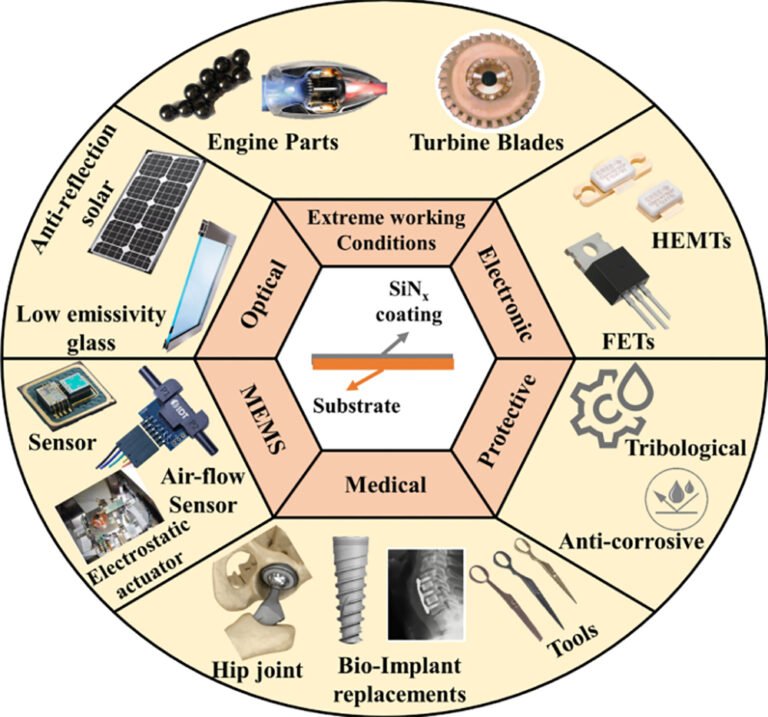
Eighth, implantable medical devices and artificial joint systems require special attention because their materials may remain in direct contact with the body for extended periods. Certain technical ceramics, including qualified silicon nitride, zirconia, and alumina grades, have been investigated or used in specific medical implant applications.
However, engineers must not assume that a conventional ceramic bearing is suitable for implantation simply because its base material is chemically stable or has favorable mechanical properties. Implantable components require evaluation of the intended anatomical location, contact conditions, wear debris, fatigue, fracture risk, sterilization, and long-term biological response.
In addition, artificial hip and knee systems typically use specialized bearing surfaces and joint components rather than generic industrial rolling bearings. Therefore, any proposed ceramic component must meet the applicable implant design, verification, and regulatory requirements for its specific intended use.
Important Note on Implantable Medical Devices
Material identity alone does not establish biocompatibility or clinical suitability. For implantable applications, manufacturers must use appropriately qualified materials and validate the finished device according to its intended use, applicable biological evaluation requirements, and relevant medical-device regulations.
5. How to Implement Ceramic Bearings in Medical Equipment
Successful implementation begins with engineering requirements rather than a material preference. In practice, medical equipment manufacturers can follow the steps below to evaluate whether a ceramic bearing provides a measurable advantage over a conventional steel or hybrid design.
Step 1: Define the Operating Requirements
First, document the radial load, axial load, rotational speed, duty cycle, acceleration, operating temperature, expected service life, and allowable vibration. Additionally, identify whether the bearing operates continuously, intermittently, or under frequent start-stop conditions.
For example, a high-speed centrifuge may prioritize speed capability and vibration control, whereas a robotic joint may require stiffness, positioning repeatability, and low friction torque. Therefore, the application determines which properties deserve the greatest weight.
Step 2: Select the Bearing Configuration
Next, compare hybrid and full ceramic bearing designs. A hybrid bearing may suit applications that benefit from ceramic rolling elements but still require steel raceways, while a full ceramic bearing may suit selected environments where corrosion resistance or electrical insulation is important.
Meanwhile, bearing type also matters. Deep-groove ball bearings, angular-contact bearings, cylindrical roller bearings, and other configurations handle loads and motion differently. Consequently, the designer should match the bearing geometry to the actual load direction, speed, stiffness, and alignment requirements.
Step 3: Specify the Ceramic Grade and Manufacturing Quality
Third, identify the exact ceramic composition, material grade, dimensional tolerances, surface finish, and required inspection criteria. Because two components may share the same chemical formula yet differ in porosity, grain structure, additives, and mechanical properties, material names alone are insufficient for engineering approval.
In addition, request traceable material documentation and inspection results appropriate to the component’s criticality. For precision rolling elements, dimensional consistency, sphericity, surface defects, and contact-surface quality can influence bearing performance.
Step 4: Design the Shaft, Housing, and Fits
Fourth, review shaft and housing tolerances, bearing clearance, preload, alignment, and thermal expansion. Since ceramics and metals can respond differently to temperature changes, engineers should calculate the effect of operating temperature on the complete bearing arrangement.
Furthermore, avoid excessive interference fits and concentrated installation forces. Because advanced ceramics have limited plastic deformation compared with metals, incorrect mounting practices can create damaging stresses or initiate cracks.
Step 5: Validate Lubrication, Sealing, and Cleaning
Fifth, determine whether the design requires grease, oil, or a specialized low-lubrication arrangement. Although ceramic rolling elements may offer benefits under certain lubrication conditions, the raceways, cage, operating speed, and load still determine the overall lubrication requirement.
Similarly, choose seals and lubricants that remain compatible with the cleaning agents, disinfectants, temperature cycles, and intended service environment. If the device requires sterilization, validate the assembled bearing rather than relying solely on the ceramic material’s temperature resistance.
Step 6: Test the Complete Assembly
Sixth, perform tests under representative operating conditions before releasing the design. Depending on the risk assessment, validation may include rotational accuracy, starting torque, running torque, vibration, noise, temperature rise, load capacity, endurance, and inspection for wear or damage.
Additionally, test cleaning and sterilization compatibility when the device requires these processes. For patient-contacting or implantable applications, include the relevant biological evaluation and regulatory verification activities in the device development plan.
Step 7: Establish Maintenance and Quality Controls
Finally, define inspection intervals, replacement criteria, lubrication procedures, and traceability requirements. Even when a ceramic bearing reduces selected wear mechanisms, the complete assembly can still experience lubricant degradation, seal damage, misalignment, contamination, or fatigue.
Therefore, use operating data and maintenance records to confirm whether the bearing delivers the expected reliability improvement. This approach also helps manufacturers distinguish genuine performance gains from assumptions based solely on material properties.
6. Ceramic Bearings vs. Conventional Steel Bearings
Ceramic bearings do not automatically outperform steel bearings in every medical application. Instead, each design offers different trade-offs in mass, toughness, cost, corrosion resistance, and operating requirements.
| Comparison Factor | Ceramic or Hybrid Bearings | Conventional Steel Bearings |
|---|---|---|
| Rolling-element mass | Silicon nitride elements are lighter than steel elements of comparable size. | Steel rolling elements generally have higher density. |
| Impact tolerance | Ceramics are brittle and require careful control of impact and contact stress. | Steel generally offers greater ductility and tolerance of impact deformation. |
| Corrosion behavior | Suitable ceramic grades can resist many corrosive environments. | Corrosion resistance depends on the steel grade and surface protection. |
| Electrical behavior | Many technical ceramic grades provide electrical insulation. | Steel is electrically conductive. |
| Cost and availability | Precision ceramic components may involve higher material and processing costs. | Standard steel bearings are widely available in many sizes and configurations. |
| Best selection method | Use when verified ceramic properties address defined engineering needs. | Use when standard bearing performance, toughness, cost, and availability meet requirements. |
Ultimately, a hybrid ceramic bearing may provide a practical compromise when engineers need lower rolling-element mass but still prefer steel raceways. Conversely, a conventional steel bearing may remain the better choice when impact tolerance, cost, availability, and established maintenance procedures outweigh the potential benefits of ceramic components.
7. Biocompatibility, Sterilization, and Medical Device Compliance
Medical equipment introduces requirements that do not apply to every industrial bearing. In particular, engineers must determine whether a bearing remains isolated inside the equipment, contacts a patient’s skin, communicates with a fluid pathway, or forms part of an implantable device.
For equipment-internal bearings, the primary concerns may include mechanical reliability, cleaning compatibility, lubricant containment, and contamination control. However, patient-contacting and implantable components require additional evaluation based on the nature and duration of contact.
Where applicable, manufacturers should assess biological safety using a risk-based approach consistent with relevant requirements, including ISO 10993-1. Furthermore, sterilization validation, packaging integrity, chemical residues, and material degradation may require separate assessment according to the device’s intended use.
Importantly, a ceramic material’s general reputation for chemical stability does not prove that a finished component is biocompatible. Processing aids, residual contaminants, surface treatments, coatings, and wear particles can affect the final biological risk profile.
Similarly, a component’s ability to tolerate a high temperature does not establish that an assembled medical device can withstand repeated steam sterilization. Engineers must consider the bearing cage, seals, lubricant, housing, dimensional fits, and any changes in performance after repeated cycles.
8. AOFE MIMCustom: Precision Component Development for Engineering Applications
For manufacturers developing medical equipment or other precision products, component selection often requires coordination between material properties, part geometry, manufacturing methods, and assembly requirements. Therefore, early communication between the design team and the component supplier can help identify manufacturing constraints before production begins.
AOFE MIMCustom can be introduced in this context as a potential manufacturing and engineering contact for projects involving precision components, metal injection molding (MIM), ceramic injection molding (CIM), and mold or tooling development, subject to confirmation of the company’s actual capabilities for the specific project.
When evaluating a supplier for medical equipment components, buyers should first confirm the available materials, dimensional tolerances, surface-finish capability, production volume, inspection methods, and quality documentation. In addition, projects involving patient-contacting or implantable components require explicit confirmation of the supplier’s relevant material controls, traceability, validation support, and regulatory responsibilities.
What Should Buyers Confirm Before Starting a Project?
- Material composition and grade-specific technical data.
- Manufacturing method and suitability for the requested component geometry.
- Dimensional tolerances, surface finish, and inspection criteria.
- Prototype availability, production capacity, and batch consistency.
- Quality documentation and traceability requirements.
- Medical-device compliance responsibilities where patient contact or implantation is involved.
- Compatibility with the bearing assembly, cleaning procedures, and operating environment.
For a new project, provide the intended application, drawings, material requirements, operating loads, target quantities, and any relevant compliance specifications. Consequently, the engineering team and supplier can assess whether a proposed manufacturing process fits the design and identify any requirements that need additional validation.
Discuss Your Precision Component Requirements
Share your component drawings, target material, operating conditions, and production requirements to begin a technical feasibility discussion with AOFE MIMCustom.
9. Frequently Asked Questions About Ceramic Bearings in Medical Equipment
Q1. What is the best ceramic material for medical equipment bearings?
Generally, silicon nitride is a strong candidate for high-speed precision applications because of its low density, hardness, and wear resistance. However, zirconia may suit applications that prioritize toughness and corrosion resistance, while alumina may suit selected insulating applications. Ultimately, the best material depends on the bearing design, operating conditions, and validation requirements.
Q2. Can ceramic bearings operate without lubrication?
Sometimes, a specially designed bearing can operate under reduced-lubrication conditions. Nevertheless, ceramic construction alone does not eliminate friction or wear, so engineers must validate the complete bearing arrangement at the required speed, load, temperature, and service life.
Q3. Are ceramic bearings suitable for dialysis machines?
Yes, selected ceramic or hybrid bearings may suit certain drive and fluid-handling mechanisms in dialysis equipment. However, engineers must distinguish equipment-internal bearings from components that contact blood or dialysate, because direct fluid contact introduces additional material compatibility and contamination-control requirements.
Q4. Can ceramic bearings be used in surgical robots?
Yes, designers may consider ceramic bearings for selected robotic joints, motors, and precision transmission systems. However, the final selection must satisfy stiffness, positioning accuracy, load capacity, vibration, lubrication, sterilization compatibility, and reliability requirements.
Q5. Can silicon nitride bearings be implanted in the human body?
A conventional industrial silicon nitride bearing should not be assumed suitable for implantation. Although certain silicon nitride materials have medical and biomedical applications, implantable use requires appropriate material qualification, finished-device testing, biological evaluation, and regulatory assessment for the specific intended use.
Q6. Are ceramic bearings compatible with autoclave sterilization?
Compatibility depends on the complete bearing assembly rather than the ceramic rolling elements alone. Therefore, manufacturers must verify the effects of the specified sterilization cycle on the cage, lubricant, seals, raceways, clearances, and overall performance.
Q7. Do ceramic bearings last longer than steel bearings?
Not necessarily. Ceramic rolling elements may improve performance under certain speed, lubrication, or corrosion conditions, but service life also depends on contact stress, raceway quality, contamination, installation, fatigue, and maintenance. Accordingly, engineers should compare validated endurance data under equivalent operating conditions.
Q8. What information should I provide when requesting a custom ceramic component?
First, provide a drawing or CAD model, the intended application, material grade, dimensional tolerances, expected loads, operating speed, temperature range, and annual quantity. Additionally, identify any cleaning, sterilization, patient-contact, traceability, or regulatory requirements so the supplier can assess manufacturing feasibility and documentation needs.
Q9. What is the difference between a ceramic bearing and a ceramic artificial joint component?
A ceramic bearing is a mechanical component designed to support relative motion, commonly through rolling elements and raceways. In contrast, an artificial joint component uses a specialized bearing surface or articulation designed for a particular anatomical application. Therefore, the two categories have different geometries, loading conditions, wear mechanisms, and qualification requirements.
Conclusion
Overall, ceramic bearings can offer meaningful engineering benefits in selected medical equipment, particularly where designers need low rolling-element mass, wear resistance, corrosion resistance, electrical insulation, or precise motion control. However, no single ceramic material or bearing configuration suits every medical application.
Therefore, manufacturers should begin with the equipment’s operating requirements, compare silicon nitride, zirconia, and alumina at the grade level, and validate the complete bearing assembly under representative conditions. For patient-contacting or implantable devices, biological safety and regulatory requirements must also guide material selection and verification.
By combining careful material selection, precise mechanical design, suitable lubrication, and application-specific testing, medical equipment developers can make better-informed decisions about whether ceramic bearing technology is appropriate for their products.
Key Takeaways
- Ceramic bearings use advanced ceramic rolling elements, raceways, or both, depending on their design.
- Silicon nitride, zirconia, and alumina offer different mechanical, thermal, and electrical characteristics.
- Potential applications include centrifuges, dialysis equipment, surgical tools, surgical robots, imaging systems, dental equipment, infusion pumps, and selected implant-related systems.
- Bearing performance depends on geometry, tolerances, lubrication, installation, and operating conditions as well as material properties.
- Patient-contacting and implantable applications require specific biological evaluation and regulatory verification.