Industry News • New Energy Vehicles
How many advanced ceramics are used in a new energy vehicle?
📈 Executive Summary
- Modern new energy vehicles incorporate six to eight distinct categories of advanced ceramic components across multiple subsystems.
- Silicon nitride AMB substrates now power SiC-based inverters that extend driving range by five to ten percent per charge.
- Ceramic-coated battery separators have captured over seventy-two percent of the global market while solid-state ceramic electrolytes loom on the horizon.
- Silicon nitride bearing balls solve electrical discharge damage problems inherent to 800V architectures while cutting rotating mass by forty percent.
- PTC ceramic heaters, automotive MLCCs, oxygen sensors, and carbon-ceramic brake discs round out an increasingly ceramic-rich bill of materials.
- Ultimately, advancing voltage platforms, power density requirements, and safety regulations collectively accelerate ceramic penetration throughout every EV architecture.
Power Electronics: SiC Chips Demand Ceramic Substrates
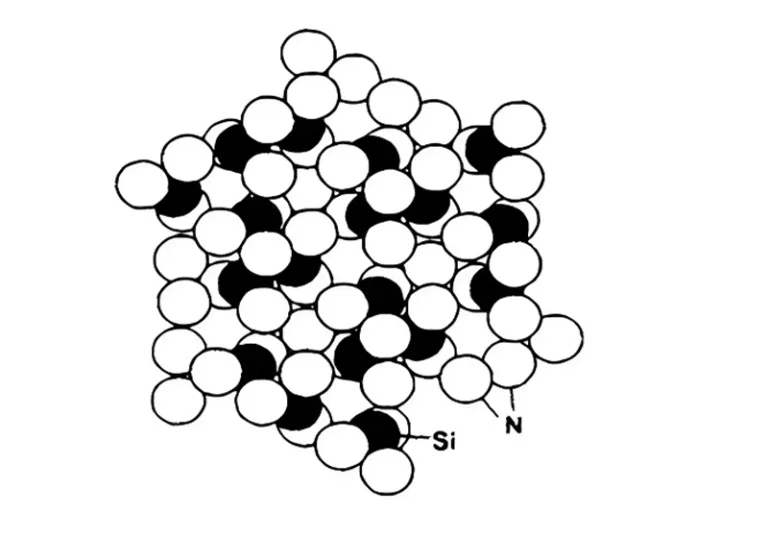
High-voltage architectures deliver the most direct performance gains to wide-bandgap power semiconductors. Specifically, SiC MOSFET-based traction inverters improve overall vehicle range by approximately five to ten percent while enabling ultra-fast charging capabilities. However, SiC chips generate intense junction temperatures and concentrated thermal flux that traditional DBC substrates simply cannot withstand over a fifteen-year automotive lifespan. Consequently, silicon nitride (Si3N4) AMB substrates have emerged as the prevailing solution because they deliver thermal conductivity exceeding ninety W/(m·K) and match the thermal expansion coefficient of SiC crystals. Furthermore, manufacturers can braze copper layers up to 0.8 mm thick onto these substrates, thereby achieving superior current-carrying capacity and thermal cycling resilience compared to conventional alternatives. Notably, models such as the BYD Seal and NIO ET9 have already begun mass production with these advanced ceramic substrates installed. Meanwhile, global silicon nitride ceramic substrate market valuation stands at approximately 1.9 billion USD in 2026 and is projected to reach 3.71 billion USD by 2032, representing a compound annual growth rate of roughly 11.6 percent. Domestically, Chinese AMB substrate producers including Fulehua, Bolin Electronics, Tongxin Electronics, Huaqing Electronics, and Xinzhou Electronics are rapidly expanding capacity to capture the import substitution window created by prevailing lead times exceeding twenty weeks.
Battery Systems: Ceramic Coatings Become Standard Practice
Separators represent the single largest application volume for inorganic ceramics within lithium-ion battery packs. In fact, ceramic-coated separator routes are expected to account for over seventy-two percent of the global market in 2026, a dramatic increase from merely forty-eight percent in 2020. Alumina coatings dominate current production due to mature processing techniques and low cost, although competition increasingly centers on batch consistency and cost optimization. Meanwhile, boehmite coatings are experiencing the fastest growth trajectory because their lower hardness reduces equipment wear and their low water absorption improves coating quality. The global boehmite market reached approximately 420 million USD in 2025 and will likely expand at a fifteen percent compound annual rate over the coming decade. Looking further ahead, solid-state electrolytes based on oxide (LLZO) and sulfide chemistries fundamentally belong to the ceramic and glass-ceramic family, meaning that successful commercialization could unlock market space far exceeding conventional coating applications. Additionally, thermal runaway prevention strategies increasingly employ ceramicized silicone rubber and aerogel insulation sheets to provide cell-to-cell thermal barriers and pack-level fire protection. Thus, ceramics now protect batteries at every level from individual cell safety to pack-level thermal management.
Alumina Coating
Mature technology with focus on consistency and cost control.
Boehmite Coating
Fastest growing segment with lower equipment wear characteristics.
Solid-State Electrolytes
Ceramic family poised to unlock transformative market potential.
Motors and Drivetrain: 800V Platforms Force Ceramic Bearings
The widespread adoption of 800V architectures elevates motor shaft voltages to levels that electrically discharge through bearing lubricant films, thereby creating characteristic crawfish-pattern damage and pitting on raceway surfaces. Industry feedback indicates that under severe operating conditions, bearing service life can plummet from hundreds of thousands of kilometers down to merely thirty to sixty thousand kilometers. Therefore, hybrid ceramic bearings combining steel rings with silicon nitride rolling elements represent the current optimal engineering solution. Silicon nitride functions as an electrical insulator that breaks the shaft current return path, while its density sits approximately forty percent lower than steel, making it ideally suited for motors spinning beyond twenty thousand RPM. Moreover, reduced friction and lower operating temperatures further extend bearing reliability. Commercially, the global silicon nitride bearing ball market reached approximately 225 million USD in 2025 and is projected to grow to 260 million USD in 2026 before potentially reaching 583 million USD by 2034, representing a compound annual growth rate of roughly 15.5 percent. Chinese manufacturers have already established complete supply chains from high-purity silicon nitride powder through ceramic ball production and have begun supplying major OEM platforms.
Thermal Management and Cabin Comfort: PTC and Carbon-Ceramic Heating
Electric vehicles lack engine waste heat for cabin heating, which means winter warming depends entirely on electrical consumption. BaTiO3-based PTC ceramic heaters have long remained the dominant warm-air solution due to their self-regulating temperature characteristics and inherent safety profile. Meanwhile, next-generation carbon-ceramic heating films achieve coating thicknesses below 10 micrometers while operating at 12 to 14.5 volts with individual unit power ratings around 45 watts and surface temperatures near 65 degrees Celsius. These ultra-thin films heat seats, floor mats, and door armrests directly, thereby consuming significantly less energy than running the entire HVAC system. Consequently, targeted ceramic heating strategies deliver meaningful range preservation during cold-weather operation. Additionally, ceramic-based thermal management extends beyond cabin comfort to include coolant pump seals, sensor housings, and heat exchanger components that demand long-term chemical inertness and dimensional stability under thermal cycling conditions.
📋 Auxiliary Components: The Hidden Ceramic Content
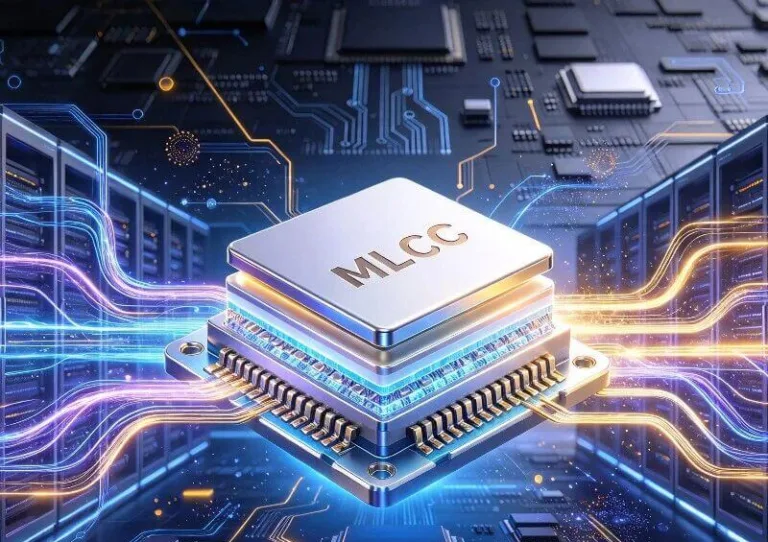
Beyond the major subsystems discussed above, modern NEVs incorporate numerous smaller ceramic components that collectively contribute substantial material value. Automotive MLCCs alone require thousands of units per vehicle, with high capacitance density and high-temperature tolerance representing key performance barriers. ZrO2 oxygen sensors remain essential for hybrid and extended-range electric vehicles that still operate internal combustion engines. Fuse and relay ceramic components utilizing alumina and talc porcelain provide arc quenching and electrical insulation within high-voltage distribution boxes. SiC mechanical seals serve cooling water pumps and other components requiring long-term durability in aggressive fluid environments. Furthermore, carbon-ceramic brake discs and sensor window pieces represent growth vectors for premium performance models and intelligent driving sensor suites. Each of these seemingly minor components relies on specialized ceramic formulations and precision manufacturing processes that collectively distinguish premium EVs from conventional alternatives.
MLCC Capacitors
Thousands per vehicle requiring high capacitance and temperature resilience.
O2 Sensors
ZrO2 ceramics essential for hybrid and range-extended powertrains.
Brake Discs
Carbon-ceramic composites for high-performance braking applications.
Market Drivers and Future Trajectory
Three macro trends collectively accelerate ceramic penetration throughout electric vehicle architectures. First, the industry-wide transition from 400V to 800V platforms amplifies demands for electrical insulation and voltage withstand capability, directly benefiting ceramic bearing balls and high-insulation substrates. Second, escalating power density requirements intensify thermal dissipation and reliability demands, making silicon nitride AMB substrates the canonical solution. Third, increasingly stringent safety regulations drive adoption of thermal runaway protection materials including ceramic-coated separators and ceramicized fire-proofing compounds. Meanwhile, the common bottleneck for domestic substitution rarely involves production capacity itself; instead, it centers on powder purity, batch-to-batch consistency, and the lengthy automotive qualification validation cycles. As these material capabilities mature, advanced ceramics will progressively transition from supporting consumables to performance-critical components that define vehicle capability boundaries. Therefore, manufacturers who master ceramic material science will ultimately control the innovation pace of next-generation electric mobility.
❓ Frequently Asked Questions
Q: How many types of advanced ceramics are used in a single new energy vehicle?
A modern new energy vehicle typically incorporates six to eight distinct categories of advanced ceramic components, spanning power electronics substrates, battery separator coatings, bearing balls, heating elements, capacitors, sensors, and braking systems.
Q: Why do electric vehicles need silicon nitride substrates?
Silicon nitride AMB substrates deliver thermal conductivity above 90 W/(m·K) and match the thermal expansion coefficient of SiC chips, thereby enabling reliable operation of wide-bandgap power devices under extreme thermal cycling conditions.
Q: What role do ceramic coatings play in EV batteries?
Ceramic coatings on battery separators prevent thermal runaway by providing heat resistance and electrical insulation. Additionally, materials like alumina and boehmite improve separator stability while solid-state ceramic electrolytes promise even greater energy density gains.
Q: How does 800V architecture affect ceramic bearing adoption?
The rise of 800V platforms increases shaft voltages that damage conventional steel bearings through electrical discharge machining. Silicon nitride ceramic balls solve this problem by acting as electrical insulators while also reducing weight by approximately 40 percent compared to steel.