
The Global Advanced Ceramics Market Is Continuously Expanding: The Size Is Expected to Reach $142.0 Billion by 2026
Semiconductor
New Energy
AI Computing
📊 Executive Summary
- Globally, the advanced ceramics market reached $133.1 billion in 2025, and analysts now project it will surge to $142.0 billion in 2026.
- Over the 2026-2032 forecast window, the industry will sustain a CAGR of 6.69%, reflecting robust structural growth.
- Notably, semiconductor packaging and new energy applications already command over 45% of total downstream demand.
- Meanwhile, leading manufacturers face three critical supply-chain pain points: 18-month lead times for high-end AlN substrates, persistently high import costs, and sintering yields stuck below 65%.
- Furthermore, Chinese firms are rapidly closing the gap in MLCC powders, AI cooling substrates, and dental zirconia, thereby reshaping the competitive landscape.
Market Overview: A Sector in Acceleration
Across the global manufacturing landscape, advanced ceramics now serve as the indispensable backbone for next-generation electronic, energy, and industrial systems. Specifically, these high-performance inorganic non-metallic materials originate from meticulously controlled high-purity powder feedstocks and undergo precise batching, forming, sintering, heat treatment, and ultra-precision machining to achieve exceptional functional and structural properties.
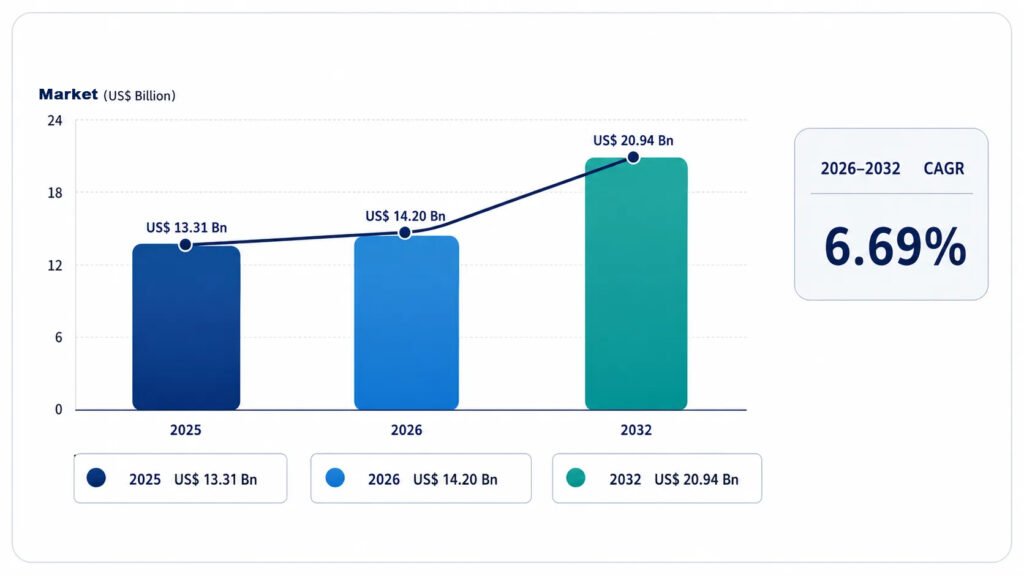
According to the latest industry survey data released in September 2026, the market valuation already stood at $133.1 billion in 2025. Subsequently, forecasters expect this figure to climb to $142.0 billion by the end of 2026, with a compound annual growth rate of 6.69% projected across the 2026-2032 period. Importantly, downstream demand from semiconductor fabrication and new energy sectors now exceeds 45% of total market consumption, signaling that high-tech applications have become the primary growth engine.
2025 Market Size
$133.1B
2026 Forecast
$142.0B
CAGR 2026-2032
6.69%
Semi + Energy Share
>45%
Material Classification and Manufacturing Architecture
Researchers classify advanced ceramics into two primary material families: oxide ceramics (including alumina and zirconia) and non-oxide ceramics (such as aluminum nitride, silicon nitride, and silicon carbide). Within this framework, functional and structural properties describe performance attributes rather than separate material categories. Additionally, the research scope encompasses high-purity ceramic powders, ceramic substrates, precision structural components, functional coatings, and integrated devices while excluding traditional building ceramics, sanitary ware, and ordinary refractory materials.
From a production standpoint, the complete manufacturing chain spans six critical stages. Initially, manufacturers prepare high-purity powder feedstocks. Next, they design precise compositional formulas. Subsequently, they employ multiple forming techniques, followed by debinding and sintering cycles. Afterward, precision grinding achieves the required dimensional tolerances. Finally, metallization and assembly complete the finished product. Ultimately, the microstructure of the material system, geometric complexity of the product, and machining precision collectively determine both performance boundaries and total cost.
⚗
Powder Prep
📝
Formula Design
🛠
Forming
🔥
Sintering
🔬
Grinding
⚡
Assembly
Demonstrating the tangible benefits of process upgrades, a leading Chinese electronic ceramics company introduced an automated batching production line in June 2026. Consequently, batch-to-batch consistency deviation in ceramic powders dropped dramatically from 3.2% to just 0.8%, while finished product yield for precision structural components improved by 27%.
Downstream Pain Points: Three Critical Supply-Chain Bottlenecks
Currently, semiconductor packaging, SiC power devices, and AI computing thermal management represent the fastest-expanding downstream segments. Unfortunately, manufacturers across these sectors consistently encounter three severe pain points that constrain supply-chain autonomy.
18+ Month Lead Times
High-end aluminum nitride (AlN) ceramic substrates routinely require over 18 months for delivery, severely disrupting production schedules for power electronics manufacturers.
Elevated Import Costs
Imported precision ceramic structural components carry persistently high procurement costs, eroding profit margins for downstream device and module manufacturers.
Yields Below 65%
Large-format ceramic component sintering yields remain chronically below 65%, creating material waste and further inflating unit costs across the value chain.
Against this backdrop, advanced ceramics are rapidly evolving from generic industrial parts toward customized, high-purity, material-component integrated solutions. Specifically, the deep fusion of ceramic powder purification technology with precision structural component manufacturing has emerged as the core strategy for breaking through existing supply bottlenecks.
Competitive Landscape: A Stratified Global Market
Presently, the advanced ceramics market comprises four distinct tiers of participants: integrated materials conglomerates, specialized technical ceramics producers, functional ceramics and powder manufacturers, and engineering-oriented suppliers serving industrial clients.
Tier 1: Global Leaders
CoorsTek, KYOCERA, and 3M collectively command approximately 70% of the global high-end market share. These companies maintain deep advantages in full-spectrum material system coverage, worldwide manufacturing networks, and long-term application validation in mission-critical environments.
Rising Challengers: Chinese Manufacturers
Meanwhile, leading Chinese firms are leveraging local supply-chain ecosystems, rapid customization capabilities, and deep application-specific adaptation to steadily increase their market share in MLCC ceramic powders, AI cooling ceramic substrates, and dental zirconia materials.
Case Study: Domestic Substitution in Action
During Q2 2026, a major Chinese electric vehicle manufacturer adopted domestically produced silicon nitride AMB ceramic carriers to accompany its SiC power devices. As a result, component delivery cycles shrank from 14 weeks to just 3 weeks, while overall procurement costs fell by 38%. Moreover, the components successfully passed full-scenario automotive-grade reliability verification, marking a definitive entry of Chinese precision structural components into the global high-end supply chain.
🛠 Technology Frontiers: Three Persistent Engineering Challenges
Despite rapid market expansion, the industry continues to grapple with three fundamental technical bottlenecks that limit broader adoption of advanced ceramics in extreme-performance applications.
Ultra-High Purity Powder Production
First, controlling purity at the 6N level (99.9999%) for materials such as yttrium oxide and producing nano-grade aluminum nitride powders at scale remain dominated by overseas suppliers. This monopoly directly inflates upstream raw material costs across the entire value chain.
Sintering Uniformity for Large Components
Second, achieving uniform sintering in large-format, complex-geometry ceramic parts presents enormous difficulty. For instance, semiconductor-grade ceramic chucks exceeding 12 inches require full-surface flatness deviation within 5 micrometers, demanding extraordinary temperature-field uniformity during debinding and sintering.
Inherent Brittleness Under Impact
Third, the brittle fracture behavior of ceramic materials persistently restricts their deployment in high-impact operating conditions. Overcoming this limitation requires advanced modification techniques, including whisker reinforcement and nanocomposite engineering, to further enhance material toughness.
Strategic Responses and Emerging Business Models
In response to these challenges, leading suppliers are aggressively deploying new service paradigms. Specifically, they are accelerating joint material-formula R&D programs with downstream clients, implementing full-process digital quality traceability systems, and establishing collaborative design partnerships tailored to specific application scenarios.
Looking ahead, companies that possess end-to-end capabilities spanning material R&D, precision manufacturing, and global application engineering services will secure the most durable competitive positions in high-value niche segments. Ultimately, this full-chain competency will differentiate market leaders from commodity players as the industry matures.
Joint R&D
Collaborative formula development with OEM partners
Digital Traceability
Full-process quality tracking via AI and IoT
Co-Design
Application-specific engineering partnerships
🔮 Market Outlook: Growth Vectors Through 2032
Overall, the growth momentum driving the global advanced ceramics market has decisively shifted from general-purpose industrial applications toward high-growth sectors including semiconductors, new energy vehicles, and AI computing infrastructure. Consequently, breakthroughs in domestic ceramic powder production and parallel upgrades in precision structural component processing will define the core growth narrative over the next six years.
Additionally, Chinese manufacturers, supported by dense downstream industrial clusters, stand poised to rapidly capture share across multiple high-value-added segments. In parallel, established global leaders like CoorsTek and KYOCERA will likely intensify their R&D spending to defend premium market positions. Ultimately, this dynamic tension between incumbents and challengers will accelerate innovation, reduce costs, and expand the total addressable market for advanced ceramics worldwide.
❓ Frequently Asked Questions
Q: What is the current size of the global advanced ceramics market?
Globally, the advanced ceramics market reached $133.1 billion in 2025. Analysts now project it will grow to $142.0 billion in 2026, with a compound annual growth rate of 6.69% through 2032. Notably, semiconductor and new energy applications already account for over 45% of total market demand.
Q: Who are the leading companies in the advanced ceramics market?
CoorsTek, KYOCERA, and 3M dominate the global high-end segment, collectively holding approximately 70% of the premium market share. These companies maintain deep advantages in full-spectrum material portfolios, global manufacturing networks, and long-term application validation across critical industries.
Q: What are the main technology challenges in advanced ceramics manufacturing?
The industry faces three core technical bottlenecks: achieving 6N ultra-high purity in ceramic powders, maintaining sintering uniformity for large components (flatness deviation under 5 micrometers for 12-inch semiconductor chucks), and overcoming inherent ceramic brittleness through whisker reinforcement and nanocomposite modifications.
Q: How are Chinese manufacturers impacting the advanced ceramics market?
Chinese firms are rapidly gaining share in MLCC ceramic powders, AI cooling substrates, and dental zirconia by leveraging local supply chains, fast customization, and deep application adaptation. For example, one Chinese EV maker cut ceramic substrate delivery from 14 weeks to 3 weeks and reduced costs by 38% after adopting domestic silicon nitride AMB carriers.
Q: What is the manufacturing process chain for advanced ceramics?
The complete advanced ceramics manufacturing chain encompasses six stages: high-purity powder preparation, formula design, multi-process forming, debinding and sintering, precision grinding, and metallization with final assembly. Material microstructure, product geometry complexity, and machining precision collectively determine performance boundaries and total cost.
📋 Key Entities at a Glance
📈 Market Growth Trajectory
2025
Global advanced ceramics market reaches $133.1 billion.
2026 (Projected)
Market expected to climb to $142.0 billion as semiconductor and new energy demand exceeds 45%.
2026 – 2032
Sustained 6.69% CAGR driven by domestic substitution in high-value ceramic powders and components.
Beyond 2032
Full-chain capable manufacturers expected to dominate premium segments as the industry consolidates globally.