Advanced Ceramics | Industrial Applications
Why Bearings Remain the Primary Application for Silicon Nitride Ceramics
Article Summary
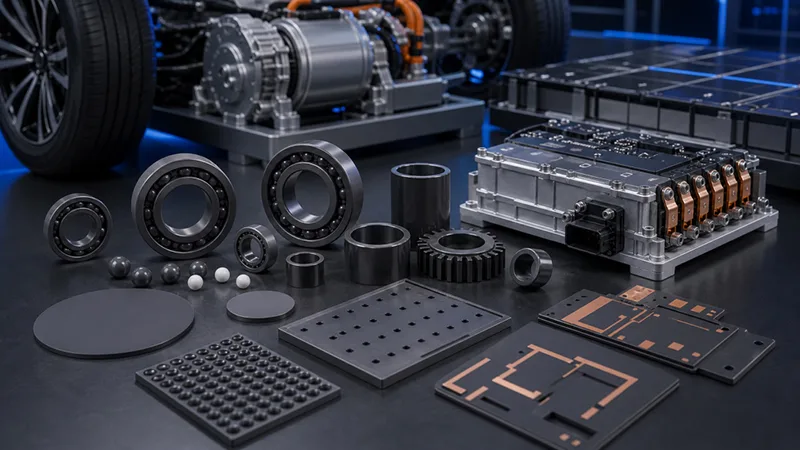
Silicon nitride (Si3N4) ceramic bearings remain one of the most established applications of advanced silicon nitride ceramics. Their low density, high hardness, wear resistance, and electrical insulation make them suitable for high-speed and precision equipment. Meanwhile, electric vehicles, power electronics, semiconductor manufacturing, aerospace systems, and medical devices are expanding the material’s application landscape. This article explains the role of bearings and examines five important application areas shaping the future of silicon nitride ceramics.
Introduction: Why Silicon Nitride Matters in Advanced Manufacturing
As electric vehicles, power electronics, semiconductor equipment, and precision manufacturing continue to develop, engineers increasingly need materials that combine mechanical reliability with stable performance under demanding conditions.
Among advanced non-oxide ceramics, silicon nitride (Si3N4) stands out because it offers a useful balance of low density, high strength, fracture toughness, wear resistance, and thermal stability. In addition, its electrical insulation properties support applications where conventional conductive materials may create operational challenges.
Traditionally, manufacturers have used silicon nitride in ceramic bearing balls and other wear-resistant components. However, demand from electric vehicles, high-power electronics, and semiconductor equipment is creating new opportunities beyond conventional mechanical applications.
From an industrial perspective, five application areas deserve particular attention: ceramic bearings, active metal brazed (AMB) power substrates, semiconductor equipment components, aerospace and high-temperature structures, and medical or high-precision devices.
1. Silicon Nitride Ceramic Bearings: A Mature and Established Application
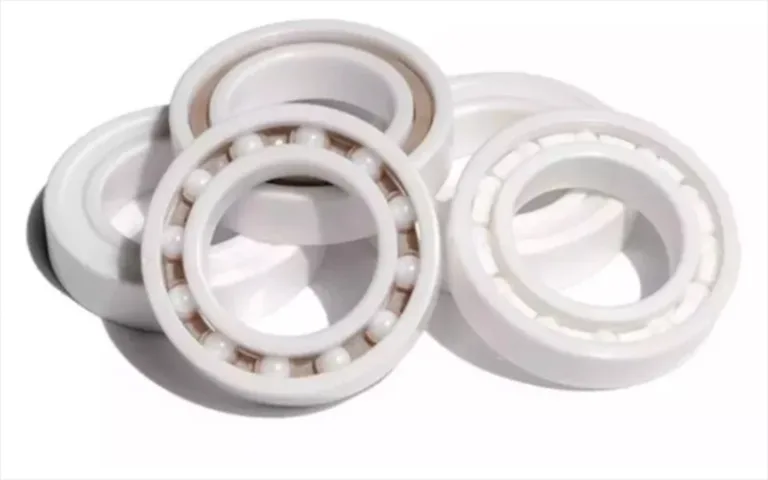
Among the established uses of silicon nitride, ceramic bearings represent one of the most mature and widely recognized application areas. Their development reflects the material’s ability to support high-speed rotation, precision movement, and demanding operating conditions.
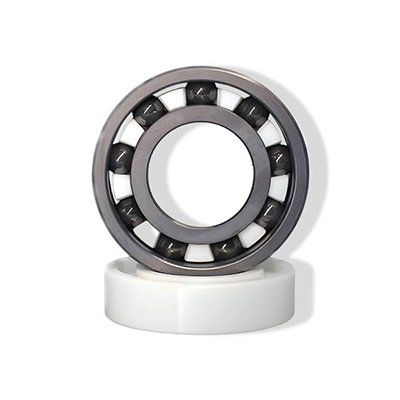
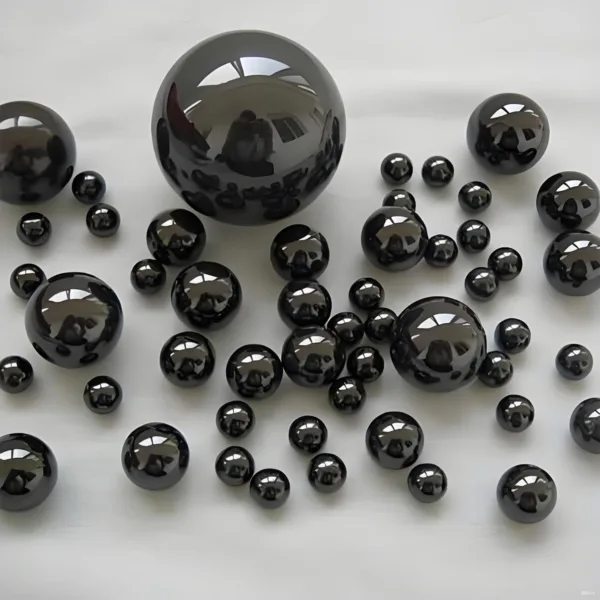
Compared with conventional steel bearing balls, silicon nitride ceramic balls have a lower density and high hardness. Consequently, they can reduce centrifugal loading in suitable high-speed bearing designs while offering excellent wear resistance.
Furthermore, silicon nitride provides electrical insulation, which can help reduce electrical current passage through bearing contacts in certain motor applications. This property makes ceramic bearing balls particularly relevant to electric motors and other equipment where electrical discharge damage may affect bearing life.
Where Are Silicon Nitride Bearings Used?
Machine Tool Spindles
High-speed precision spindles benefit from low-density ceramic rolling elements and stable rotational performance.
Electric Motors
Electrical insulation can help reduce the risk of electrical erosion in appropriately designed motor bearing systems.
Wind Power Equipment
Selected bearing applications can benefit from wear resistance and reliable operation under demanding mechanical conditions.
Industrial Machinery
Precision ceramic rolling elements support specialized equipment that requires high rotational accuracy and wear resistance.
Nevertheless, ceramic bearings require careful system-level design. Engineers must consider ball grade, roundness, surface finish, raceway material, lubrication, preload, operating temperature, and bearing geometry.
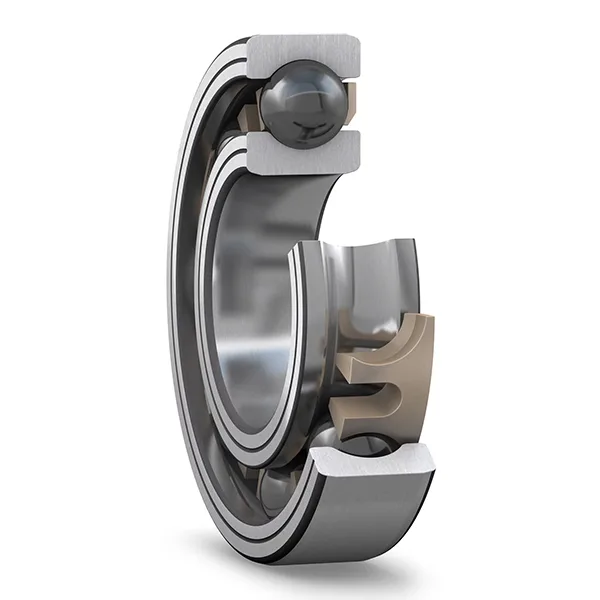
Ultimately, bearings represent an established application where material performance, precision manufacturing, and repeatable quality all influence commercial competitiveness.
2. Si3N4 AMB Substrates: An Important Growth Opportunity
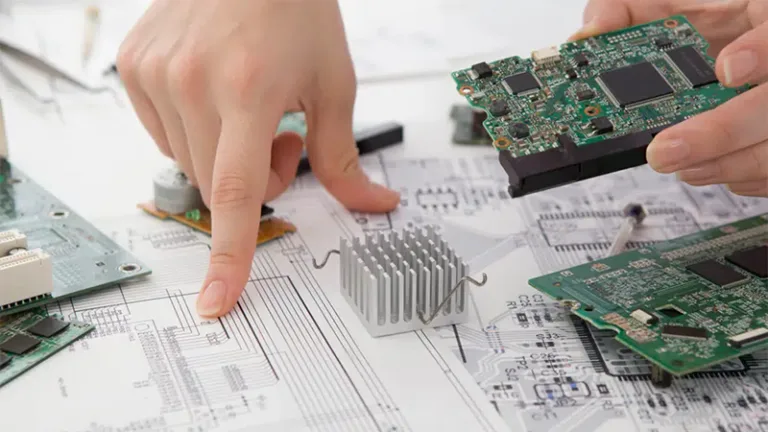
Beyond mechanical applications, silicon nitride is attracting attention in power electronics through active metal brazed (AMB) ceramic substrates. These substrates provide electrical insulation while supporting thermal management and mechanical reliability in demanding power modules.
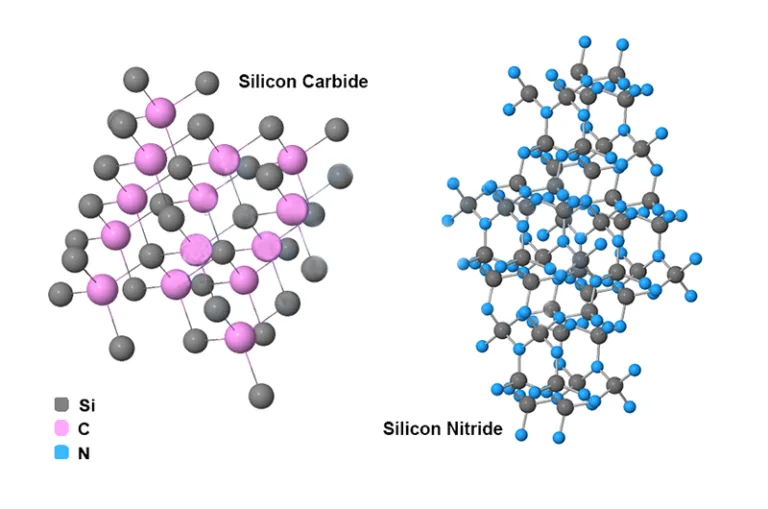
As electric vehicles, energy storage systems, wind power, and industrial drives adopt more advanced power conversion technologies, power modules must handle increasing electrical and thermal demands. In particular, the wider use of silicon carbide (SiC) power devices is driving interest in packaging materials that can support high power density and demanding thermal cycling.
In this context, silicon nitride offers an attractive combination of mechanical strength, fracture toughness, electrical insulation, and thermal cycling resistance. Therefore, Si3N4 AMB substrates have become an important material option for high-reliability power electronics.
The Power Electronics Growth Chain
EV and energy system development → Wider SiC power device adoption → More demanding power modules → Greater need for reliable ceramic substrates → New opportunities for Si3N4 AMB substrates
However, successful AMB production involves more than selecting a suitable ceramic material. Manufacturers must also control ceramic thickness, copper bonding quality, interface integrity, substrate warpage, dimensional accuracy, and thermal cycling reliability.
For this reason, AMB substrates represent a promising growth direction, although commercial success depends on process control, module-level qualification, production yield, and customer approval.
3. Semiconductor Equipment Components: High Technical Barriers and Strong Customer Qualification
In semiconductor manufacturing, precision ceramic components support wafer handling, thermal processing, equipment structures, and other demanding operations. Silicon nitride can serve selected applications where mechanical strength, thermal stability, wear resistance, and electrical properties match the equipment requirements.
Nevertheless, semiconductor applications demand much more than the ability to produce a ceramic part. Equipment manufacturers often require high material consistency, controlled contamination, low particle generation, precise dimensions, and stable performance throughout repeated operating cycles.
Moreover, component suppliers must understand the operating environment, including temperature, vacuum conditions, process gases, chemical exposure, contact surfaces, and assembly requirements. Even small variations in material quality or machining accuracy can affect equipment performance.
What Makes Semiconductor Ceramic Components Difficult to Manufacture?
- Material consistency: Stable composition, density, and microstructure help maintain predictable component performance.
- Contamination control: Material selection, machining, cleaning, and handling all influence particle and contamination risks.
- Precision machining: Tight dimensional tolerances and controlled surface conditions require specialized ceramic processing.
- Operating stability: Components must match the equipment’s thermal, mechanical, chemical, and vacuum requirements.
- Customer qualification: Equipment makers need repeatable quality and reliable documentation before approving a component for production use.
Once a component passes qualification and enters an equipment platform, the supplier may gain opportunities for recurring replacement orders and long-term cooperation. Consequently, semiconductor ceramics can offer strong customer retention, although qualification cycles and technical requirements create significant entry barriers.
In this market, manufacturing consistency and application engineering often matter as much as the material itself.
4. Aerospace and High-Temperature Structural Components: High-Value Applications
Beyond power electronics and precision machinery, silicon nitride also offers potential in aerospace systems, gas turbines, and other high-temperature applications. These environments place demanding requirements on strength retention, thermal stability, wear resistance, and component reliability.
Because silicon nitride combines relatively low density with high strength and useful thermal shock resistance, it can support selected structural and wear-resistant applications under demanding conditions.
However, aerospace and advanced high-temperature markets often require extensive material validation, strict traceability, and long qualification cycles. In addition, component volumes may remain relatively small compared with more established industrial applications.
Therefore, these markets tend to emphasize engineering value, reliability, and application-specific performance rather than high-volume material consumption alone.
5. Medical and High-Precision Devices: Specialized Opportunities
Meanwhile, medical equipment and high-precision devices provide another potential application area for advanced ceramics. Selected silicon nitride materials have attracted interest in specialized medical and precision engineering applications because of their mechanical properties and material characteristics.
In precision equipment, silicon nitride can support wear-resistant components, pump and valve parts, sealing elements, and other parts that require dimensional stability and reliable operation.
Medical applications require a different level of evaluation. Biocompatibility, sterilization compatibility, long-term performance, regulatory approval, and application-specific clinical evidence all matter before a material can be used in a medical device or implant.
Accordingly, medical and high-precision applications offer specialized opportunities, but engineers must verify the material grade and regulatory suitability for each intended use.
How Electrification Is Changing Silicon Nitride Applications
Historically, automotive silicon nitride applications included selected engine-related components, such as turbocharger and valve-related parts. However, the development of electric vehicles is changing the long-term demand structure for automotive materials.
As electric drivetrains gain adoption, ceramic bearing applications in electric motors become increasingly relevant. At the same time, SiC power devices and high-performance power modules create new opportunities for silicon nitride substrates.
| Traditional application direction | Emerging direction | Industrial driver |
|---|---|---|
| Engine-related ceramic components | EV motor ceramic bearings | Electric drivetrain development |
| Conventional automotive structural ceramics | Power electronics ceramic substrates | SiC power devices and high-power modules |
| General industrial wear components | Precision semiconductor ceramic parts | Advanced semiconductor equipment |
As a result, silicon nitride is moving from a material used mainly in selected mechanical and high-temperature components toward a broader role in electric mobility, power electronics, and semiconductor manufacturing.
From Selling Ceramic Materials to Delivering Application Performance
Across the silicon nitride supply chain, competitive advantage increasingly depends on more than powder availability or basic material properties. Instead, each stage contributes to the final component’s performance and reliability.
Upstream: Powder
Powder purity, particle size distribution, α/β phase composition, and sintering activity influence the material’s processing behavior.
Midstream: Manufacturing
Forming, sintering, hot isostatic pressing (HIP), and precision machining determine component density, structure, and dimensional accuracy.
Downstream: Components
Ceramic bearing balls, AMB substrates, and semiconductor components convert material performance into application-specific value.
As components move closer to end-use applications, material cost often becomes only one part of the total product value. Meanwhile, machining capability, process yield, qualification, quality assurance, and customer relationships become increasingly important.
For this reason, successful silicon nitride suppliers need to understand not only how to produce the ceramic, but also how the finished component performs inside the customer’s equipment.
Five Silicon Nitride Application Areas Compared
| Application | Main value | Key challenge | Market characteristic |
|---|---|---|---|
| Ceramic Bearings | Established demand and precision performance | Cost, grade, accuracy, and production yield | Mature application base |
| Si3N4 AMB Substrates | Power module reliability and thermal cycling performance | Bonding, warpage, and qualification | Important growth opportunity |
| Semiconductor Components | Precision, equipment reliability, and contamination control | Purity, particles, machining, and customer approval | High technical barriers |
| Aerospace and High-Temperature Parts | High-temperature and structural performance | Long qualification and reliability testing | Specialized, high-value applications |
| Medical and Precision Devices | Specialized material performance | Application validation and regulatory requirements | Niche opportunities |
This comparison is a qualitative application overview, not a quantified market-share or revenue ranking. Actual market size and growth depend on region, product type, customer qualification, and supply-chain conditions.
Three Supply Chains Worth Watching
Looking ahead, three connected supply chains illustrate how silicon nitride can create value across different industrial sectors.
1. High-Performance Bearing Supply Chain
Si3N4 powder → Ceramic balls → High-performance bearings → EV motors and wind power equipment
2. Power Electronics Supply Chain
High-performance Si3N4 → AMB substrates → SiC power modules → EVs and energy storage systems
3. Semiconductor Equipment Supply Chain
High-purity Si3N4 → Precision ceramic materials → Semiconductor equipment components → Semiconductor manufacturing systems
Together, these pathways show that silicon nitride is evolving from a specialized engineering ceramic into an important material option for several advanced manufacturing industries.
Frequently Asked Questions
1. Why are silicon nitride ceramics widely used in bearings?
Silicon nitride offers low density, high hardness, wear resistance, and electrical insulation. Consequently, ceramic bearing balls can support selected high-speed, precision, and electrically demanding applications.
2. Are silicon nitride ceramic bearings suitable for electric motors?
Yes, selected hybrid or full ceramic bearing designs can suit electric motor applications. In particular, the electrical insulation of silicon nitride rolling elements can help reduce current passage through bearing contacts. However, engineers must evaluate the complete bearing system, including raceways, lubrication, load, speed, and operating conditions.
3. Why is silicon nitride used in AMB substrates?
Silicon nitride combines electrical insulation with useful mechanical strength, fracture toughness, and thermal cycling resistance. Therefore, it is an important ceramic option for high-reliability power modules.
4. What makes semiconductor silicon nitride components difficult to manufacture?
Semiconductor components often require tight dimensional tolerances, controlled contamination, low particle generation, consistent material properties, and reliable performance. Additionally, equipment makers may require extensive supplier qualification.
5. Is silicon nitride suitable for high-temperature applications?
Yes, selected silicon nitride grades can support demanding high-temperature applications. Nevertheless, the maximum service temperature depends on material composition, atmosphere, mechanical loading, exposure time, and component design.
6. Can silicon nitride be used in medical devices?
Selected silicon nitride materials have been investigated or used in specialized medical applications. However, each intended use requires appropriate biocompatibility evidence, regulatory review, and application-specific validation.
7. What determines the quality of a custom silicon nitride ceramic component?
Material grade, powder characteristics, forming method, sintering conditions, machining accuracy, surface finish, and inspection standards all affect component quality. Furthermore, the manufacturer must understand the actual operating environment to select suitable specifications.
Conclusion: Bearings Lead Today, While New Applications Shape Tomorrow
Silicon nitride ceramic bearings remain one of the most established applications of Si3N4, supported by years of development in precision machinery and industrial equipment. Their combination of low density, wear resistance, and electrical insulation continues to make them relevant to high-speed machinery and selected electric motor designs.
At the same time, AMB substrates represent an important growth opportunity as power electronics evolve. Meanwhile, semiconductor components offer high technical barriers and potential long-term customer relationships, while aerospace, medical, and precision applications provide specialized opportunities for high-value ceramic parts.
Ultimately, the future of silicon nitride depends on the ability to turn material properties into reliable application performance. Manufacturers that combine stable raw materials, controlled processing, precision machining, and consistent quality will be better positioned to serve the next generation of advanced industrial equipment.