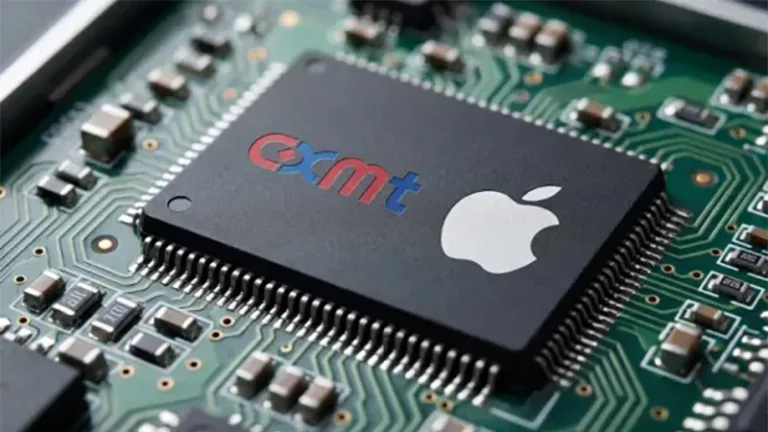
SEMICONDUCTOR INDUSTRY INSIGHTS | NOVEMBER 2026
SEMICON Europa 2026: Advanced Ceramics and Silicon Nitride in Semiconductor Manufacturing
Silicon Nitride Ceramic
Advanced Ceramics
SEMICON Europa 2026
As semiconductor manufacturing advances, precision ceramic components are becoming increasingly important in equipment design. Ahead of SEMICON Europa 2026, developments in silicon nitride, wafer handling components and advanced ceramic manufacturing highlight new opportunities for materials engineering.

1. Why Advanced Ceramics Matter to Semiconductor Manufacturing
Semiconductor manufacturing equipment must maintain precision and reliability under demanding operating conditions. Meanwhile, increasingly complex processes place greater requirements on thermal stability, mechanical strength, electrical insulation and material cleanliness.
Although metals and polymers remain essential engineering materials, they cannot satisfy every equipment requirement. Advanced technical ceramics provide alternative material solutions for selected applications involving elevated temperatures, mechanical wear, electrical isolation and chemically demanding environments.
For equipment manufacturers, material selection must consider more than individual material properties. Component geometry, surface quality, process chemistry, contamination limits and manufacturing consistency also influence final performance.
Against this background, SEMICON Europa 2026, scheduled for November 10–13 at Messe München, Germany, provides an important opportunity to examine emerging developments in semiconductor equipment and advanced materials.
2. SEMICON Europa 2026: Three Ceramic Industry Developments to Watch
Several companies have announced technologies and product portfolios relevant to semiconductor manufacturing ahead of the exhibition. Their announcements illustrate three important directions: high-performance ceramic materials, complex component design and application-specific manufacturing.
2.1 CeramTec: High-Performance Ceramics for Semiconductor Equipment
CeramTec has announced its participation in SEMICON Europa 2026 at Hall C2, Booth 335. Its semiconductor-related portfolio covers front-end manufacturing and metrology applications.
The announced material range includes silicon nitride (Si₃N₄), silicon-infiltrated silicon carbide (SiSiC), aluminum nitride (AlN) and aluminum oxide (Al₂O₃).
These materials serve different engineering functions:
- Silicon Nitride: High mechanical strength, fracture toughness and thermal-shock resistance for selected structural applications.
- Alumina: Electrical insulation, hardness and established industrial ceramic applications.
- Aluminum Nitride: High thermal conductivity combined with electrical insulation.
- Silicon Carbide: High hardness, stiffness and thermal performance for demanding equipment environments.
CeramTec has also highlighted additively manufactured ceramic components. This development demonstrates how advanced manufacturing technologies can expand the design possibilities of semiconductor equipment parts.
Industry implication: Semiconductor ceramic components increasingly require coordinated material engineering, precision manufacturing and application-specific validation.
2.2 Sinto Advanced Ceramics: Integrated Ceramic Components Through 3D Printing
Sinto Advanced Ceramics Europe, formerly Bosch Advanced Ceramics, has announced its participation at Hall C2, Booth C2458.
One of its published technical examples concerns a ceramic gas injector for semiconductor etching equipment. The original two-part design was redesigned as an integrated ceramic structure containing internal flow channels and 62 outlet openings.
The reported component uses 99.8% alumina. Its integrated geometry illustrates how ceramic additive manufacturing can simplify assembly and reduce potential leakage interfaces while enabling complex internal structures.
This case is particularly relevant to equipment designers because it demonstrates that component innovation involves more than selecting a high-performance material. Internal geometry, gas distribution, assembly design and manufacturing consistency are equally important.
Industry implication: Ceramic additive manufacturing provides new options for complex components that may be difficult or inefficient to produce through conventional forming and machining alone.
3. Where Are Ceramic Components Used in Semiconductor Equipment?
Semiconductor equipment incorporates ceramics in different subsystems. However, the appropriate material depends on the component function, process environment and required performance.
Wafer Handling
Wafer support pins, positioning fixtures, grippers and selected end-effector components require dimensional stability, controlled surface quality and reliable mechanical performance.
Plasma Processing
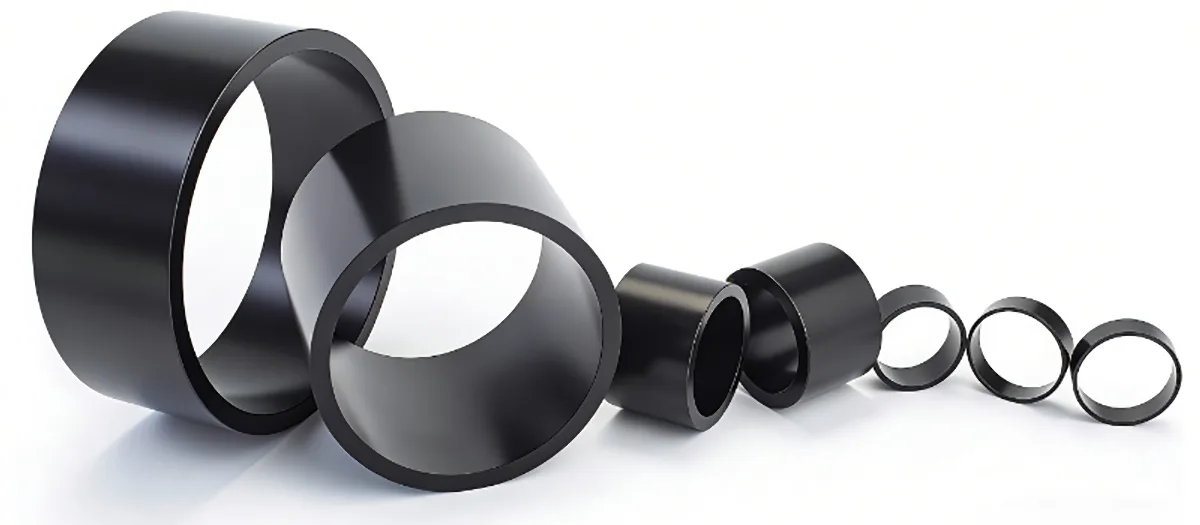
Chamber rings, insulators and protective components require evaluation of plasma chemistry, erosion behavior, material purity and contamination limits.
Thermal Processing
Furnace supports, spacers, protective tubes and thermal fixtures require suitable temperature stability and resistance to repeated thermal cycling.
Electrical Insulation
Ceramic insulating rings, positioning parts and electrical supports help separate conductive components while maintaining mechanical stability.
For example, alumina is widely considered for electrical insulation, while aluminum nitride is attractive where high thermal conductivity is required. Silicon carbide is relevant to selected high-temperature and wear-resistant applications. Silicon nitride offers a different combination of strength, toughness and thermal-shock resistance.
Importantly, optical and inspection windows require separate material evaluation. Sapphire and fused silica are established options for particular optical or process-window requirements. Silicon nitride should not be described as a universal transparent ceramic window material.
4. Silicon Nitride: A High-Performance Structural Ceramic
Silicon nitride (Si₃N₄) is a non-oxide engineering ceramic valued for its combination of mechanical strength, fracture toughness, low density and thermal-shock resistance.
Its properties make it a candidate for selected precision mechanical components and demanding industrial structures. The actual performance depends on powder characteristics, sintering additives, microstructure, manufacturing route and finishing quality.
- Mechanical Strength: Suitable grades can withstand substantial mechanical loads in properly designed components.
- Fracture Toughness: Silicon nitride offers comparatively high fracture toughness among engineering ceramics.
- Thermal Shock Resistance: Its relatively low thermal expansion helps reduce thermal stress under suitable operating conditions.
- Low Density: Its relatively low mass can benefit selected moving and rotating components.
- Electrical Insulation: Appropriate grades can provide electrical insulation, subject to verification of actual electrical specifications.
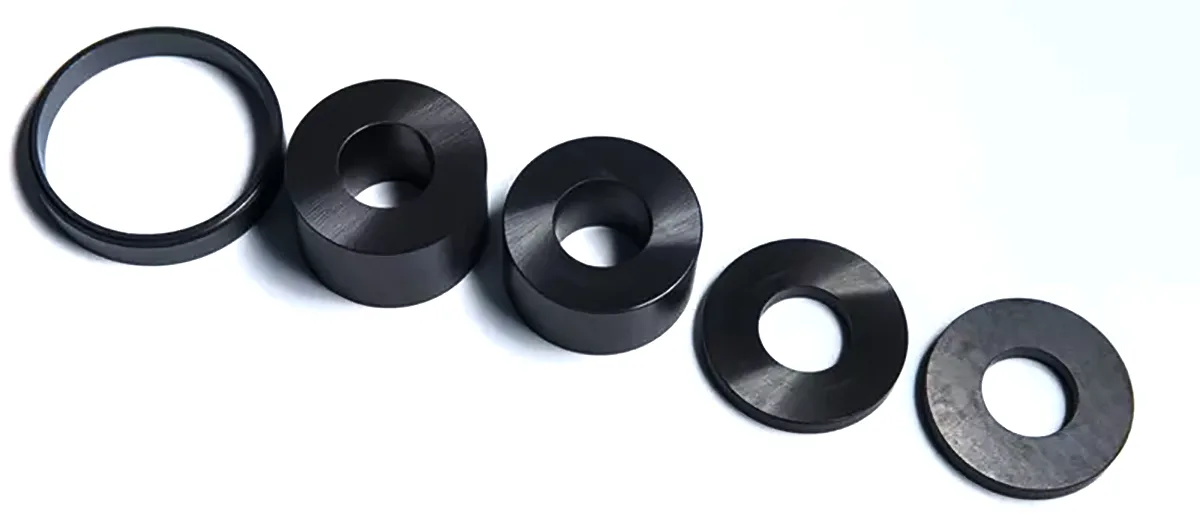
Potential component categories include precision rings, positioning pins, support structures, protective tubes and selected wear-resistant parts. Nevertheless, suitability for semiconductor process environments must be verified against temperature, chemistry, cleanliness and contamination requirements.
5. Structural Silicon Nitride Ceramics vs. Silicon Nitride Thin Films
The term silicon nitride appears in both equipment manufacturing and semiconductor wafer fabrication. However, bulk structural ceramics and deposited SiN thin films serve fundamentally different functions.
Bulk Si₃N₄ Ceramics
Solid engineering components produced through ceramic powder preparation, forming and sintering.
- Mechanical structural parts
- Wear-resistant components
- Precision supports
- Selected insulating parts
SiN Thin Films
Thin layers deposited onto wafers using semiconductor processes such as LPCVD or PECVD.
- Dielectric insulation
- Surface passivation
- Etch-stop layers
- Diffusion barriers and spacers
Consequently, Ceramic Injection Molding produces bulk ceramic components; it does not manufacture the silicon nitride thin films used in integrated circuit fabrication. This distinction is essential when evaluating suppliers and manufacturing technologies.
6. Precision Manufacturing and Ceramic Injection Molding
Advanced ceramic components require manufacturing processes that match their material properties and design requirements.
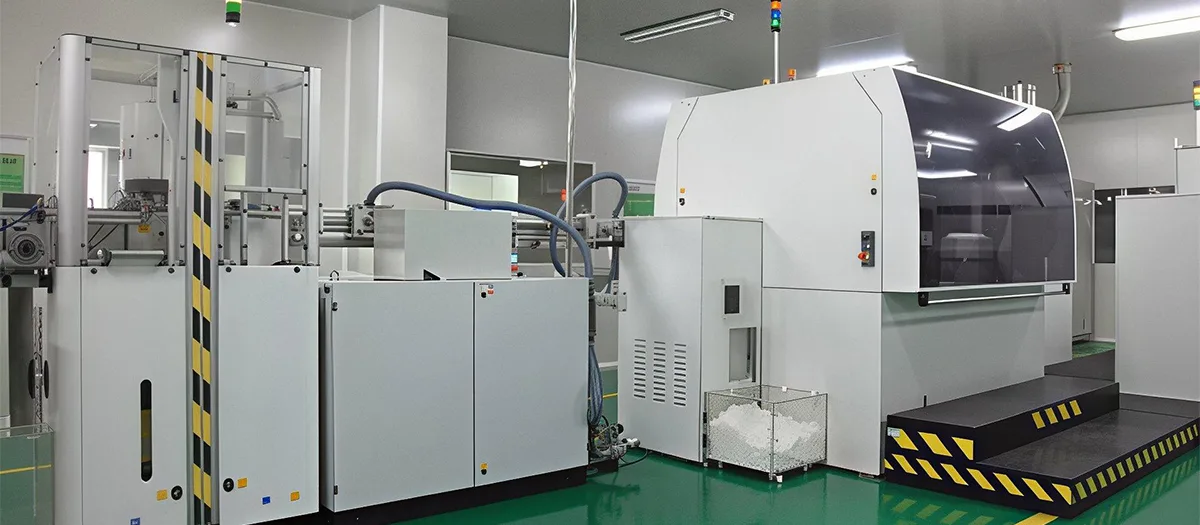
Ceramic Injection Molding (CIM) combines ceramic powder with a binder system to create an injectable feedstock. The material is then formed in a precision mold before debinding and sintering.
01
Powder & Feedstock Preparation
02
Injection Molding
03
Debinding
04
Sintering
05
Finishing & Inspection
CIM can be considered for complex geometries, integrated features and repeatable production. However, it is not automatically suitable for every ceramic component. Conventional pressing, isostatic pressing, extrusion and precision machining may be preferable depending on size, geometry, tolerance and order quantity.
For silicon nitride in particular, the forming and densification route must be selected according to the material formulation and final performance requirements.
7. AOFE MIMCustom: Custom Advanced Ceramic Components
AOFE MIMCustom provides custom advanced ceramic manufacturing solutions for industrial equipment and precision engineering applications.
Its published ceramic material portfolio includes silicon nitride (Si₃N₄), aluminum oxide (Al₂O₃), zirconia (ZrO₂) and silicon carbide (SiC). The company also provides Ceramic Injection Molding, mold development, secondary processing and custom component evaluation.
For semiconductor-related projects, the company’s published application categories include wafer support pins, handling grippers, positioning fixtures, precision rings, process tubes and electrical insulation components.
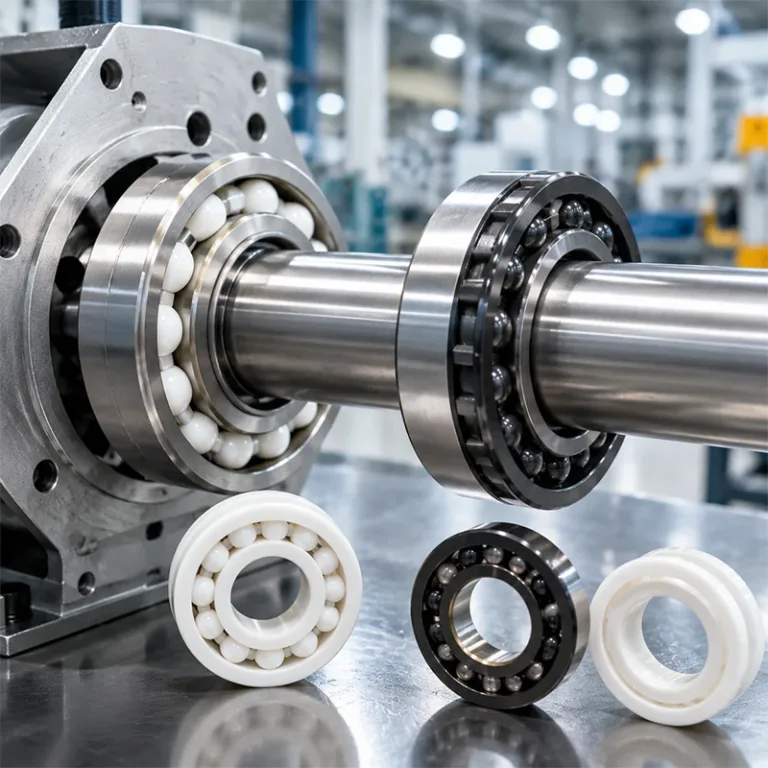
Its silicon nitride product range also includes insulating rings, positioning pins, protective tubes, nozzles and ceramic bearings. These product categories provide starting points for discussing customized component requirements.
Each project should undergo a technical review covering material grade, component geometry, operating environment, manufacturing route, dimensional requirements and inspection criteria. In particular, semiconductor process compatibility and cleanliness requirements must be confirmed before production approval.
Explore AOFE MIMCustom Ceramic Injection Molding Services and Silicon Nitride Ceramic Components.
8. What Semiconductor Equipment Buyers Should Evaluate
Before selecting a ceramic component supplier, engineering and purchasing teams should evaluate more than the material name or catalog description.
- Material Specification: Confirm the ceramic grade, composition and relevant material test data.
- Process Compatibility: Review temperature, plasma exposure, gases, chemicals, vacuum and contamination limits.
- Dimensional Control: Specify critical dimensions, flatness, parallelism and geometric tolerances.
- Surface Quality: Define roughness, polishing, cleanliness and contact-surface requirements.
- Manufacturing Capability: Confirm forming, sintering, finishing and inspection processes for the specific component.
- Quality Documentation: Agree on inspection reports, material traceability and acceptance criteria.
A clear engineering specification helps reduce material-selection risks and supports a more efficient supplier evaluation process.
9. Looking Ahead: Ceramic Innovation in Semiconductor Manufacturing
SEMICON Europa 2026 provides a timely opportunity to examine developments in advanced materials and semiconductor equipment manufacturing.
Three areas deserve particular attention:
- Advanced Material Engineering: More application-specific evaluation of silicon nitride, alumina, silicon carbide and aluminum nitride.
- Innovative Component Manufacturing: Greater interest in ceramic additive manufacturing, complex geometries and integrated structures.
- Precision and Quality Control: Increasing attention to dimensional consistency, material purity, cleanliness and component reliability.
For ceramic manufacturers, the opportunity lies in connecting material expertise with practical component design and reliable manufacturing processes.
Conclusion: Advanced Ceramics Support the Next Generation of Semiconductor Equipment
Advanced ceramics provide valuable material options for semiconductor manufacturing equipment, particularly where mechanical performance, electrical insulation, thermal stability and process compatibility are important.
Developments announced ahead of SEMICON Europa 2026 demonstrate the continued evolution of ceramic materials and manufacturing technologies. Silicon nitride deserves particular attention for selected precision structural applications, while alumina, silicon carbide and aluminum nitride serve complementary engineering functions.
AOFE MIMCustom supports custom advanced ceramic component development through material selection discussions, Ceramic Injection Molding and related manufacturing services.
Have a semiconductor equipment ceramic component to develop? Share your engineering drawings and application requirements with AOFE MIMCustom.
Request a Custom Ceramic Component Consultation
Send your 2D drawings, 3D models, material specifications and estimated quantities for an initial manufacturing feasibility discussion.
AOFE MIMCustom | Advanced Technical Ceramics | Custom CIM Manufacturing