Industry News • Semiconductor Materials • Advanced Ceramics
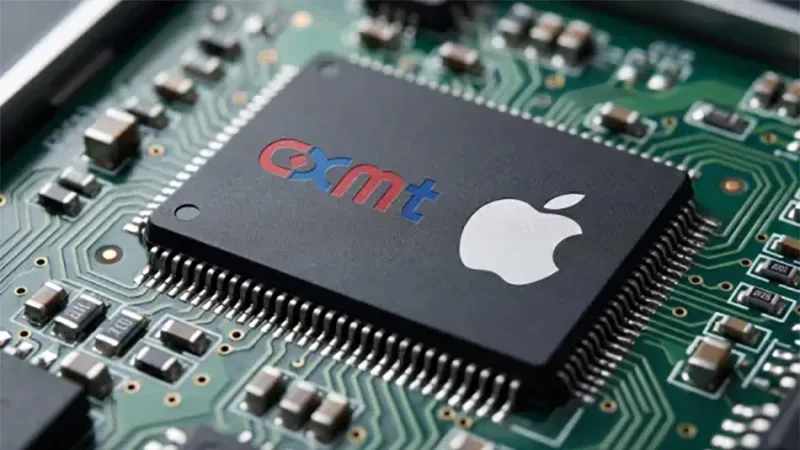
The confidence behind CXMT’s willingness to turn down Apple
Key Takeaways
- Initially, Wccftech reported on October 25 that CXMT had not reached a DDR5 supply agreement with overseas server makers and had politely declined Apple’s memory inquiry.
- Furthermore, Yole analyst Huang Maoyuan noted that nearly 90% of CXMT’s current output already serves Huawei, Xiaomi, and Lenovo, leaving minimal room for additional global customers.
- Meanwhile, TrendForce estimates monthly capacity at roughly 320,000 wafers today, climbing toward 420,000 in 2027 and possibly 500,000 by 2028 as new fabs ramp.
- Specifically, advanced ceramic parts-especially electrostatic chucks and aluminum nitride heaters-now act as hidden bottlenecks that limit tool uptime and slow qualification cycles.
- Ultimately, CXMT’s choice reflects strategic prioritization of domestic ecosystem security over short-term revenue from a single marquee client.
A Polite Refusal That Reveals Deeper Constraints
Initially, industry observers interpreted CXMT’s rejection of Apple as mere negotiation posture, yet subsequent reporting suggests otherwise. According to Wccftech on October 25, the company has also failed to secure DDR5 supply deals with major overseas server manufacturers, indicating that available capacity simply cannot accommodate another tier-one design win without disrupting existing commitments. Consequently, this refusal signals operational saturation rather than commercial disinterest.
Additionally, financial disclosures reinforce this reading. CXMT’s prospectus projects first-half 2026 revenue between RMB 110 billion and RMB 120 billion alongside net profit of RMB 50-57 billion, figures that reflect full utilization of current lines. Therefore, accepting Apple would require either diverting wafers from entrenched domestic partners or accelerating capex beyond prudent engineering limits.

Domestic Demand Absorbs Nearly All Output
Furthermore, Yole analyst Huang Maoyuan stated publicly that close to ninety percent of CXMT’s present production capacity supplies Chinese smartphone and PC brands, notably Huawei, Xiaomi, and Lenovo. These customers depend on stable DRAM flows for flagship devices and national technology initiatives, making reallocation politically and commercially sensitive. As a result, CXMT faces strong institutional incentives to honor domestic allocations first.
Moreover, TrendForce data shows monthly wafer starts at approximately 320,000 units currently, with plans to reach 420,000 in 2027 and potentially 500,000 by 2028. Even with this expansion, each incremental 50,000-60,000 wafer-per-month block demands equipment procurement worth RMB 35-43 billion, implying multi-year lead times for installation and qualification. Hence, near-term flexibility remains structurally limited.
Ceramic Components: The Hidden Bottleneck Beneath Capacity Numbers
Notably, headline wafer-start figures obscure a deeper constraint residing inside process tools themselves. Specifically, advanced ceramic components such as electrostatic chucks (ESCs) and aluminum nitride (AlN) heaters directly determine equipment availability, particle performance, and thermal uniformity during etch and deposition steps. When these parts degrade or fail validation, entire tool clusters sit idle regardless of nominal line capacity.
In particular, ESCs must deliver consistent clamping force across 300mm wafers while maintaining surface flatness within microns and resisting plasma erosion over thousands of cycles. Simultaneously, AlN heaters require thermal conductivity of 170–200 W/(m·K), temperature uniformity better than ±0.5°C, and ultra-low metallic impurity levels to avoid contaminating sensitive DRAM structures. Because both attributes depend on powder purity, sintering density, and precision machining, only a handful of global suppliers can meet specification consistently.
| Ceramic Component | Key Performance Requirement | Dominant Suppliers | Domestic Maturity |
|---|---|---|---|
| Electrostatic Chuck (ESC) | Wafer clamping stability, µm-level flatness, plasma resistance | AMAT, Lam Research, Shinko, TOTO, MiCo | Limited; mostly R&D stage |
| AlN Heater | 170-200 W/(m·K), ±0.5°C uniformity, low metal contamination | NGK, NTK, Sumitomo | <10% localization rate |
| High-Purity Alumina Parts | 25-30 W/(m·K), chemical inertness, dimensional stability | Kyocera, CoorsTek | ~60-70% of high-end supply concentrated abroad |
| Quartz / SiC Focus Rings | Etch selectivity, edge profile control, lifetime consistency | Tokai Carbon, Ferrotec | Improving but verification ongoing |
Why Verification Timelines Matter More Than Headline Capex
Behind every announced fab expansion lies a parallel timeline for qualifying replacement ceramic consumables. Typically, full verification of ESCs or AlN heaters in leading-edge DRAM nodes spans two to three years, encompassing material characterization, bench testing, tool integration, marathon runs, and final yield sign-off. During this period, even if wafers start processing, output may remain non-shippable until ceramic-related defect signatures stabilize.
Consequently, annual replacement spending on ceramic parts often reaches 5-10% of total equipment value, creating recurring dependency on qualified vendors. Since domestic alternatives still cover less than ten percent of high-performance AlN heater demand and face similar gaps in ESC supply, CXMT cannot accelerate line ramps merely by ordering more tools. Instead, it must wait for ceramic ecosystems to mature alongside silicon processing capabilities.
Strategic Implications for Global Memory Buyers
Therefore, Apple’s unsuccessful approach reveals structural realities extending beyond one supplier relationship. First, China’s DRAM self-sufficiency strategy prioritizes ecosystem resilience over individual customer wins, ensuring that domestic device makers retain guaranteed access during geopolitical uncertainty. Second, ceramic component maturity now functions as a de facto pacing item for capacity deployment, meaning that future expansions will proceed at the speed of materials qualification rather than equipment delivery alone.
Third, global memory buyers should recalibrate expectations around secondary sourcing from Chinese fabs. While CXMT possesses technical capability to produce competitive DDR5, its operational bandwidth remains committed to national champions for the foreseeable future. Finally, investors and analysts ought to monitor ceramic supplier certifications and localization rates as leading indicators of true scalable capacity, since headline wafer-start numbers increasingly mask underlying materials constraints.
Conclusion: Confidence Rooted in Ecosystem Priority
Ultimately, CXMT’s willingness to decline Apple stems not from arrogance but from calculated alignment with national industrial priorities and realistic assessment of physical bottlenecks. Its confidence derives from secured domestic demand, government-backed expansion roadmaps, and growing recognition that sustainable scale requires mastering ceramics as thoroughly as silicon. Until electrostatic chucks and AlN heaters achieve broader domestic qualification, even well-capitalized fabs will face invisible ceilings that no amount of capital expenditure can instantly remove.
❓ Frequently Asked Questions
Why did CXMT decline Apple’s memory inquiry?
CXMT declined Apple because domestic customers such as Huawei, Xiaomi, and Lenovo already absorb nearly 90% of its current output, leaving little spare capacity for new overseas consumer programs.
What share of CXMT’s capacity serves domestic brands?
According to Yole analyst Huang Maoyuan, close to 90% of CXMT’s present production capacity supplies Chinese smartphone and PC makers including Huawei, Xiaomi, and Lenovo.
How large is CXMT’s current and planned wafer capacity?
TrendForce estimates CXMT’s monthly capacity at about 320,000 wafers now, rising toward 420,000 in 2027 and potentially reaching 500,000 by 2028 as new lines come online.
Which ceramic components most constrain DRAM tool uptime?
Electrostatic chucks and aluminum nitride heaters are the most critical ceramic consumables; they directly affect wafer clamping stability, temperature uniformity, particle generation, and overall equipment availability in etch and deposition tools.
How long does ceramic component verification typically take in DRAM fabs?
Full qualification of high-purity ceramic parts in leading DRAM processes usually requires two to three years of testing, reliability validation, and yield correlation before volume adoption.
Related topics: DRAM Expansion • Electrostatic Chuck • Aluminum Nitride Heater • Semiconductor Ceramics • Wafer Fab Equipment • Memory Supply Chain • China Semiconductor Self-Sufficiency