
Advanced Ceramics | Materials Science
Why Do Silicon Nitride (Si₃N₄) Ceramics Come in Green, Red, White, Yellow, Gray, and Transparent Varieties?
At first glance, silicon nitride seems to be a simple gray engineering ceramic; however, powder chemistry, sintering conditions, secondary phases, rare-earth additives, porosity, and crystal structure can create a much wider range of appearances. This guide explains which colors manufacturers commonly encounter, which shades researchers have engineered, and why color alone cannot confirm a component’s quality or suitability.
The quick answer: why does Si₃N₄ change color?
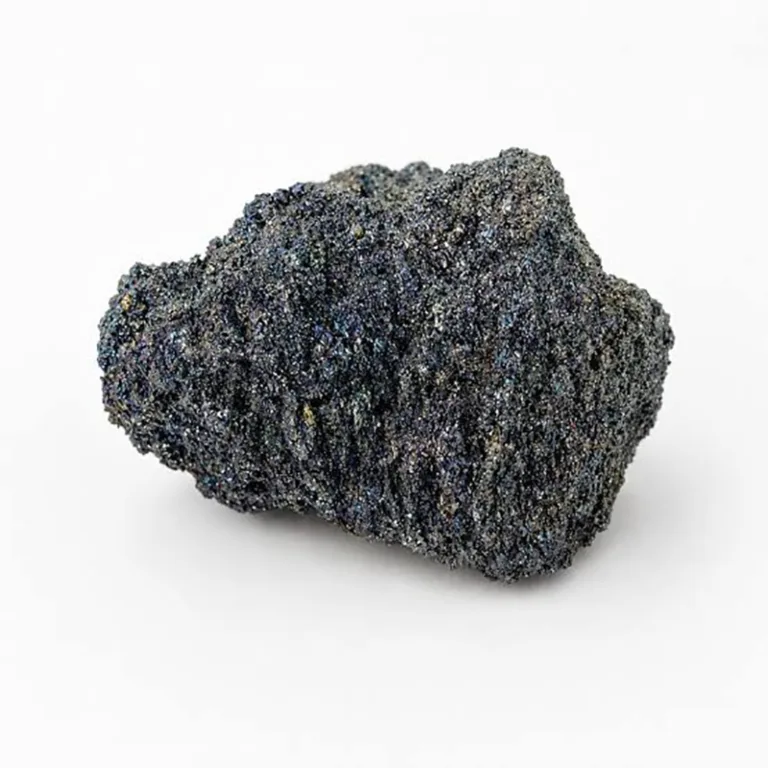
In ordinary engineering production, dense silicon nitride ceramics usually appear gray or dark gray, although composition and manufacturing route can produce lighter or darker shades. Meanwhile, carefully designed formulations can develop white, yellow, or yellow-green appearances, and specific reaction products may produce brown or red-brown surface or bulk coloration. Under exceptional research conditions, a cubic form of silicon nitride has even demonstrated optical transparency.
Importantly, these appearances do not represent six standard colors available in every commercial grade. Instead, they describe different material states, additives, phases, and processing outcomes; therefore, a buyer should confirm the exact grade, microstructure, and test data instead of specifying color as a substitute for material properties.
Gray / dark gray
Common in technical grades; often linked to impurities, silicon-rich inclusions, and sintering conditions.
White / light gray
Possible when strong color centers are absent; opacity can remain because pores and grain boundaries scatter light.
Yellow / yellow-green
Reported in engineered compositions using selected secondary phases or rare-earth oxide colorants.
Red-brown
May arise from specific nitride/carbide reaction products; it is not a universal color of red-doped Si₃N₄.
Transparent
A specialized, research-demonstrated cubic Si₃N₄ form-not the usual appearance of conventional bearing or structural ceramics.
1. Silicon nitride ceramic: structure and key material characteristics
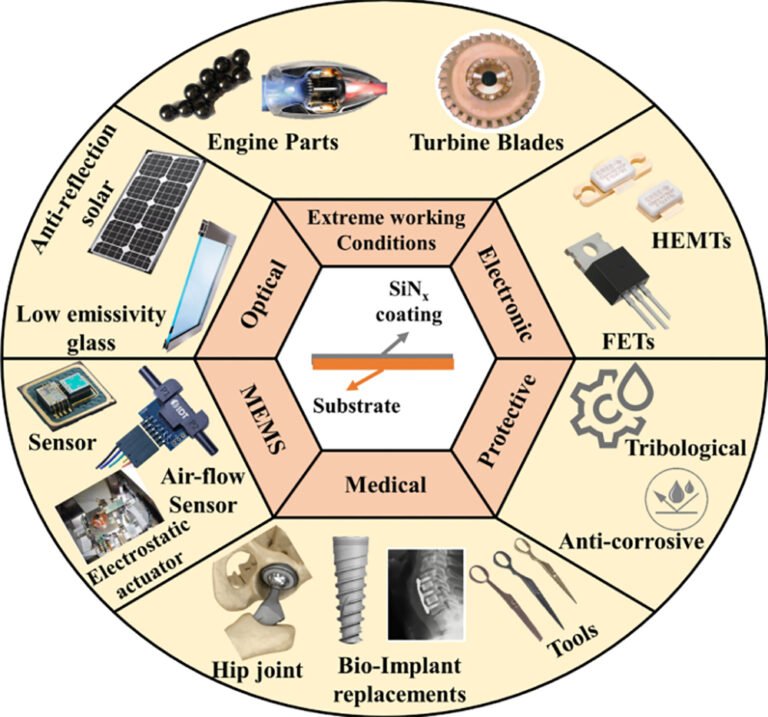
Silicon nitride, with the chemical formula Si₃N₄, is a covalent ceramic that engineers value for high strength, hardness, wear resistance, good thermal-shock resistance, and relatively low thermal expansion. In addition, its low density compared with steel helps reduce centrifugal loads in rolling components, while its chemical stability supports use in demanding industrial environments.
At ambient pressure, the two common crystalline polymorphs are α-Si₃N₄ and β-Si₃N₄, both of which have hexagonal structures in which silicon atoms coordinate with nitrogen in SiN₄ tetrahedra. During conventional sintering, α-rich starting powder often transforms partly or largely into β-Si₃N₄; consequently, the elongated β-grains can form a reinforcing microstructure that helps deflect cracks and improve fracture resistance. By contrast, cubic γ-Si₃N₄, also described as cubic silicon nitride, requires very high-pressure synthesis and differs structurally from the usual engineering grades.
Although ideal Si₃N₄ has a wide band gap and does not inherently need to absorb visible light, actual ceramics contain grain boundaries, sintering-aid-derived phases, trace impurities, defects, and sometimes residual pores. As a result, the appearance of a finished component reflects the complete processing history rather than the formula alone.
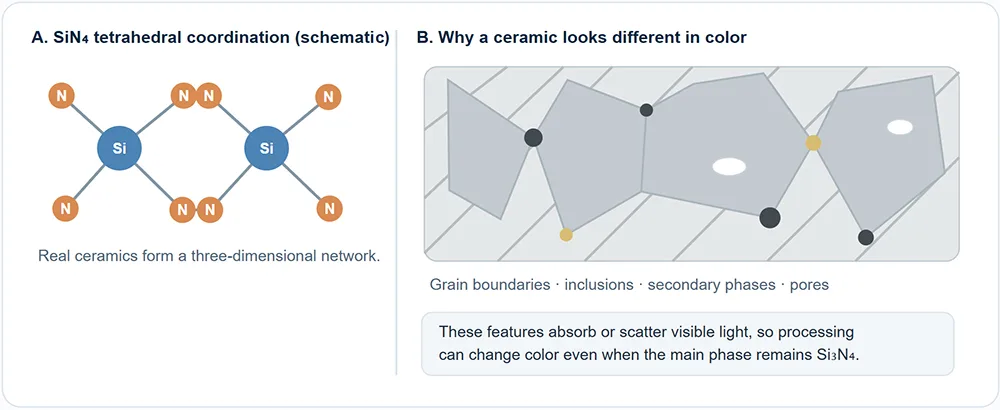
For this reason, engineers should distinguish intrinsic electronic properties from the optical response of a real sintered body. Specifically, a color change may indicate altered impurity chemistry or processing, yet it does not automatically prove that the part has gained or lost strength.
2. What do green, red, white, yellow, gray, and transparent Si₃N₄ actually mean?
2.1 Gray and dark gray: the most familiar industrial appearance
Across commercial structural grades, gray or dark gray remains a common appearance for dense silicon nitride. In particular, studies of gas-pressure-sintered Si₃N₄ connect gray coloration with the composition and distribution of color centers, including silicon-rich inclusions and silicide-forming impurities; meanwhile, sintering temperature, nitrogen pressure, holding time, and surface-layer chemistry can alter the shade.
Moreover, trace transition-metal-related impurities may contribute to darker coloration when they form silicides or other absorbing phases. However, color cannot identify the exact impurity by sight, so manufacturers need chemical analysis and process records to distinguish harmless visual variation from contamination that could affect reliability.
2.2 White, cream, or light gray: low absorption does not mean transparency
When strong visible-light-absorbing color centers are absent, silicon nitride ceramics may look white or pale rather than gray. Nevertheless, ordinary polycrystalline Si₃N₄ usually remains opaque because pores, differently composed grain-boundary phases, and optical anisotropy scatter visible light before it can pass directly through the component.
In practical manufacturing, lighter color may accompany changes in porosity, additive chemistry, grain-boundary glass, or surface finish. Therefore, engineers should not assume that a white part contains higher-purity Si₃N₄ or has better electrical insulation, fracture toughness, or wear performance until tests confirm those properties.
2.3 Yellow and golden: reaction products or deliberately designed colorants
Yellow or golden coloration can emerge when the sintering chemistry creates a colored secondary phase. For example, published work on gas-pressure-sintered silicon nitride reports that titanium-containing additions may form TiN, with appearance shifting from dark to brown or golden as the concentration and phase distribution change; under strongly reducing conditions, certain zirconium nitride-carbide products may also create yellow tones.
Beyond these reaction products, researchers have explored rare-earth oxide additions to develop colored Si₃N₄. In such formulations, the optical response can reflect rare-earth ion transitions and the chemistry of phases formed during sintering, rather than a simple one-to-one replacement of silicon atoms in the Si₃N₄ lattice.
2.4 Green and yellow-green: possible in engineered compositions, not a standard stock grade
Recently reported research has demonstrated yellow-green silicon nitride ceramics using a suitable sintering-additive system and europium oxide, while dysprosium oxide helped tune the brightness of the resulting material. Consequently, green-leaning shades are scientifically plausible in specially formulated ceramic systems, although the exact hue depends on additive content, phase formation, firing atmosphere, and thermal history.
At the same time, it would be inaccurate to claim that copper ions routinely replace silicon atoms in the Si₃N₄ crystal and reliably turn any ceramic green. Dense silicon nitride is strongly covalent, and added elements may segregate into grain boundaries or secondary phases instead of occupying a simple substitutional site; therefore, a credible color-development program must confirm phase chemistry and chromaticity experimentally.
2.5 Red and red-brown: distinguish bulk coloration from surface reaction layers
Red or red-brown tones need especially careful interpretation because they do not represent a routine commercial color family for structural silicon nitride. Research on strongly reducing sintering conditions describes red-brown titanium carbonitride or hafnium carbonitride-related products under specific chemical conditions, and these phases may influence a surface region or the bulk depending on the process.
In contrast, a red coating, plated layer, glaze-like film, or decorative surface treatment can change the appearance without changing the color of the underlying Si₃N₄ body. Accordingly, technical specifications should state whether the required color extends through the bulk material or applies only to a coating, because the two constructions differ in abrasion resistance, thermal cycling, chemical durability, and repair options.
2.6 Black: strong absorption or dark-forming phases
Although the title highlights six appearances, black and near-black grades also deserve mention because they sit at the darker end of the industrial Si₃N₄ color range. For instance, more abundant silicon-rich inclusions or particular metallic and silicide-related impurities can increase visible-light absorption; in addition, low porosity can make a dark body appear more uniform by reducing the whitening effect of light scattering.
Even so, “black” is a visual description rather than a compositional specification. Thus, procurement teams should request the manufacturer’s grade code, impurity limits, microstructure criteria, and application-specific strength or electrical data rather than relying on a color name alone.
2.7 Transparent: an exceptional cubic phase, not ordinary bearing ceramic
Transparent polycrystalline cubic silicon nitride has been reported in scientific research, demonstrating that a carefully controlled cubic phase can transmit visible light when optical scattering remains sufficiently low. However, this material differs significantly from the conventional α/β-based hexagonal Si₃N₄ used for bearings, cutting tools, engine components, and industrial seals.
Specifically, cubic γ-Si₃N₄ forms under very high pressure, reported in the region above roughly 13 GPa, and its spinel-like structure gives it a different atomic packing arrangement. Furthermore, a transparent ceramic must minimize pores and optically mismatched grain-boundary pockets; otherwise, light scattering can eliminate transparency even when the base compound has a wide band gap.
Therefore, transparent cubic Si₃N₄ should be described as a specialized research material with potential optical-window applications under severe conditions, not as proof that an ordinary sintered silicon nitride bearing ball can be clear like glass. In addition, claims about mass production, component size, optical transmission, or commercial availability require direct manufacturer data.
3. Four mechanisms that control the color of silicon nitride ceramics
Mechanism A: impurities and color centers
First, trace elements can form absorbing inclusions, silicides, nitrides, or carbides, depending on the starting powder and the chemical environment inside the furnace. For example, studies have associated some gray coloration with silicon precipitates on scales from nanometers to micrometers; meanwhile, transition-metal-related phases may darken the ceramic or shift its tone toward brown or gold.
Importantly, the result depends on chemical state and phase location rather than total elemental concentration alone. Thus, energy-dispersive X-ray spectroscopy can help map where elements reside, while X-ray diffraction or electron microscopy can identify crystalline reaction products when concentrations and detection limits permit.
Mechanism B: sintering additives and rare-earth oxides
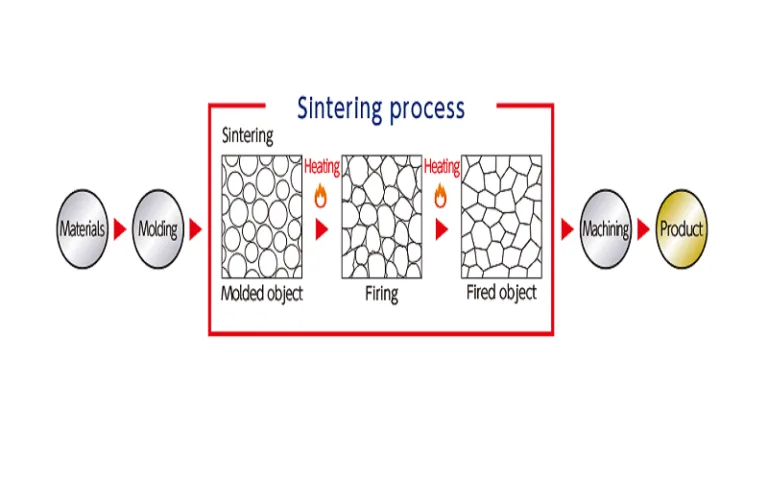
Second, manufacturers often add oxides such as yttria and alumina to promote densification because strongly covalent Si₃N₄ is difficult to densify by ordinary solid-state sintering. Those additives can form a transient liquid during firing and later remain in grain-boundary phases, so changes made for densification can also influence optical absorption, scattering, and color.
Similarly, research has used rare-earth oxides such as neodymium oxide, europium oxide, and dysprosium oxide in conjunction with a carefully selected sintering-additive system to create colored samples. Nevertheless, the final hue depends on the chemistry of the phases that actually form after firing, and formulators must balance the optical objective against flexural strength, fracture toughness, thermal conductivity, oxidation resistance, and long-term stability.
Mechanism C: atmosphere, temperature, pressure, and holding time
Third, high-temperature processing controls the reactions that generate color centers or secondary phases. During gas-pressure sintering, for example, nitrogen pressure, firing temperature, and holding time can affect the amount and distribution of silicon-rich inclusions; moreover, the furnace’s reducing conditions can change which nitrides, silicides, or carbon-containing phases are thermodynamically favored.
As a result, the same nominal powder recipe can yield different shades when a production line changes furnace loading, temperature uniformity, atmosphere purity, or dwell time. For this reason, a repeatable color specification requires a validated firing window rather than simply adding a fixed percentage of a colorant.
Mechanism D: porosity, grain boundaries, polishing, and coatings
Fourth, microstructure affects how light travels through a ceramic. In general, pores and grain-boundary phases with different refractive indices scatter light, so increasing scattering often makes the body appear paler or less saturated; meanwhile, polishing changes surface reflection and can make the same bulk material look darker, lighter, or more uniform depending on roughness and lighting.
Likewise, a coating or thin reaction layer may dominate what an observer sees without representing the composition of the entire part. Consequently, color specifications should record the measurement surface, polishing condition, component thickness, lighting, and whether the target applies to the bulk or only to the surface.
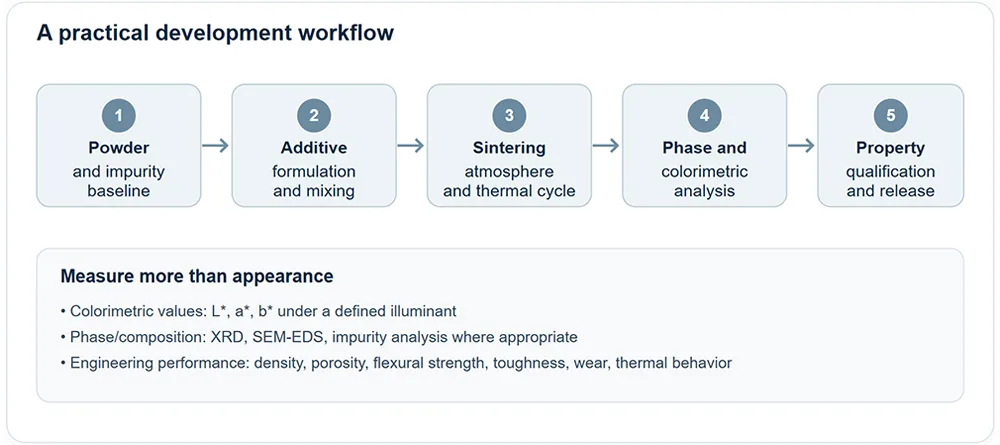
4. How manufacturers develop and control colored Si₃N₄
To begin, engineers should define the required shade as a measurable target rather than relying on words such as “green,” “bright gray,” or “pure white.” A spectrophotometer can record CIE L*a*b* coordinates, where L* describes lightness, a* represents the red–green axis, and b* represents the yellow–blue axis; consequently, teams can compare samples against a reference tile or approved production part.
Next, the development team should establish a controlled baseline for powder purity, oxygen content, particle-size distribution, and existing trace impurities. Because these inputs influence sintering behavior and the formation of color centers, suppliers should retain powder-lot traceability and avoid changing feedstock sources without a qualification plan.
Afterward, formulators can screen additive systems using small test batches. In particular, yttria–alumina-based sintering systems and selected rare-earth oxide colorants may offer a route to colored samples, but every combination requires experimental validation because high-temperature reactions can change oxidation states, form secondary phases, and affect grain-boundary chemistry.
During sintering trials, operators should record peak temperature, dwell time, nitrogen pressure, gas purity, furnace loading, and cooling conditions. Additionally, consistent sample location and furnace fixtures matter because the local atmosphere and temperature can vary across the hot zone, creating surface-to-core differences in coloration.
Once the process produces a stable shade, laboratories should examine phase composition and microstructure. For example, X-ray diffraction can identify sufficiently abundant crystalline phases, while SEM-EDS can reveal elemental distribution near grains and boundaries; nevertheless, neither method alone can fully explain every optical absorption mechanism, particularly when inclusions occur at very low concentrations or at nanometer scale.
Finally, manufacturers should test engineering properties on the same formulation and a representative processing lot. Depending on the end use, this qualification may include density, open porosity, flexural strength, fracture toughness, hardness, wear behavior, thermal-shock resistance, electrical properties, and oxidation performance; therefore, a cosmetic color change should never bypass the normal material approval process.
Why the “ion-exchange” explanation needs care
Unlike many glass or low-temperature ceramic systems, dense silicon nitride does not typically rely on a simple post-firing ion-exchange treatment to create bulk color. Rather, engineers more commonly introduce selected elements through powder blending or coating, followed by high-temperature reactions that form color-producing phases or alter grain-boundary chemistry. In comparison, a deposited surface film may color the outside without changing the bulk, so the intended mechanism must be stated accurately in process documents.
5. Does ceramic color affect industrial performance?
In some cases, color and performance share a common cause, such as a secondary phase or impurity that changes both optical absorption and mechanical behavior. For example, an additive may improve densification yet also alter grain-boundary chemistry; similarly, reducing conditions that darken a ceramic may produce inclusions or reactions that warrant closer inspection.
However, color often functions only as an indirect process indicator rather than a property in itself. A dark gray bearing ball is not automatically stronger than a white sample, and a green component is not automatically more corrosion-resistant than a gray one; instead, performance depends on phase composition, density, defects, grain shape, surface finish, and the actual operating environment.
For precision bearing balls, customers should prioritize roundness, diameter variation, surface roughness, internal defects, and rolling-contact fatigue. Meanwhile, high-temperature fixtures require thermal-shock resistance, oxidation behavior, and dimensional stability, whereas electronic components may need specified insulation resistance, dielectric strength, and thermal conductivity.
When a colored appearance is commercially important, the buyer should put both requirements in the drawing or material specification. Specifically, the document can define the allowable L*a*b* range, visual inspection conditions, surface finish, acceptable color variation across a batch, and whether color differences are permissible on nonfunctional faces; additionally, it should keep mechanical and chemical acceptance criteria separate.
| Observed appearance | Plausible contributors | What to verify |
|---|---|---|
| Gray / dark gray | Silicon-rich inclusions, impurities, silicide-related phases, sintering atmosphere | Powder chemistry, firing records, phase and microstructure data |
| White / light | Low concentration of color centers, scattering from pores or grain boundaries | Density, porosity, mechanical data; do not infer purity from color alone |
| Yellow / gold | Selected reaction products, including some Ti- or Zr-containing phases | Additive identity, atmosphere, phase analysis |
| Green / yellow-green | Engineered rare-earth-containing formulations and secondary phases | Reproducible colorimetry and performance qualification |
| Red-brown | Specific nitride/carbide reaction phases or surface layers | Bulk-versus-coating identification, phase stability, wear resistance |
| Transparent / translucent | Special cubic phase, minimal optical scattering, very low porosity | Crystal phase, spectral transmittance, sample thickness, defect population |
Ultimately, successful product development requires the color target and functional target to pass together. Accordingly, engineers should evaluate a finished component using the methods relevant to its service conditions rather than treating appearance as a stand-alone certification.
6. Where does the color story matter in real applications?
For high-speed bearings, appearance can help operators spot batch differences or surface oxidation, but dimensional accuracy and rolling-contact fatigue remain far more important. Therefore, a color-tuned bearing grade should retain the required density, surface finish, internal quality, and endurance performance throughout production.
In semiconductor and industrial equipment, silicon nitride parts may serve as wear components, handling fixtures, or process hardware where repeatability and contamination control matter. In such cases, unusual color may be acceptable if chemistry and cleanliness meet the process specification; otherwise, even a visually attractive material may fail qualification if it releases contaminants or reacts with the service environment.
For high-temperature systems, manufacturers should ensure that color-producing additives or secondary phases do not undermine oxidation resistance, thermal cycling, or hot strength. Similarly, for optical or electromagnetic applications, teams should verify the relevant transmission, dielectric, or shielding parameters directly because visible color by itself cannot predict performance outside the visible spectrum.
In consumer-facing or design-led components, color can distinguish product families and support visual inspection. Even so, designers should decide whether they need through-body coloration, a surface coating, or simply consistent surface finishing; each option has different costs, scale-up risks, scratch behavior, and thermal limits.
Frequently asked questions
Is pure silicon nitride transparent?
In theory, ideal Si₃N₄ has a wide band gap, but conventional polycrystalline silicon nitride ceramics generally look gray or are opaque because microstructural features scatter or absorb light. Researchers have reported transparent polycrystalline cubic Si₃N₄ under specialized high-pressure synthesis, which should not be confused with ordinary α/β structural grades.
Why is most commercial silicon nitride gray?
Gray coloration commonly reflects impurities, silicon-rich inclusions, grain-boundary chemistry, and sintering conditions. Nevertheless, different grades may show lighter or darker shades, so a color name cannot identify the exact composition or quality.
Can manufacturers make green or yellow Si₃N₄?
Yes, research has demonstrated colored formulations, including yellow-green ceramics made with rare-earth-containing additive systems. However, the result depends on the full formulation and firing route; therefore, green or yellow should be treated as a developed and qualified grade rather than a generic property of silicon nitride.
Does adding copper always turn silicon nitride green?
No. A simple statement that copper substitutes directly for silicon and reliably creates green Si₃N₄ oversimplifies the chemistry. Added elements may form separate phases or segregate at grain boundaries, so any proposed coloration mechanism requires evidence from phase and microstructure analysis.
Does a darker ceramic have better mechanical properties?
Not necessarily. Color may correlate with impurities or secondary phases, but mechanical performance depends on density, grain structure, defects, phase composition, and processing history. Consequently, use test data-not shade-to confirm strength, toughness, hardness, and wear behavior.
Can red Si₃N₄ be specified for industrial parts?
A red or red-brown appearance may be possible through specific reaction products or a surface layer, but it is not a universal catalog standard. As a result, the supplier should clarify whether the color comes from the bulk, a secondary phase, or a coating and then verify stability under the actual service conditions.
How should buyers specify a target color?
For repeatable results, define a CIE L*a*b* tolerance, reference sample, illuminant, observer setting, surface finish, measurement location, and acceptable batch variation. In addition, specify all application-critical material properties independently and require qualification samples before approving mass production.
Conclusion
In summary, silicon nitride does not have one mandatory color because real ceramics combine a covalent Si₃N₄ matrix with processing-dependent microstructures, grain-boundary phases, impurities, and sometimes deliberately introduced colorants. Gray and dark gray remain common in structural grades, while white or pale samples, yellow or yellow-green formulations, and red-brown reaction products arise under particular chemical and process conditions.
Most importantly, transparency is a special case that requires the right crystal structure and exceptionally low optical scattering; it is not the normal appearance of commercial Si₃N₄ ceramic. Therefore, manufacturers and buyers should treat color as a controlled visual attribute, verify its physical cause where needed, and qualify strength, toughness, wear, thermal, electrical, and chemical behavior against the real application.
Technical references and further reading
The publications below provide background on silicon nitride coloration, rare-earth additions, phase structure, and transparent cubic silicon nitride. Exact results depend on the specimens and processing routes studied in each paper.
- M. Herrmann and O. Göb, “Colour of gas-pressure-sintered silicon nitride ceramics Part I. Experimental data,” Journal of the European Ceramic Society, 21 (2001), 303–314. https://doi.org/10.1016/S0955-2219(00)00205-3
- M. Herrmann and O. Göb, “Colour of gas-pressure-sintered silicon nitride ceramics Part II. Thermodynamic considerations,” Journal of the European Ceramic Society. Publisher record
- “Effect of rare earth oxides addition on the mechanical properties and coloration of silicon nitride ceramics,” Journal of the European Ceramic Society, 40 (2020), 1132–1138. https://doi.org/10.1016/j.jeurceramsoc.2019.11.058
- “Transparent polycrystalline cubic silicon nitride,” Scientific Reports (2017). https://doi.org/10.1038/srep44755
- “Mechanical and electromagnetic shielding properties of colored Si₃N₄ ceramics,” Ceramics International, 50 (2024), 29282–29292. https://doi.org/10.1016/j.ceramint.2024.05.223
- Kyocera, “Silicon Nitride (Si₃N₄): Fine Ceramics Material Properties.” Manufacturer technical overview