Industry News • Passive Components
Murata to invest 9 billion yen to expand production of ceramic raw materials for MLCCs
MLCC Supply Chain
AI Infrastructure
Automotive Electronics
📈 Strategic Investment Overview
- Initially, Murata Manufacturing confirmed a 9 billion yen investment through its subsidiary Okayama Murata.
- Subsequently, construction of the new ceramic powder facility will commence in October 2026.
- Furthermore, commercial production targets an April 2028 launch to support long-term AI and automotive demand.
- Meanwhile, this expansion strengthens vertical integration from upstream materials to finished MLCC components.
- Additionally, proprietary core-shell particle technologies enable thinner dielectric layers for next-gen chips.
- Ultimately, securing high-purity powder supply prevents future bottlenecks in premium capacitor manufacturing.
Expanding Upstream Ceramic Powder Capacity
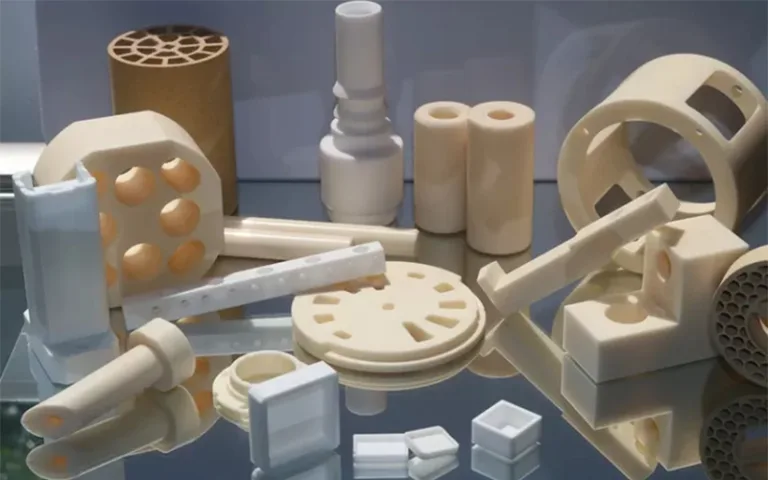
Recently, global MLCC leader Murata Manufacturing announced a significant capital deployment aimed at fortifying its foundational material supply chain. Specifically, subsidiary Okayama Murata will utilize approximately 9 billion yen to construct a dedicated production line for advanced ceramic raw materials. Moreover, project timelines indicate groundbreaking in October 2026, followed by operational readiness in April 2028. Therefore, this eighteen-month construction window reflects the sophisticated engineering requirements inherent in sub-micron powder manufacturing facilities. Additionally, while exact capacity figures remain undisclosed, industry analysts interpret this scale as a substantial addition to global high-purity barium titanate output.
Concurrently, this strategic move underscores Murata’s commitment to controlling every stage of MLCC production. Rather than depending on external suppliers for critical dielectric powders, the company continues internalizing this vital process step. Thus, Okayama Murata serves as the technological bedrock supporting the parent corporation’s market dominance. Furthermore, prioritizing upstream investment signals confidence in sustained structural growth rather than temporary cyclical recovery. Hence, stakeholders recognize this expenditure as a defensive moat against future supply disruptions.
The Critical Role of Dielectric Powder Technology
Fundamentally, ceramic dielectric powder determines the ultimate performance ceiling of any multilayer ceramic capacitor. Specifically, barium titanate purity, particle uniformity, and size distribution directly dictate achievable layer thickness and volumetric efficiency. Consequently, manufacturers cannot produce miniaturized, high-capacitance MLCCs without mastering these nanoscale material properties. Additionally, achieving reliable performance in harsh automotive or AI server environments demands exceptional batch-to-batch consistency that only integrated producers consistently deliver. Therefore, material science expertise represents the true competitive differentiator in the premium MLCC segment.
Nanoscale Precision
Controls particle size to sub-micron levels enabling thinner dielectric layers.
Core-Shell Design
Engineers unique microstructures balancing high capacitance with reliability.
Purity Assurance
Eliminates impurities causing failures in mission-critical applications.
Addressing Structural Demand from AI and Automotive
Currently, two powerful secular trends are reshaping MLCC demand structures away from traditional consumer electronics volatility. Notably, artificial intelligence servers require significantly more capacitors per unit compared to legacy data center equipment. Furthermore, electric vehicles and advanced driver assistance systems impose stringent reliability standards that eliminate lower-tier suppliers entirely. Consequently, high-value MLCC segments are experiencing persistent supply tightness despite broader market fluctuations. Thus, Murata’s proactive capacity addition specifically targets these resilient growth vectors rather than commoditized product categories.
Simultaneously, automotive qualification processes demand years of validation before volume production begins. Therefore, aligning new powder capacity availability with 2028 vehicle platform launches demonstrates meticulous forward planning. Moreover, AI infrastructure buildouts follow similar multi-year deployment cycles requiring guaranteed component availability. Hence, securing upstream materials now ensures Murata can fulfill future contracts when competitors face shortages. Ultimately, this timing transforms raw material investment into a strategic customer retention tool.
Advanced Material Engineering and Core-Shell Architecture
Beyond mere capacity expansion, Okayama Murata specializes in sophisticated particle engineering techniques unavailable elsewhere commercially. Specifically, their proprietary core-shell structure encapsulates high-dielectric cores within protective crystalline shells. Consequently, this architecture simultaneously maximizes charge storage while preventing electrical breakdown under extreme voltage stress. Furthermore, achieving such nanostructural precision requires complete mastery over sintering kinetics and dopant diffusion mechanisms. Therefore, replicating these capabilities would take competitors decades of accumulated empirical knowledge even with unlimited funding.
Additionally, modern AI accelerators operate at power densities generating intense localized heating within densely packed PCB assemblies. Thus, conventional X7R or X5R dielectrics suffer unacceptable capacitance degradation above 125°C junction temperatures. Meanwhile, Murata’s specialized high-temperature formulations maintain stable electrical characteristics up to 150°C continuously. Hence, system architects designing liquid-cooled AI racks increasingly mandate these premium materials despite higher unit costs. Ultimately, thermal resilience becomes the primary selection criterion superseding traditional price-per-microfarad metrics.
Vertical Integration as Competitive Moat
Strategically, Murata’s vertically integrated model creates insurmountable barriers for less cohesive competitors. Specifically, internal powder development enables simultaneous optimization of materials and manufacturing processes. Consequently, new product introductions occur faster because R&D teams collaborate across organizational boundaries without contractual friction. Additionally, proprietary formulations remain completely confidential within the corporate ecosystem. Therefore, rivals purchasing commodity powders cannot replicate Murata’s performance characteristics even with identical equipment. Thus, material autonomy translates directly into sustained pricing power and market share defense.
Furthermore, historical industry cycles demonstrate that upstream constraints typically emerge before finished goods shortages manifest. Previously, manufacturers expanded assembly capacity while neglecting foundational material investments, creating systemic vulnerabilities during demand surges. Now, Murata deliberately avoids repeating this pattern by front-loading powder production capability. Hence, when the next upcycle accelerates, their factories will operate at full utilization while others idle awaiting external supplies. Ultimately, this foresight converts potential industry-wide bottlenecks into exclusive growth opportunities.
Global Supply Chain Implications Through 2030
Looking ahead, Murata’s Okayama expansion signals a fundamental shift in how the passive component industry approaches capacity planning. Rather than reacting to spot market signals, leading manufacturers now prioritize decade-long structural positioning over quarterly earnings optimization. Consequently, smaller players lacking comparable balance sheets face existential choices between niche specialization or gradual commoditization. Moreover, geopolitical considerations increasingly influence site selection decisions favoring domestic Japanese production for strategic materials. Thus, national security concerns reinforce commercial logic driving upstream reinvestment throughout East Asia.
Simultaneously, emerging applications like humanoid robotics and edge AI devices promise additional demand layers beyond current projections. Each autonomous robot requires thousands of high-reliability MLCCs operating continuously in uncontrolled environments. Therefore, today’s capacity decisions will determine which suppliers capture tomorrow’s transformative markets. Furthermore, sustainability mandates increasingly favor manufacturers demonstrating closed-loop material stewardship and energy-efficient processing. Hence, integrated producers controlling entire value chains possess inherent advantages meeting evolving ESG criteria. Ultimately, Murata’s 9 billion yen bet represents far more than incremental capacity-it embodies a comprehensive vision for dominating the post-smartphone electronics era.
❓ Frequently Asked Questions
Q: When will Murata’s new Okayama ceramic powder line start production?
Construction begins in October 2026, with full production scheduled to commence in April 2028. This timeline reflects the complex engineering required for sub-micron ceramic powder manufacturing facilities.
Q: Why is ceramic powder critical for AI server MLCCs?
AI servers demand MLCCs with extreme capacitance density and thermal stability. Only ultra-high-purity barium titanate powders with precise particle size control enable the thin dielectric layers necessary for these specifications.
Q: How does vertical integration benefit Murata’s MLCC business?
Controlling ceramic powder production internally allows Murata to synchronize material development with component design. Consequently, they achieve faster innovation cycles and avoid supply bottlenecks that affect competitors relying on external vendors.
Q: What distinguishes automotive-grade MLCCs from consumer variants?
Automotive MLCCs must withstand extreme temperature cycling, vibration, and decades of operation without failure. Therefore, manufacturers use specialized ceramic formulations and rigorous testing protocols that exceed standard commercial specifications significantly.