INDUSTRY NEWS | ADVANCED MATERIALS
Why are advanced ceramics increasingly being used in precision industrial components?
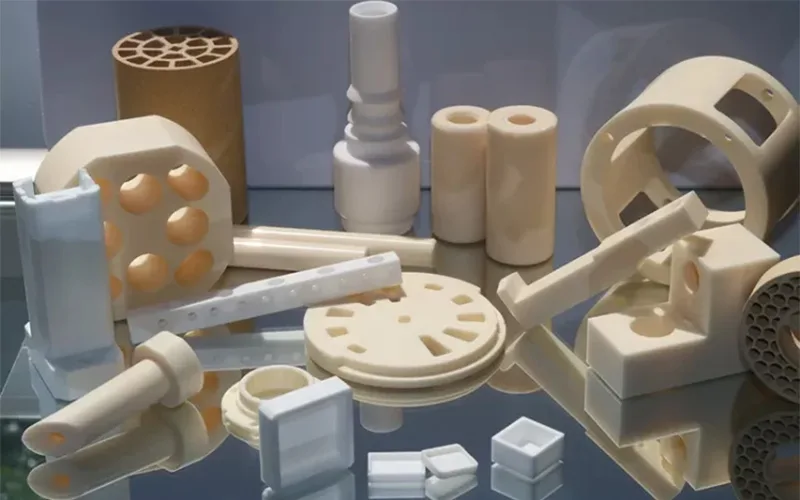
As industrial equipment faces higher temperatures, more aggressive chemicals, tighter tolerances, and increasingly demanding operating conditions, advanced ceramics are becoming an important material choice for precision industrial components. Rather than replacing metals in every application, these engineered materials help manufacturers solve specific performance problems that conventional materials may struggle to address.
Key Takeaways
- First, advanced ceramics can provide excellent wear resistance and help extend component service life in abrasive environments.
- Additionally, many ceramic materials offer strong electrical insulation and corrosion resistance for demanding industrial applications.
- Meanwhile, selected ceramic grades maintain useful mechanical properties at elevated temperatures and support dimensional stability under suitable operating conditions.
- Furthermore, their low electrical conductivity, chemical stability, and low contamination potential make certain grades valuable in semiconductor and vacuum equipment.
- Ultimately, engineers should select advanced ceramics according to the actual operating environment, mechanical loads, manufacturing requirements, and total lifecycle cost.
1. Why Are Traditional Metal Components Not Always Enough?
Traditionally, engineers have relied on stainless steel, titanium alloys, aluminum alloys, and copper alloys to manufacture industrial parts. These materials offer valuable advantages, including toughness, ductility, machinability, and, in many cases, cost-effective production. However, increasingly demanding operating conditions can expose their limitations.
For example, elevated temperatures may reduce the strength of certain metals, while oxidation and thermal expansion can affect component dimensions. Similarly, corrosive chemicals may attack unsuitable metal grades, and continuous friction can gradually wear down moving surfaces. Consequently, equipment operators may face more frequent maintenance, unplanned downtime, and replacement costs.
In addition, electrical insulation creates a separate material challenge because most conventional engineering metals conduct electricity. Semiconductor manufacturing and vacuum systems also demand strict control over contamination, particle generation, and dimensional changes. Therefore, engineers increasingly evaluate advanced ceramics when a component must combine several specialized properties within a compact design.
Nevertheless, metal components remain essential across many industries. Instead, the practical objective is to identify the material that best matches the operating conditions, whether that means using metal, advanced ceramics, or a combination of both.
2. What Are Advanced Ceramics?
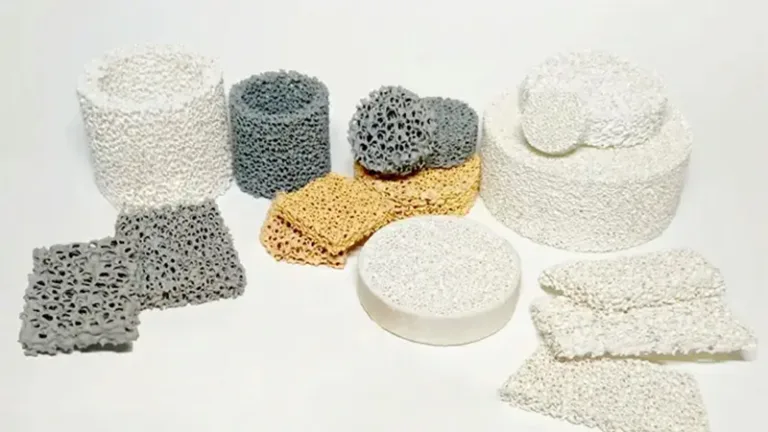
In engineering, advanced ceramics are specially formulated inorganic, non-metallic materials designed to deliver controlled physical, chemical, electrical, or mechanical properties. Unlike traditional pottery and ordinary building ceramics, these materials use carefully selected raw materials, controlled processing conditions, and application-specific manufacturing methods.
For instance, alumina (Al₂O₃) provides electrical insulation, hardness, and useful wear resistance, while zirconia (ZrO₂) offers high fracture toughness relative to many other technical ceramics. Silicon nitride (Si₃N₄) combines low density with high strength and good thermal shock resistance, whereas silicon carbide (SiC) provides excellent hardness, wear resistance, and thermal conductivity.
Beyond these familiar materials, aluminum nitride can support demanding thermal management applications because of its high thermal conductivity and electrical insulation. Meanwhile, selected ceramic compositions serve specialized roles in electronics, chemical processing, energy systems, and high-temperature equipment.
Because each ceramic grade has a different property profile, engineers should compare specific material data rather than treating all advanced ceramics as interchangeable. As a result, successful material selection begins with the component’s intended function and its actual service conditions.
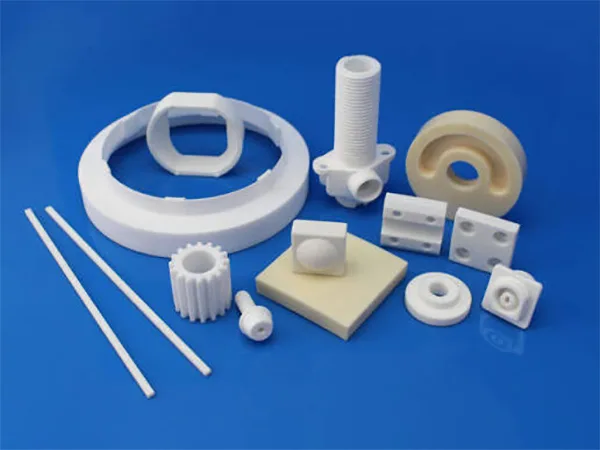
3. Six Key Advantages of Advanced Ceramics in Precision Industrial Components
3.1 Excellent Wear Resistance for Longer Service Life
First, many advanced ceramics possess high hardness, which helps them resist abrasion and surface wear in demanding applications. Components that handle abrasive particles, sliding contact, or repeated mechanical movement can benefit from this property when engineers select an appropriate ceramic grade and surface finish.
For example, ceramic bearings, mechanical seal faces, wear-resistant liners, and precision shafts can use materials such as silicon nitride, silicon carbide, or alumina according to their operating requirements. Consequently, a well-designed ceramic component may reduce wear-related maintenance and help equipment retain its performance over a longer service period.
However, hardness alone does not guarantee long service life because contact stress, lubrication, surface finish, impact loading, and alignment also influence wear behavior. Therefore, engineers should evaluate the complete tribological system rather than selecting a material based on hardness alone.
3.2 High-Temperature Performance and Thermal Stability
Second, selected advanced ceramics retain useful strength, hardness, and chemical stability at temperatures where some metals lose mechanical performance or require additional protection. Depending on the composition and operating atmosphere, these materials can support components used in furnaces, thermal processing equipment, industrial heating systems, and high-temperature machinery.
Moreover, certain ceramics offer relatively low thermal expansion, which helps engineers control dimensional changes across temperature variations. Silicon nitride and silicon carbide, for example, can provide useful combinations of thermal shock resistance and thermal performance in appropriately designed components.
Even so, engineers must consider thermal gradients, heating and cooling rates, oxidation behavior, and mechanical loading before specifying a ceramic part. Although many advanced ceramics perform well at elevated temperatures, their maximum service temperatures depend on the material grade, environment, and component design.
3.3 Strong Corrosion Resistance in Aggressive Environments
Third, many advanced ceramics resist chemical attack from selected acids, alkalis, solvents, and process fluids. This chemical stability makes suitable ceramic grades valuable in chemical processing equipment, pumps, valves, fluid handling systems, and components that contact corrosive media.
For instance, alumina and silicon carbide can serve in applications that demand resistance to particular chemicals, while zirconia may suit other wear-intensive or chemically demanding environments. Consequently, replacing a vulnerable metal surface with a compatible ceramic component can reduce corrosion-related damage and help stabilize maintenance schedules.
Nevertheless, chemical resistance varies with composition, concentration, temperature, exposure time, and the presence of impurities. Accordingly, manufacturers should verify material compatibility under realistic process conditions before making a final selection.
3.4 Reliable Electrical Insulation for Electronic Equipment
Fourth, many advanced ceramics provide excellent electrical insulation, allowing engineers to design components that separate conductive elements while maintaining mechanical or thermal functions. This combination is particularly useful in high-voltage equipment, power electronics, sensors, semiconductor manufacturing systems, and electrical assemblies.
For example, alumina insulators and ceramic substrates can support electrical isolation, while aluminum nitride can combine insulation with effective heat transfer. In addition, specialized ceramic components may help control electrical behavior in demanding environments where conventional metal parts cannot perform the required insulating function.
However, dielectric strength, dielectric loss, operating frequency, surface contamination, and moisture exposure all affect insulation performance. Therefore, engineers should match the ceramic grade and geometry to the relevant electrical requirements instead of assuming that every ceramic provides identical insulating properties.
3.5 Low Contamination and Dimensional Stability
Fifth, precision manufacturing environments often require materials that minimize unwanted particle generation, chemical contamination, and dimensional variation. Properly processed advanced ceramics can help meet these requirements because selected grades offer high hardness, chemical stability, and low outgassing potential under suitable conditions.
For example, semiconductor fabrication equipment, vacuum systems, precision positioning assemblies, and laboratory instruments may use ceramic guides, insulating supports, structural components, or other carefully engineered parts. Furthermore, ceramic components can maintain useful dimensional stability when engineers account for thermal expansion, manufacturing tolerances, and operating loads.
Nevertheless, material selection alone cannot guarantee cleanliness because surface finish, porosity, machining residues, cleaning procedures, and assembly practices also influence contamination control. Consequently, manufacturers should evaluate the complete component and its processing history when supplying parts for high-purity applications.
3.6 Thermal Management and Specialized Functional Performance
Finally, certain advanced ceramics offer specialized properties that conventional materials may struggle to combine within the same component. Aluminum nitride and silicon carbide, for example, can provide valuable thermal conductivity, while other ceramic compositions support electrical insulation, dielectric functions, or controlled thermal expansion.
As electronic devices become more compact and power densities increase, engineers need reliable ways to move heat away from sensitive components. Therefore, electrically insulating ceramic substrates and heat-spreading components can help manage thermal loads without creating an unintended electrical connection.
In addition, the availability of different ceramic compositions allows designers to tailor components for particular combinations of mechanical, electrical, and thermal performance. As a result, advanced ceramics contribute not only to component durability but also to new equipment designs and more specialized engineering solutions.
4. Where Are Advanced Ceramics Used in Precision Industrial Components?
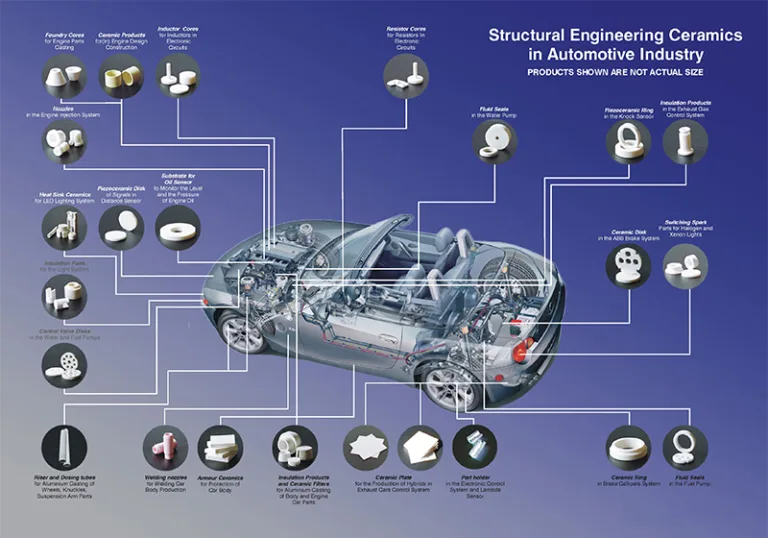
Across modern manufacturing, engineers use advanced ceramics in a wide range of industries because different ceramic grades can address specific performance requirements. The following examples illustrate common applications, although the final material choice depends on the actual operating environment and component design.
| Industry | Typical Components | Relevant Material Advantages |
|---|---|---|
| Mechanical engineering | Bearings, seal faces, wear liners, shafts | Wear resistance, hardness, and selected grades with good thermal shock resistance |
| Semiconductor manufacturing | Insulating supports, precision fixtures, process components | Electrical insulation, dimensional stability, and low contamination potential |
| Electronics and power systems | Ceramic substrates, insulating parts, thermal management components | Electrical insulation and, for selected grades, high thermal conductivity |
| Chemical processing | Valve components, pump parts, fluid handling elements | Chemical resistance and wear resistance in compatible environments |
| Vacuum and thermal equipment | Insulators, structural supports, furnace components | Electrical insulation, thermal stability, and suitable vacuum performance |
| Medical and analytical equipment | Selected wear parts, insulating components, precision elements | Application-dependent chemical stability, wear resistance, and dimensional control |
| New energy and power generation | Insulators, thermal components, specialized mechanical parts | Electrical, thermal, and mechanical properties tailored to the application |
Overall, these examples show that advanced ceramics serve more than one industrial purpose. Instead of relying on a single universal material, manufacturers can select a suitable ceramic grade for each component’s particular combination of operating temperature, mechanical load, electrical function, and chemical exposure.
5. How Should Engineers Choose the Right Advanced Ceramic Material?
Although advanced ceramics offer important performance advantages, choosing the correct grade requires more than comparing a few headline properties. Instead, engineers should assess the component’s function, operating conditions, manufacturing tolerances, and expected service life before confirming a material specification.
- First, define the operating environment. Record the normal and peak temperatures, chemical exposure, humidity, vacuum conditions, and potential contamination sources so that unsuitable materials can be eliminated early.
- Next, evaluate mechanical requirements. Consider contact pressure, impact loads, bending stress, friction, vibration, and thermal cycling because these factors influence ceramic reliability and service life.
- Additionally, identify electrical and thermal targets. Specify dielectric strength, insulation resistance, thermal conductivity, thermal expansion, or other relevant properties according to the component’s function.
- Meanwhile, confirm geometry and manufacturing feasibility. Review wall thickness, holes, grooves, complex features, dimensional tolerances, surface finish, and the suitability of available forming and machining processes.
- Furthermore, consider production volume and total cost. Compare material costs, tooling requirements, machining expenses, inspection needs, expected service life, maintenance intervals, and replacement downtime.
- Finally, validate the design. Whenever possible, use material data, prototype testing, application-specific simulations, and quality inspection to verify performance before moving into full production.
By following these steps, engineers can balance material performance, manufacturing complexity, and economic value. Consequently, advanced ceramics become a practical engineering solution rather than simply a premium material choice.
6. Why Does Precision Manufacturing Matter for Advanced Ceramics?
Despite their excellent properties, advanced ceramics present manufacturing challenges that engineers must address during component design. Their high hardness makes post-sintering machining more difficult than conventional metal cutting, while their relatively limited ductility means that local stress concentrations and impact loads can cause cracking.
Therefore, manufacturers often select a suitable forming process according to the component geometry, material composition, production volume, and required tolerances. Ceramic injection molding can support complex shapes and repeatable production, whereas pressing and other forming techniques may suit different component sizes and geometries.
After forming, controlled sintering develops the required material structure and density. Subsequently, precision grinding, lapping, polishing, and dimensional inspection can help achieve demanding tolerances and surface finishes where the application requires them.
Ultimately, successful ceramic manufacturing depends on more than raw material selection. Careful design for manufacturability, process control, defect prevention, and appropriate quality assurance all contribute to reliable precision industrial components.
7. Are Advanced Ceramics Always Better Than Metals?
Certainly, advanced ceramics do not outperform metals in every situation. Many ceramic materials offer excellent hardness and compressive strength, but their limited ductility and sensitivity to certain tensile stresses, impact loads, and defects can restrict their use in some structural applications.
Meanwhile, metals often provide greater plastic deformation before fracture, easier machining, and better suitability for applications that demand substantial impact resistance or extensive deformation. In addition, ceramic parts may require specialized tooling, grinding, and inspection, which can increase initial manufacturing costs.
Nevertheless, advanced ceramics can deliver better overall value when their specific properties reduce wear, corrosion, electrical failure, or maintenance requirements. Rather than replacing metals universally, these materials complement conventional engineering materials and allow designers to optimize components for demanding service conditions.
8. The Future of Advanced Ceramics in Precision Engineering
As semiconductor equipment, high-performance electronics, automation systems, and energy technologies continue to develop, manufacturers need components that deliver more consistent performance in increasingly specialized environments. Consequently, advanced ceramics are likely to remain important wherever electrical, thermal, chemical, and mechanical requirements intersect.
At the same time, improvements in powder preparation, forming technology, sintering control, precision machining, and inspection continue to expand the range of ceramic components that manufacturers can produce. Better process control can also help improve dimensional consistency, production repeatability, and confidence in application-specific performance.
Looking ahead, the greatest opportunities will come from matching material science with practical engineering design. When manufacturers understand both the advantages and limitations of advanced ceramics, they can develop components that meet demanding specifications while supporting equipment reliability and lifecycle efficiency.
Frequently Asked Questions About Advanced Ceramics
1. What are the main advantages of advanced ceramics?
Generally, advanced ceramics offer a combination of high hardness, wear resistance, electrical insulation, chemical stability, and temperature-dependent thermal performance. However, the exact advantages depend on the ceramic composition and grade.
2. Which advanced ceramic materials are commonly used in industrial components?
Common engineering ceramics include alumina, zirconia, silicon nitride, silicon carbide, and aluminum nitride. Each material provides a different balance of mechanical, electrical, chemical, and thermal properties, so engineers should select a grade according to the intended application.
3. Why are advanced ceramics used in semiconductor equipment?
Selected advanced ceramics provide electrical insulation, dimensional stability, chemical resistance, and low contamination potential under suitable conditions. These characteristics make them useful for precision fixtures, insulating supports, and other components in semiconductor manufacturing systems.
4. Can advanced ceramics replace stainless steel?
In some applications, advanced ceramics can replace stainless steel when wear resistance, electrical insulation, or compatibility with a specific chemical environment becomes the primary requirement. Nevertheless, stainless steel remains preferable for many applications that demand ductility, impact resistance, ease of fabrication, or complex structural connections.
5. Are advanced ceramic components expensive?
Advanced ceramic components can involve higher initial material, tooling, machining, and inspection costs than some metal alternatives. However, the total cost may become more favorable when a suitable ceramic grade extends service life, reduces replacement frequency, or minimizes equipment downtime.
6. What should manufacturers consider when ordering custom advanced ceramic parts?
Before requesting a quotation, manufacturers should define the material grade, component drawings, critical dimensions, tolerances, surface finish, operating conditions, annual production volume, and inspection requirements. Additionally, discussing forming methods and post-sintering machining with the supplier can help identify practical design improvements.
Conclusion: Advanced Ceramics Offer Targeted Solutions for Demanding Industrial Conditions
In summary, advanced ceramics are increasingly used in precision industrial components because they offer valuable combinations of wear resistance, electrical insulation, corrosion resistance, thermal stability, and specialized functional properties. These advantages can help engineers address operating conditions that challenge conventional metal components.
However, successful implementation depends on choosing the right material grade, understanding the operating environment, and controlling the manufacturing process. By evaluating performance requirements and lifecycle costs together, manufacturers can determine where advanced ceramics provide a meaningful technical and economic advantage.