Technical Guide | Advanced Ceramic Bearings | Food Processing Engineering
Why Silicon Nitride Bearings Are Superior to Stainless Steel Bearings in Food Processing Machinery
Food processing machinery requires dependable bearings that withstand moisture, frequent cleaning, temperature changes, and continuous production. Although stainless steel bearings remain a practical choice for many food-grade applications, silicon nitride ceramic bearings offer distinct advantages when corrosion resistance, reduced rolling-element mass, electrical insulation, and high-speed operation become important engineering requirements.
Engineering takeaway: Silicon nitride bearing balls can improve the performance of hybrid ceramic bearings in demanding food processing environments. However, applications involving direct food contact, aggressive cleaning chemicals, or strict hygienic requirements also need suitable bearing rings, cages, seals, lubricants, and contamination-control measures.
In particular, engineers should evaluate the complete bearing assembly rather than selecting a bearing solely by its rolling-element material. This approach helps balance corrosion resistance, load capacity, operating speed, maintenance requirements, and total cost of ownership.
At a Glance: Silicon Nitride vs. Stainless Steel Bearings
Silicon Nitride Ceramic
First, silicon nitride offers low density, high hardness, strong wear resistance, and excellent resistance to many aqueous environments.
Consequently, it suits high-speed hybrid bearings and selected full-ceramic bearing designs.
Stainless Steel
Meanwhile, suitable stainless steel grades offer good toughness, established bearing designs, and practical manufacturing and maintenance options.
Therefore, stainless steel remains competitive for applications with moderate speeds, suitable lubrication, and controlled cleaning conditions.
Hybrid Ceramic Bearings
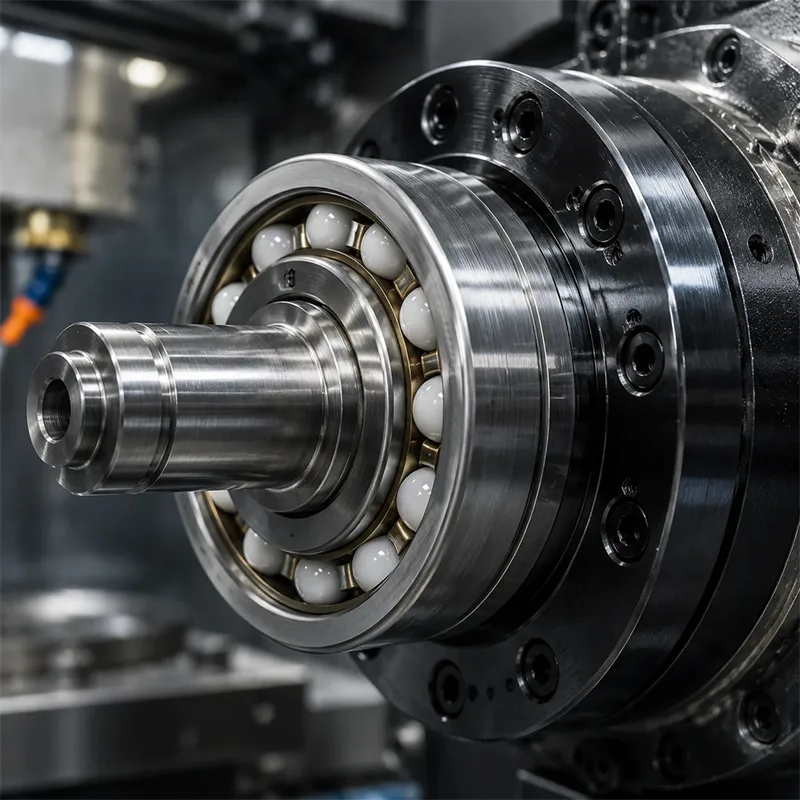
In a hybrid bearing, steel rings run against silicon nitride rolling elements.
As a result, this configuration combines ceramic rolling-element advantages with steel raceway toughness, although the steel rings still require corrosion protection appropriate to the application.
1. What Is a Silicon Nitride Ceramic Bearing?
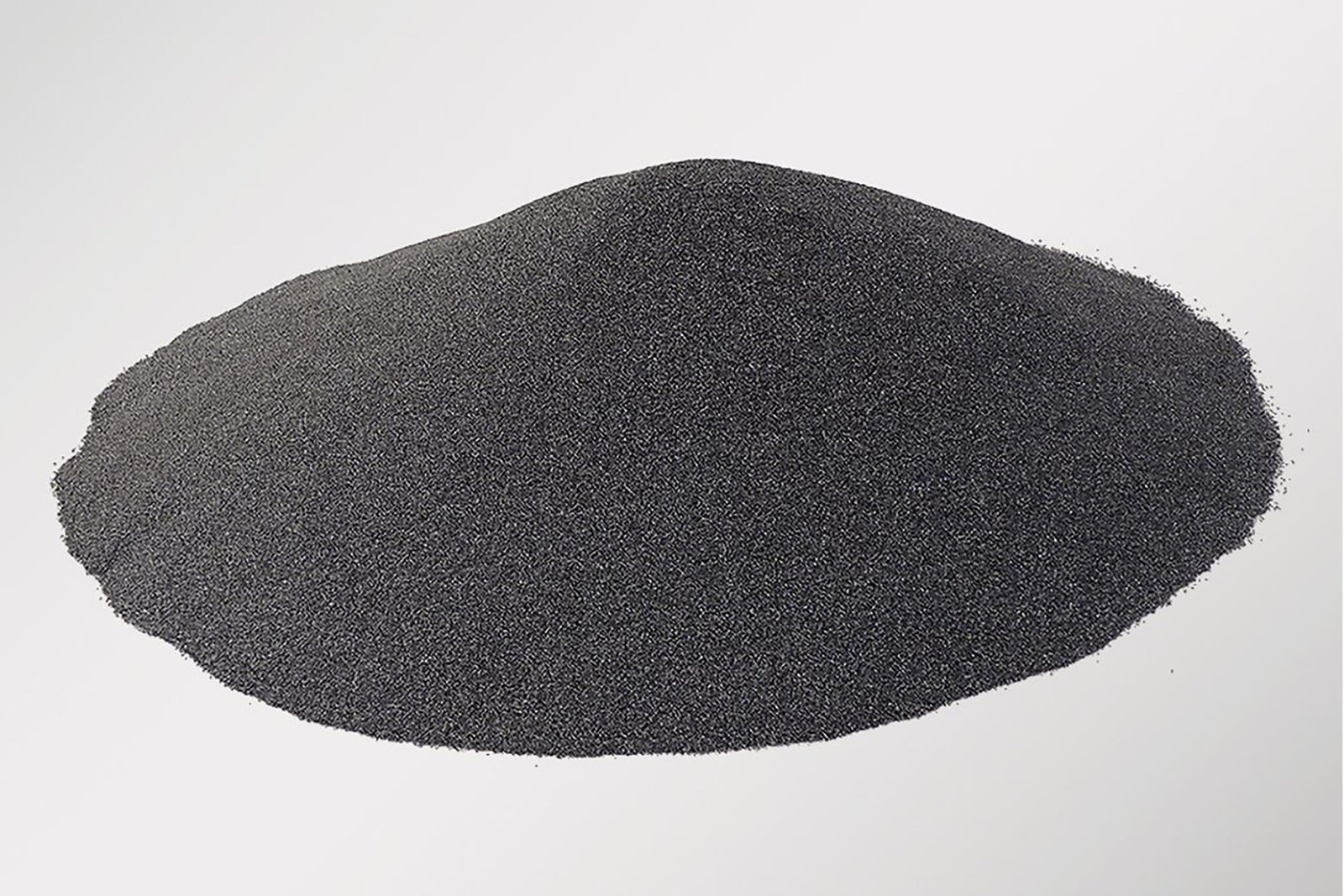
A silicon nitride ceramic bearing is a rolling-element bearing that uses silicon nitride, chemically represented as Si₃N₄, for its balls or other rolling elements. Depending on the design, manufacturers may combine ceramic balls with steel rings or use silicon nitride for both the bearing rings and rolling elements.
Unlike conventional steel rolling elements, silicon nitride components combine relatively low density with high hardness and good dimensional stability. Consequently, engineers often consider them for high-speed machinery, precision rotating assemblies, and environments where corrosion resistance or electrical insulation matters.
Understanding the Main Bearing Components
1. Rolling Elements
Silicon nitride balls transfer loads between the inner and outer raceways. Their lower density can reduce centrifugal forces and other speed-related effects compared with steel balls of similar dimensions.
2. Inner and Outer Rings
These rings provide the raceways that guide rolling motion. Hybrid designs typically use steel rings, whereas full-ceramic designs use ceramic rings and ceramic rolling elements.
3. Cage or Separator
The cage maintains rolling-element spacing and helps guide the balls. Depending on temperature, lubricant, cleaning exposure, and load, designers may select an appropriate polymer, stainless steel, or another compatible cage material.
4. Seals and Lubrication
Seals help limit the entry of water, cleaning chemicals, and contaminants, while lubricant reduces friction and wear. Nevertheless, seal materials and lubricant selection must match the actual washdown and operating conditions.
Hybrid vs. Full Silicon Nitride Ceramic Bearings
Hybrid ceramic bearings generally combine steel rings with silicon nitride balls. Therefore, they can deliver lower rolling-element mass and electrical insulation through the ceramic balls, while retaining the toughness and familiar raceway design of steel rings.
Full-ceramic bearings use ceramic material for both the rings and rolling elements. Accordingly, they can reduce dependence on metallic bearing components and may suit selected corrosive or electrically insulating applications. However, their ceramic rings remain more vulnerable to shock damage than steel rings, so designers must evaluate impact loads and mounting conditions carefully.
Important distinction: A ceramic rolling element does not make an entire bearing automatically corrosion-proof, food-safe, or suitable for direct food contact. In particular, steel rings, cages, seals, lubricants, mounting hardware, and cleaning procedures can determine the suitability of the complete assembly.
2. Silicon Nitride Bearing Material Properties and Engineering Data
Silicon nitride is an advanced structural ceramic with a combination of mechanical, thermal, and electrical properties that differs substantially from bearing steel. For food processing machinery, these differences can influence bearing acceleration, frictional heating, corrosion exposure, and long-term dimensional stability.
The following values represent indicative ranges for engineering-grade silicon nitride ceramics. Actual results vary with powder composition, sintering method, microstructure, test standard, and material grade; therefore, engineers should request grade-specific technical data before finalizing a design.
Key Silicon Nitride Material Parameters
| Property | Indicative Si₃N₄ Range | Engineering Significance |
|---|---|---|
| Density | 3.2-3.3 g/cm³ | Lower rolling-element mass can reduce centrifugal loading at high speed. |
| Vickers hardness | Approximately 1,400-1,800 HV | Supports resistance to indentation and abrasive wear. |
| Flexural strength | Approximately 600-1,000 MPa | Indicates bending strength under a specified test method; it does not equal bearing load capacity. |
| Fracture toughness | Approximately 5-8 MPa·m1/2 | Helps characterize resistance to crack propagation; ceramic remains more brittle than steel. |
| Young’s modulus | Approximately 280-320 GPa | Describes elastic stiffness and influences contact deformation. |
| Thermal expansion coefficient | Approximately 2.8-3.3 × 10⁻⁶/K | Low expansion can help limit thermal dimensional changes. |
| Thermal conductivity | Approximately 15-30 W/(m·K) for many grades | Influences heat transfer through the ceramic component. |
| Electrical behavior | Generally electrically insulating | Can help interrupt electrical current paths through rolling contacts. |
| Chemical resistance | Good resistance to many environments | Can resist many aqueous and mildly corrosive conditions, but compatibility depends on the actual chemicals and temperature. |
Data note: These ranges are general material references, not guaranteed specifications for every bearing ball or finished bearing. For design approval, request the manufacturer’s actual grade data and test conditions.
Figure 1: Silicon Nitride Ceramic Material Property Profile
Representative material values illustrate the characteristics relevant to bearing design. The bars use different scales and should not be compared directly across properties.
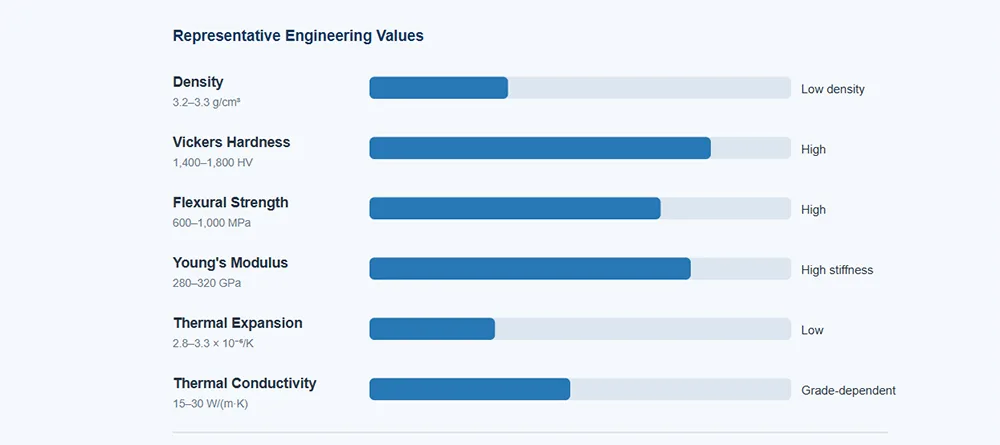
Illustrative profile only. Bar lengths do not represent a shared numerical scale.
Why These Properties Matter in Food Processing
First, the density of silicon nitride is approximately 3.2-3.3 g/cm³, compared with roughly 7.7-8.0 g/cm³ for many stainless steels. Thus, a silicon nitride ball has around 40-43% of the mass of a similarly sized stainless steel ball.
At high rotational speeds, this mass difference can reduce centrifugal forces and the associated loading at the outer raceway. Consequently, hybrid ceramic bearings may offer useful advantages in high-speed cutters, compact motors, and fast-running conveyor assemblies.
In addition, silicon nitride’s low thermal expansion helps limit changes in the ceramic rolling element’s dimensions as temperature varies. Nevertheless, actual bearing clearance and preload also depend on ring materials, fits, shaft and housing expansion, temperature gradients, and the bearing arrangement.
Finally, silicon nitride’s hardness and wear resistance can support stable rolling contact when the bearing uses suitable raceway finishes and lubrication. However, high hardness does not eliminate brittle fracture risk, contamination damage, or the need for proper installation.
3. Silicon Nitride Bearings vs. Stainless Steel Bearings: Technical Comparison
Selecting a bearing for food machinery requires more than comparing the corrosion resistance of two materials. Instead, engineers should evaluate rolling-element mass, raceway materials, contact stress, lubrication, cleaning procedures, and the consequences of bearing failure.
| Comparison Factor | Silicon Nitride Rolling Elements | Stainless Steel Rolling Elements |
|---|---|---|
| Density | Approximately 3.2-3.3 g/cm³ | Approximately 7.7-8.0 g/cm³, depending on grade |
| Corrosion resistance | Excellent in many environments; verify compatibility with actual process chemicals. | Depends strongly on stainless grade, surface condition, chloride exposure, and cleaning practice. |
| Hardness | Very high; commonly around 1,400–1,800 HV | Generally lower; varies with steel grade and heat treatment |
| Shock tolerance | Brittle; requires careful handling and impact-load control | Generally better tolerance to impact and overload deformation |
| High-speed behavior | Lower rolling-element mass can support high-speed operation. | Higher rolling-element mass can increase centrifugal loading at high speed. |
| Electrical behavior | Generally electrically insulating | Electrically conductive |
| Thermal expansion | Low; approximately 2.8-3.3 × 10⁻⁶/K | Generally higher; depends on alloy and temperature |
| Cost and availability | Typically higher initial cost and more specialized manufacturing | Often more economical and widely available |
3.1 Corrosion Resistance During Washdown
Food production facilities frequently expose equipment to water, detergents, sanitizers, and sometimes hot-water or steam-cleaning cycles. Under these conditions, the suitability of stainless steel depends on its alloy composition, surface finish, passivation, and the concentration and temperature of the cleaning chemicals.
Silicon nitride itself resists many aqueous environments and does not undergo the same electrochemical corrosion mechanism as stainless steel. Therefore, ceramic balls can remove the rolling-element corrosion mechanism from a hybrid bearing assembly.
Nevertheless, hybrid bearings retain metallic rings and may still suffer corrosion at their raceways or other exposed components. For highly aggressive washdown conditions, engineers should examine the complete assembly and consider corrosion-resistant rings, compatible seals, and a suitable lubrication strategy.
3.2 Friction, Speed, and Energy Consumption
Lower rolling-element mass reduces centrifugal forces at a given speed, which can improve the operating conditions of some high-speed bearing designs. In addition, silicon nitride’s surface hardness and wear characteristics can help maintain contact quality when manufacturing tolerances, lubrication, and raceway finishes are appropriate.
However, bearing friction does not depend on rolling-element mass alone. Seal drag, lubricant viscosity, cage design, preload, contact geometry, and operating temperature can dominate the total friction torque in a particular assembly.
Consequently, users should verify actual torque, temperature, and energy consumption under representative operating conditions rather than assume a fixed percentage of energy savings.
3.3 Thermal Stability During Cleaning Cycles
Rapid changes between production temperature and cleaning temperature can alter bearing clearance and internal contact conditions. Because silicon nitride has a low thermal expansion coefficient, its dimensions change relatively little with temperature compared with many bearing steels.
Even so, a hybrid bearing contains components with different thermal expansion coefficients. As a result, temperature gradients across the steel rings, shaft, housing, and ceramic balls may change internal clearance or preload.
For that reason, engineers should evaluate the entire assembly’s temperature profile, mounting fits, and cleaning cycle before specifying a hybrid or full-ceramic configuration.
3.4 Wear, Fatigue, and Service Life
Silicon nitride’s hardness and low density can reduce certain wear mechanisms and rolling-element-related dynamic effects. Moreover, suitable ceramic balls may offer strong rolling contact fatigue performance when the material quality, surface finish, lubrication, and contact stress remain within design limits.
Nevertheless, ceramic rolling elements do not guarantee a longer service life in every application. Contamination, inadequate lubrication, excessive preload, misalignment, impact loading, raceway defects, and improper installation can shorten the life of either ceramic or stainless steel bearings.
Therefore, a meaningful comparison should use the same load spectrum, speed, lubrication, cleanliness, and mounting conditions. Where possible, validate the design through manufacturer calculations and application-specific testing.
4. Common Silicon Nitride Ceramic Bearing Specifications
Silicon nitride bearings are available in several configurations, including deep-groove ball bearings, angular-contact ball bearings, miniature bearings, and custom ceramic bearing assemblies. The appropriate design depends on the shaft diameter, housing dimensions, load direction, rotational speed, environmental exposure, and required service life.
4.1 Common Bearing Configurations
| Bearing Type | Typical Construction | Potential Food Machinery Uses |
|---|---|---|
| Hybrid deep-groove ball bearing | Steel rings with silicon nitride balls | Conveyors, electric motors, and selected high-speed drives |
| Hybrid angular-contact bearing | Steel rings and ceramic balls arranged for combined load support | High-speed spindles and precision rotating equipment |
| Full-ceramic ball bearing | Silicon nitride rings and balls | Selected corrosive or electrically insulating applications |
| Miniature ceramic bearing | Compact geometry with hybrid or full-ceramic construction | Compact food inspection devices and precision mechanisms |
| Custom ceramic bearing assembly | Application-specific dimensions, materials, and cage arrangement | Specialized filling, cutting, conveying, or processing equipment |
4.2 Specification Parameters for Procurement
When requesting a quotation, buyers should provide the bearing’s basic dimensions and operating conditions. In particular, the following parameters help a manufacturer determine whether a standard series or a custom design will meet the application requirements.
| Parameter | Information to Confirm |
|---|---|
| Bearing dimensions | Bore diameter (d), outside diameter (D), and width (B), usually in millimeters |
| Bearing configuration | Deep groove, angular contact, miniature, or custom geometry |
| Ring material | Specified stainless steel grade, bearing steel, or silicon nitride ceramic |
| Rolling-element material | Silicon nitride grade, ball diameter, quantity, and precision requirements |
| Cage and seals | Material compatibility, sealing arrangement, washdown exposure, and temperature limits |
| Precision and clearance | Required dimensional tolerances, running accuracy, internal clearance, or preload |
| Operating conditions | Rotational speed, radial and axial loads, impact loads, temperature, and duty cycle |
| Hygiene requirements | Washdown frequency, chemicals, possible food contact, lubricant requirements, and cleaning validation |
Standard bearing dimensions depend on the bearing series and applicable dimensional standards. Therefore, do not assume that every ceramic bearing is available in every bore, outside diameter, width, clearance class, or precision grade.
For custom designs, provide a drawing and specify the tolerances that matter to the application. Likewise, ask the supplier to confirm achievable precision, load ratings, speed limits, cage options, and material traceability before placing an order.
Specification tip: If you need replacement silicon nitride bearing balls rather than a complete bearing, include the ball diameter, material grade, dimensional tolerance, sphericity, surface finish, quantity, and inspection requirements in your RFQ.
5. Eight Applications of Silicon Nitride Bearings in Food Processing Machinery
Food production covers a wide range of mechanical operations, from high-speed cutting to wet conveying and automated inspection. Consequently, the value of silicon nitride bearings depends on the operating conditions of each machine rather than the food industry label alone.
Which Applications Benefit Most?
Generally, high-speed cutters, precision drives, and rotating mechanisms with recurring moisture exposure are strong candidates for evaluating hybrid silicon nitride bearings. By contrast, slow-speed equipment with substantial shock loads may favor stainless steel bearings when corrosion exposure remains manageable.
Meanwhile, full-ceramic bearings may suit selected applications that require electrically insulating bearing rings and rolling elements or exceptional resistance to particular corrosive environments. Even then, engineers should verify load ratings, brittle-fracture risk, mounting tolerances, and the suitability of cages and seals.
6. Silicon Nitride Ceramic Bearing Manufacturing Process
Manufacturing silicon nitride bearing balls requires precise control of powder quality, forming conditions, densification, grinding, and surface finishing. Because rolling contact concentrates loads over small contact areas, even minor geometric or surface defects can influence noise, vibration, wear, and fatigue performance.
Furthermore, a complete ceramic bearing requires precision manufacture of both the rolling elements and the bearing rings. The following process describes common production stages; however, the exact sequence depends on the bearing design, ceramic grade, forming route, and required precision.
Figure 2: Silicon Nitride Ceramic Bearing Manufacturing Process
A representative production route from ceramic powder preparation to finished bearing assembly and quality verification.
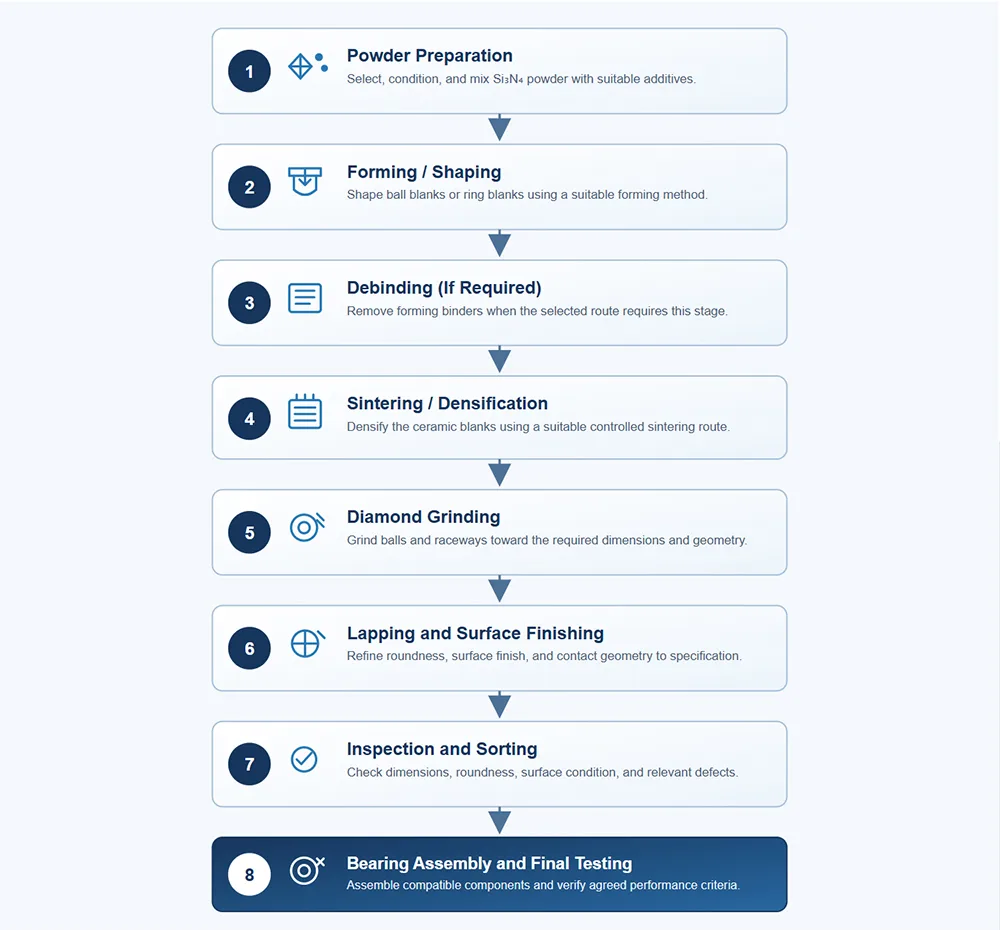
Manufacturing note: Not every product follows identical forming or finishing steps. Full-ceramic bearings also require precision machining of the ceramic rings and raceways; hybrid bearings use the appropriate metal-ring manufacturing route.
6.1 Powder Preparation and Forming
First, manufacturers select silicon nitride powder with suitable purity, particle characteristics, and sintering behavior. They then mix the powder with appropriate sintering additives and, where needed, binders to support uniform forming.
Depending on the product, forming may involve pressing, cold isostatic pressing, injection molding, or another suitable process. Consequently, the selected route influences blank geometry, dimensional consistency, material utilization, and subsequent machining requirements.
6.2 Debinding and Sintering
When a forming process uses organic binders, a controlled debinding stage removes them before densification. Next, the manufacturer sinters the shaped blanks using a suitable process, such as gas-pressure sintering, to develop the required density and mechanical properties.
Sintering conditions strongly influence microstructure, porosity, strength, and dimensional change. Therefore, process control and grade-specific inspection are important for achieving consistent rolling-element performance.
6.3 Diamond Grinding, Lapping, and Polishing
After densification, manufacturers use diamond grinding to bring the ceramic blanks closer to their final dimensions. Subsequently, lapping and polishing refine the surface and geometry to meet the required ball diameter, roundness, and finish.
For complete ceramic bearings, the manufacturer must also finish the inner and outer rings and their raceways to the required geometry. Meanwhile, hybrid bearings require compatibility between the finished ceramic rolling elements and the metal raceways.
6.4 Inspection, Assembly, and Testing
Before assembly, quality personnel may inspect dimensions, roundness, surface defects, material characteristics, and other agreed parameters. Depending on the specification, the manufacturer may also conduct checks for cracks, internal defects, or material consistency.
Finally, the assembly stage combines the rings, rolling elements, cage, seals, and lubricant where applicable. The finished bearing can then undergo checks for rotational behavior, clearance or preload, dimensional compliance, and other requirements defined by the customer.
For food processing applications, manufacturers and buyers should also confirm traceability, lubricant suitability, corrosion resistance, and cleaning compatibility. In this way, the selected bearing can meet both its mechanical requirements and the needs of the surrounding hygiene system.
7. Selection, Hygiene, and Maintenance Considerations
Choosing a ceramic bearing for food machinery requires an assessment of both mechanical performance and sanitary design. Although silicon nitride can reduce corrosion risk at the rolling elements, the complete bearing must still meet the equipment’s load, speed, cleaning, and contamination-control requirements.
7.1 Confirm the Cleaning Chemicals
First, identify the detergents, sanitizers, rinse water, and any other chemicals that reach the bearing during cleaning. In particular, record chemical concentration, temperature, exposure duration, and cleaning frequency.
Next, check the compatibility of the rings, cage, seals, lubricant, and housing materials. Even if silicon nitride itself performs well, another component may determine the service life of the assembly.
7.2 Define Load, Speed, and Shock Conditions
Record radial load, axial load, rotational speed, start-stop frequency, vibration, and possible impact events. Then compare these values with the bearing manufacturer’s load ratings and speed limits.
Because silicon nitride is a brittle ceramic, avoid impact loading, edge damage, forced mounting, and severe misalignment. For applications involving heavy shock loads, stainless steel rolling elements may offer a more forgiving solution.
7.3 Evaluate Lubrication and Sealing
Appropriate lubrication reduces friction, wear, and heat generation at rolling contacts. However, lubricant choice should account for operating speed, temperature, water exposure, cleaning procedures, and any relevant food-safety requirements.
Likewise, seals should prevent unwanted ingress without creating excessive friction or trapping residues in ways that conflict with the machine’s hygienic design. In some applications, the correct solution may require a specialized sealed bearing rather than a standard open bearing.
7.4 Distinguish Food-Grade Materials from Hygienic Equipment Design
A bearing’s ceramic composition alone does not establish that the bearing is certified for direct food contact. Instead, buyers should verify applicable regulatory requirements, material declarations, lubricant specifications, and equipment-level hygiene standards.
For direct food-contact zones, evaluate the entire assembly and the machine’s cleanability, drainage, sealing, and contamination-control measures. Where a bearing sits outside the product zone, the design may follow a different risk assessment.
Pre-Purchase Engineering Checklist
- Confirm bearing dimensions and mounting tolerances.
- Document radial, axial, and impact loads.
- Specify continuous and peak rotational speeds.
- Identify cleaning chemicals and temperature cycles.
- Select compatible rings, cages, seals, and lubricants.
- Define precision, clearance, preload, and inspection requirements.
- Confirm hygiene documentation and traceability where required.
- Request application-specific technical review before changing bearing type.
8. AOFE MIMCustom: Silicon Nitride Ceramic Component and Customization Support
Selecting an advanced ceramic component requires more than identifying a material grade. In addition, the manufacturer and buyer must coordinate dimensions, forming methods, finishing requirements, inspection criteria, and the operating conditions of the final application.
AOFE MIMCustom can present its offering around application-specific engineering communication and custom manufacturing requirements. For each project, the exact production capabilities, available materials, achievable tolerances, and inspection options should be confirmed against the product drawing and supplier’s documented processes.
Application-Based Specification Review
First, define the operating environment, dimensions, loads, speed, temperature, and chemical exposure. This information helps determine whether silicon nitride balls, hybrid bearings, full-ceramic bearings, or another material arrangement deserves evaluation.
Drawing and Dimensional Coordination
Next, provide a drawing with critical dimensions, tolerances, surface requirements, and acceptance criteria. Clear specifications reduce ambiguity during quotation, manufacturing planning, and incoming inspection.
Material and Process Communication
Meanwhile, discuss ceramic grade, forming route, sintering method, grinding, lapping, and any required material documentation. The selected process should match the geometry and performance criteria rather than rely on a generic material description.
Quality and Inspection Alignment
Finally, agree on the dimensions and characteristics that require verification. Depending on the project, these may include ball diameter, roundness, surface finish, visual defects, material data, traceability, and documentation.
What Information Should You Provide for a Quotation?
To support an efficient technical review, prepare the following information before contacting AOFE MIMCustom about a silicon nitride ceramic bearing component or related custom part.
- Product type: ceramic bearing balls, hybrid bearing components, full-ceramic components, or another custom ceramic part.
- Material requirement: silicon nitride grade or required performance characteristics.
- Dimensions: diameter, width, bore, profile, and critical tolerances.
- Operating conditions: load, rotational speed, temperature, vibration, and service cycle.
- Environmental conditions: moisture, cleaning agents, lubricants, and possible food contact.
- Quality requirements: surface finish, inspection method, documentation, and traceability.
- Commercial details: prototype quantity, expected batch size, target delivery schedule, and packaging requirements.
With these details, the supplier can evaluate the requested configuration more accurately and identify the technical questions that require clarification. Nevertheless, buyers should confirm actual manufacturing capability, lead time, certifications, and quality documentation directly with the supplier before placing an order.
Looking for Silicon Nitride Bearing Balls or Custom Ceramic Components?
Share your drawing, dimensions, operating conditions, and material requirements to discuss a suitable ceramic component solution for your food processing equipment.
9. Frequently Asked Questions About Silicon Nitride Bearings for Food Processing
Q1. Why are silicon nitride bearings suitable for food processing machinery?
Silicon nitride rolling elements combine low density, high hardness, good wear resistance, and strong resistance to many aqueous environments. Consequently, they can benefit selected high-speed or moisture-exposed applications, especially when the complete bearing assembly also meets the required corrosion, sealing, lubrication, and hygiene specifications.
Q2. Are silicon nitride bearings better than stainless steel bearings?
Silicon nitride bearings can outperform stainless steel designs in selected areas, including rolling-element mass, hardness, electrical insulation, and resistance to many corrosive environments. However, stainless steel bearings generally offer better tolerance to shock and may cost less, so the better option depends on the operating conditions and total system design.
Q3. Are silicon nitride bearing balls corrosion-resistant?
Yes, silicon nitride generally resists corrosion in many aqueous environments better than stainless steel rolling elements. Nevertheless, resistance depends on the actual chemicals, concentration, temperature, and exposure conditions, while the bearing rings, cage, seals, and lubricant require separate compatibility checks.
Q4. Can silicon nitride bearings operate without lubrication?
Not automatically. Although silicon nitride has favorable wear characteristics, a conventional rolling bearing still requires a suitable lubrication strategy unless the specific design and operating conditions support an approved lubricant-free arrangement. Therefore, confirm the bearing manufacturer’s guidance before eliminating lubrication.
Q5. Are silicon nitride bearings suitable for high-speed food cutters?
They can be suitable when the bearing geometry, ceramic ball grade, cage, lubrication, preload, and precision meet the machine’s speed requirements. In particular, lower rolling-element mass can reduce centrifugal loading, but engineers must verify the complete assembly’s speed rating and thermal behavior.
Q6. Can a hybrid ceramic bearing withstand frequent washdown?
A hybrid bearing can reduce corrosion risk at the rolling elements because silicon nitride balls do not corrode like steel balls. However, the steel rings may still corrode if the grade, surface finish, or protection does not match the cleaning environment. Accordingly, evaluate the complete assembly against the plant’s washdown chemicals and procedures.
Q7. Are silicon nitride bearings food-grade or approved for direct food contact?
The ceramic material alone does not establish food-contact approval for the complete bearing. Instead, verify the applicable regulatory requirements, material declarations, lubricant suitability, sealing arrangement, and equipment hygiene design. Where direct food contact is possible, obtain the relevant documentation from the supplier.
Q8. Can silicon nitride bearings handle impact loads?
Silicon nitride offers high strength and hardness, but it remains a brittle ceramic. Consequently, heavy shock loads, edge impacts, misalignment, and incorrect installation can cause damage. For machinery with severe impact loading, stainless steel bearings may offer better tolerance.
Q9. Do silicon nitride bearings improve energy efficiency?
They may improve efficiency in some high-speed applications because their lower rolling-element mass can reduce centrifugal effects and associated losses. However, total energy consumption also depends on lubricant viscosity, seals, preload, cage design, alignment, and operating load. Therefore, application-specific testing provides the most reliable comparison.
Q10. What information is needed to order custom silicon nitride bearing balls?
Provide the ball diameter, material grade or required properties, dimensional tolerance, roundness, surface finish, quantity, inspection criteria, and intended operating environment. Additionally, specify whether you need loose ceramic balls, a hybrid bearing assembly, or a complete full-ceramic bearing.
Conclusion: Choosing the Right Bearing for Food Processing Equipment
Silicon nitride bearings provide meaningful advantages for selected food processing applications because their ceramic rolling elements combine low density, high hardness, electrical insulation, and resistance to many aqueous environments. As a result, hybrid ceramic bearings can be attractive for high-speed cutters, conveyor drives, precision rotating mechanisms, and other equipment exposed to demanding operating conditions.
Nevertheless, stainless steel bearings remain suitable for many applications, especially where shock tolerance, cost, and established maintenance practices take priority. Furthermore, neither material can compensate for poor sealing, unsuitable lubrication, inadequate mounting, or an incompatible cleaning procedure.
Ultimately, the best solution comes from evaluating the complete bearing system against the actual load, speed, temperature, chemical exposure, and hygiene requirements. With accurate specifications and appropriate technical verification, manufacturers and equipment designers can make a more reliable choice between silicon nitride ceramic, hybrid ceramic, and stainless steel bearing solutions.
Key Takeaways
- Silicon nitride has a density of approximately 3.2-3.3 g/cm³, significantly lower than stainless steel.
- Ceramic balls can reduce rolling-element corrosion risk, but hybrid bearing rings and other components still need suitable corrosion protection.
- Lower rolling-element mass can benefit selected high-speed applications, although total friction depends on the complete bearing design.
- Silicon nitride is hard and wear-resistant, but its brittle nature requires careful control of impact loads and installation.
- Food processing suitability depends on the complete assembly, cleaning chemicals, lubrication, seals, and relevant hygiene requirements.
- Application-specific specifications and testing provide a stronger basis for selection than material comparisons alone.