Advanced Ceramics | Material Science | Powder Technology
Silicon Nitride Ceramic vs. Silicon Carbide Ceramic: Key Differences and How to Choose
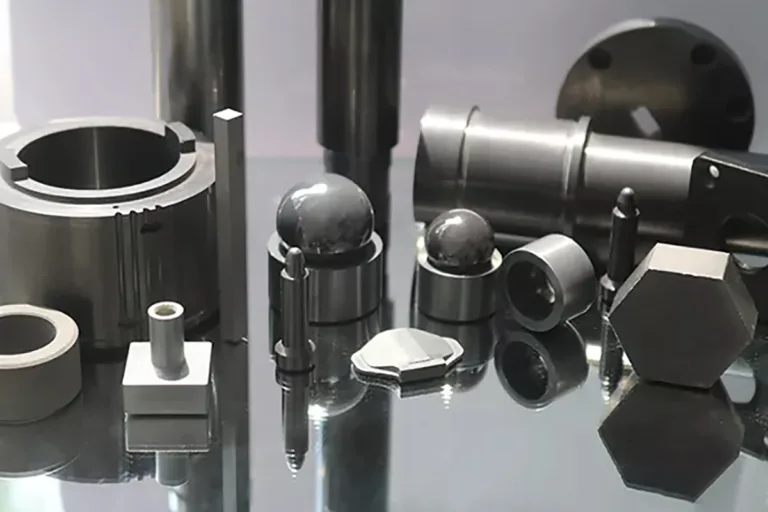
Among advanced non-oxide ceramics, silicon nitride (Si₃N₄) and silicon carbide (SiC) play important roles in industrial equipment, new energy systems, semiconductor manufacturing and precision machinery. Both materials offer high hardness, high-temperature capability and excellent resistance to demanding operating environments. However, their performance profiles differ in several important ways.
For example, silicon nitride combines high strength and fracture toughness, making it suitable for components exposed to impact, vibration and thermal cycling. By comparison, silicon carbide offers exceptional hardness, wear resistance, chemical stability and thermal conductivity, which makes it attractive for abrasive, corrosive and heat-intensive applications.
Therefore, choosing between these two materials requires more than comparing a few datasheet values. This guide examines their material characteristics, mechanical and thermal properties, manufacturing processes and typical applications, helping engineers and purchasing teams select the right ceramic for each project.
Quick Comparison: Si₃N₄ vs. SiC
In general, silicon nitride suits applications that demand strength, toughness and thermal shock resistance. Meanwhile, silicon carbide often suits applications that prioritize extreme hardness, abrasion resistance, chemical stability and heat transfer.
- Silicon nitride: High strength, relatively high fracture toughness, good thermal shock resistance and strong performance in dynamic mechanical applications.
- Silicon carbide: Very high hardness, excellent wear and corrosion resistance, high thermal conductivity and strong performance in demanding thermal environments.
1. Material Composition and Crystal Structure
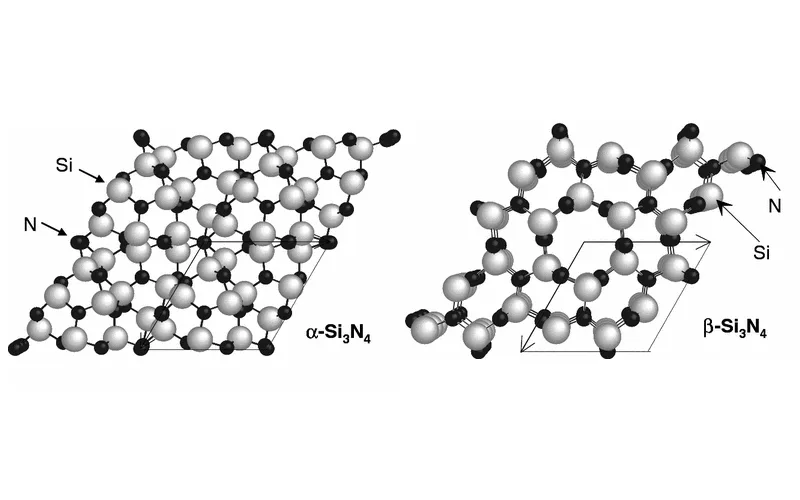
1.1 Silicon Nitride Ceramic (Si₃N₄)
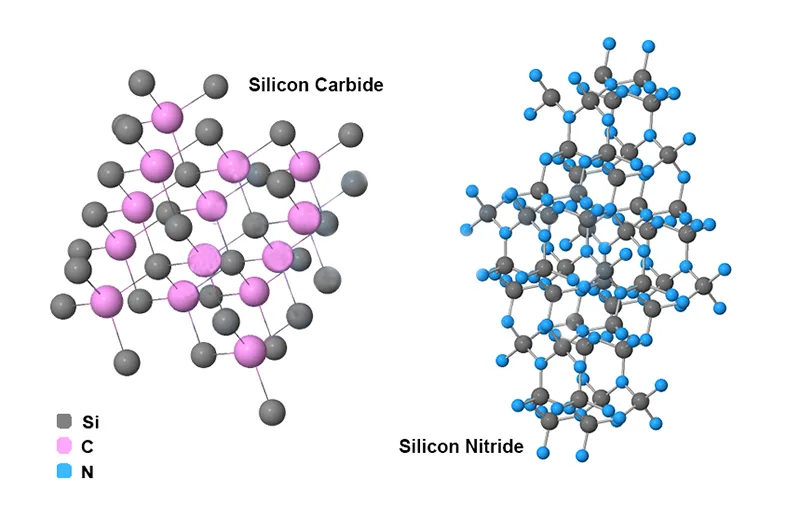
Silicon nitride is a high-performance non-oxide ceramic with strong covalent bonding and a complex crystal structure. Manufacturers commonly use sintering additives to promote densification, so the final microstructure may contain grain-boundary phases as well as silicon nitride grains.
Notably, silicon nitride can develop an interlocking grain structure that contributes to its high fracture toughness. As a result, the material offers a valuable combination of strength, resistance to crack growth and thermal shock performance.
In addition, its relatively low thermal expansion helps reduce dimensional changes during temperature variations. Consequently, engineers often consider silicon nitride for precision components that experience repeated heating, cooling or mechanical loading.
1.2 Silicon Carbide Ceramic (SiC)
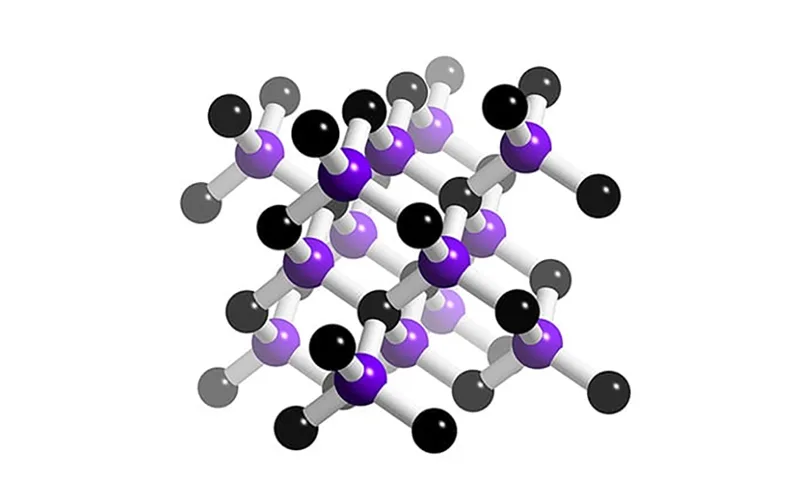
Silicon carbide has a strong covalent crystal structure and several polytypes, including alpha-SiC and beta-SiC. Its strong atomic bonding gives the material very high hardness, stiffness and resistance to abrasive wear.
Furthermore, silicon carbide combines excellent thermal conductivity with strong chemical stability in many demanding environments. These properties make it useful for heat-transfer components, mechanical seals, wear-resistant parts and high-temperature equipment.
Nevertheless, silicon carbide generally offers lower fracture toughness than high-performance silicon nitride grades. Therefore, designers should pay close attention to impact loads, stress concentrations and mounting conditions when using SiC components.
2. Mechanical and Physical Properties: A Side-by-Side Comparison
Material properties provide an important starting point for selection. However, actual values vary with grade, raw material quality, additives, sintering method, porosity, microstructure and test conditions. The ranges below therefore serve as indicative reference values for selected engineering grades, rather than guaranteed specifications for every commercial product.
| Property | Silicon Nitride (Si₃N₄) | Silicon Carbide (SiC) | Practical Significance |
|---|---|---|---|
| Flexural Strength | About 800-1,050 MPa for selected high-performance grades | About 400-600 MPa for some engineering grades | Si₃N₄ often offers an advantage in strength under bending loads. |
| Fracture Toughness | About 6-8.5 MPa·√m for selected grades | About 4.0-4.5 MPa·√m for some grades | Si₃N₄ generally handles crack growth and mechanical impact more effectively. |
| Hardness | High | Very high | SiC generally provides better resistance to abrasive wear. |
| Thermal Conductivity | About 70-90 W/(m·K) for selected high-conductivity grades | About 150-250 W/(m·K) for selected grades | SiC generally transfers heat more efficiently. |
| Thermal Expansion | Around 3.2 × 10⁻⁶/K for some grades | Varies by grade; often slightly higher than Si₃N₄ | Both offer relatively low thermal expansion compared with many metals. |
| Thermal Shock Resistance | Generally excellent | Good to excellent, depending on grade and design | Si₃N₄ often suits severe temperature cycling and mechanical stress. |
| Wear Resistance | Excellent | Excellent to outstanding in abrasive conditions | SiC often performs well in severe abrasion and particle erosion. |
Note: These figures are indicative examples, not universal material specifications. Always compare datasheets that use the same test methods, specimen dimensions and material-grade definitions.
2.1 Strength, Toughness and Impact Resistance
For components exposed to bending, vibration or repeated mechanical loading, silicon nitride often provides a useful advantage. Its relatively high flexural strength and fracture toughness help resist crack initiation and propagation.
By contrast, silicon carbide offers very high hardness and excellent resistance to surface wear. However, its lower fracture toughness in many grades means that sharp impacts, uneven clamping and local stress concentrations require careful design.
Consequently, silicon nitride often suits moving components such as bearing elements and precision rollers, while silicon carbide often suits stationary wear parts and components exposed to abrasive flow.
2.2 Thermal Conductivity and Thermal Expansion
When heat transfer is the main design requirement, silicon carbide usually has the advantage. Selected SiC grades can reach thermal conductivity values of approximately 150–250 W/(m·K), making them useful for heat-transfer structures and thermal management components.
Meanwhile, selected high-thermal-conductivity silicon nitride grades can reach approximately 70–90 W/(m·K). Although this value is generally lower than that of SiC, silicon nitride combines useful thermal conductivity with high strength and fracture toughness.
In terms of thermal expansion, silicon nitride often has a lower coefficient than many SiC grades. As a result, it can help maintain dimensional stability during temperature changes, although the exact difference depends on the material grade.
2.3 High-Temperature Performance
Both materials can operate in high-temperature environments, but their behavior depends on atmosphere and service conditions. Silicon carbide can maintain useful properties at very high temperatures and can form a protective silica-rich surface layer during oxidation in air.
Similarly, silicon nitride offers strong high-temperature mechanical performance and good thermal shock resistance. However, oxidation, grain-boundary phases and long-term strength retention depend on the grade and surrounding atmosphere.
Therefore, do not select a ceramic based only on a quoted maximum temperature. Instead, confirm continuous operating temperature, peak temperature, exposure time, atmosphere, thermal cycling and mechanical load.
2.4 Corrosion Resistance and Electrical Properties
Silicon carbide offers excellent chemical resistance in many acidic, alkaline and abrasive environments. Nevertheless, its performance depends on the specific chemical, concentration, temperature, porosity and grade, so no ceramic should be described as universally corrosion-proof.
Silicon nitride also provides good chemical and oxidation resistance in many industrial applications. However, strong chemicals or high-temperature process media may attack certain grades or their grain-boundary phases.
Regarding electrical behavior, both materials can provide electrical insulation in suitable grades. Nevertheless, silicon carbide can show significant electrical conductivity depending on its composition, impurities and processing route. Therefore, engineers should verify volume resistivity and dielectric strength rather than assume that every SiC grade provides stable insulation.
3. Manufacturing Processes and Machining Differences
Material properties are only part of the selection process. In addition, forming, sintering and precision machining determine the achievable geometry, dimensional accuracy, production cost and final quality.
3.1 Silicon Nitride Manufacturing
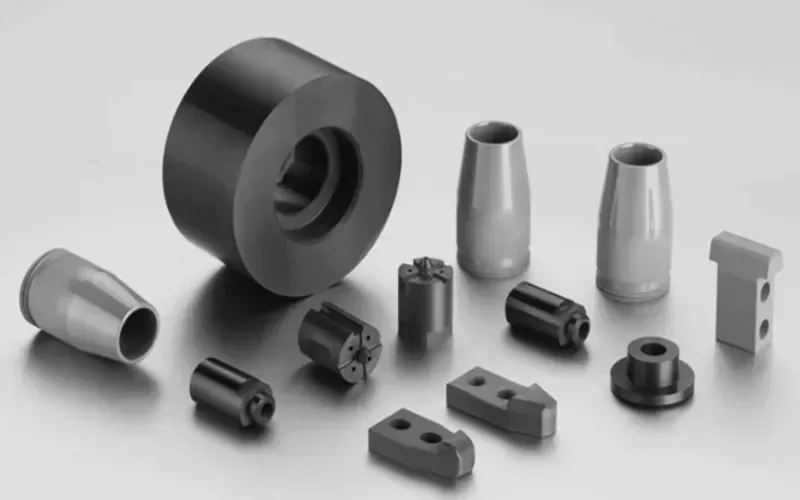
Manufacturers commonly produce silicon nitride components through gas-pressure sintering, hot pressing or hot isostatic pressing, depending on the required material properties and component design. Each route offers different advantages in densification, microstructure control and production cost.
Notably, silicon nitride can support complex engineering geometries when the manufacturer selects a suitable forming method. Dry pressing, isostatic pressing and ceramic injection molding may all suit different component shapes and production volumes.
After sintering, diamond grinding and other precision finishing methods help achieve the required dimensions and surface quality. Although silicon nitride is very hard, its relatively high toughness can make some finishing operations less prone to edge chipping than more brittle ceramic materials.
However, silicon nitride still requires specialized equipment and skilled process control. Its raw materials, sintering conditions and precision finishing can also increase production costs.
3.2 Silicon Carbide Manufacturing
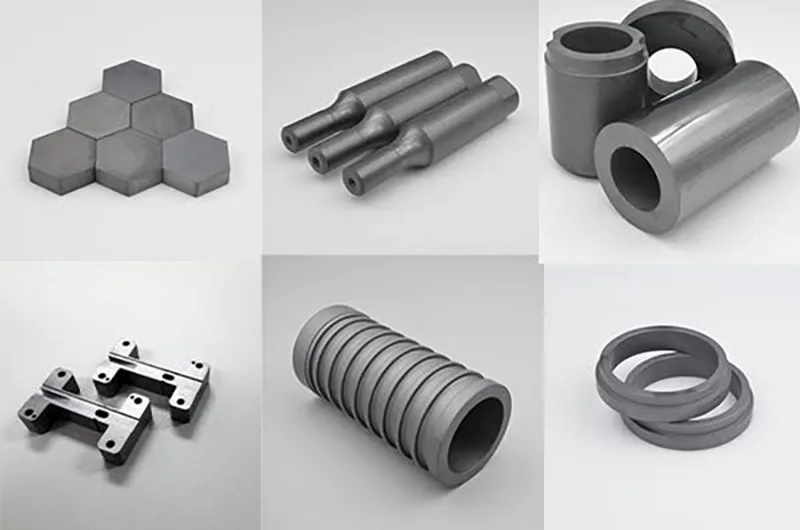
Silicon carbide components commonly use reaction bonding, pressureless sintering or hot pressing. The appropriate route depends on the required density, purity, dimensions, strength and application.
For example, reaction-bonded SiC can support certain complex shapes and offers useful dimensional control, while pressureless-sintered and hot-pressed grades can provide different combinations of density and performance. Therefore, the phrase “silicon carbide” alone does not identify one fixed manufacturing process or property profile.
Because silicon carbide has extremely high hardness, precision machining usually requires diamond tools and careful process control. Moreover, its relatively low fracture toughness can increase the risk of chipping or cracking during grinding, drilling and handling.
Nevertheless, SiC is not limited to simple shapes. Manufacturers can produce complex components when the design, forming method, machining access and production cost allow it. Early design review helps determine whether the required geometry is practical.
| Manufacturing Factor | Silicon Nitride | Silicon Carbide |
|---|---|---|
| Common Sintering Routes | Gas-pressure sintering, hot pressing, hot isostatic pressing | Reaction bonding, pressureless sintering, hot pressing |
| Precision Machining | Diamond grinding and precision finishing | Diamond grinding and specialized machining |
| Main Processing Challenge | Sintering control, material cost and precision finishing | High hardness, machining difficulty and brittle fracture risk |
| Design Consideration | Control shrinkage, stress concentration and thin-wall geometry | Avoid sharp corners, impact loads and difficult machining features |
4. Typical Industrial Applications: Where Does Each Material Perform Best?
In practical engineering, the operating environment usually determines which ceramic offers the better solution. Silicon nitride often fits dynamic mechanical applications, while silicon carbide frequently suits severe wear, corrosion and heat-transfer conditions.
4.1 Typical Applications of Silicon Nitride Ceramic
Silicon nitride is a strong candidate for components that face repeated movement, vibration, impact or thermal cycling. Its combination of strength, toughness and relatively low density supports demanding precision applications.
- Precision machinery: Ceramic bearing balls, rolling elements, rollers and other high-speed wear-resistant components.
- New energy and automotive: Selected motor-related insulating or structural components, high-temperature parts and turbocharger ceramic components.
- Metallurgy: Kiln furniture, sintering support plates, high-temperature nozzles and selected heat-resistant components.
- General industrial equipment: Components exposed to repeated motion, frequent start-stop cycles, vibration and changing temperatures.
For these applications, silicon nitride can help improve mechanical reliability and reduce the risk of premature cracking when the design and material grade match the service conditions.
4.2 Typical Applications of Silicon Carbide Ceramic
Silicon carbide is particularly useful where components face severe abrasion, corrosive media, high heat or demanding thermal management requirements.
- Semiconductor and power electronics: Selected high-purity structural parts, wafer-processing components and thermal management applications. For electronic substrates, engineers should evaluate the specific substrate material and technology, since SiC ceramics are not interchangeable with all AMB or DBC substrate materials.
- Chemical and environmental equipment: Corrosion-resistant nozzles, slurry handling components, grinding liners and pump wear parts.
- High-temperature equipment: Kiln components, heat exchangers, furnace fixtures and high-temperature structural parts.
- Precision sealing systems: Mechanical seal rings, pump and valve components, and parts exposed to abrasive fluid flow.
As a result, silicon carbide often offers a long service life in applications where abrasion, erosion, chemical exposure or heat transfer dominate the design requirements.
5. How to Choose Between Silicon Nitride and Silicon Carbide
Rather than choosing the material with the highest value in one property, start with the actual failure risks and operating conditions. The following guidelines provide a practical starting point for material selection.
Choose Silicon Nitride When…
- The component experiences impact or vibration.
- Thermal cycling or rapid temperature changes occur frequently.
- High fracture toughness and crack resistance matter.
- The part needs high strength with relatively low weight.
- Dynamic precision components or complex geometries require careful material selection.
Choose Silicon Carbide When…
- Severe abrasive wear or particle erosion dominates.
- The component contacts corrosive process media.
- High thermal conductivity is a key requirement.
- The component operates at very high temperatures.
- Dimensional stability and wear resistance matter in demanding static or fluid-contact applications.
Questions to Ask Before Finalizing the Material
- What is the continuous and peak operating temperature?
- Does the component experience impact, vibration or repeated mechanical loading?
- Will it contact abrasive particles, slurry, chemicals or corrosive gases?
- Does the design prioritize heat transfer or electrical insulation?
- Which dimensions, surface finishes and geometric tolerances control performance?
- Can the selected material and manufacturing route achieve the required shape and production quantity?
Ultimately, the best material is the one that meets the complete application requirements at an acceptable manufacturing cost. A detailed review of the drawing and operating conditions can prevent costly material substitutions and premature component failure.
6. Custom Silicon Nitride and Silicon Carbide Components from AOFE MIMCustom
For industrial buyers and equipment manufacturers, selecting the right ceramic material is only the first step. Component geometry, manufacturing process, dimensional tolerances and actual operating conditions also determine whether a custom part will perform reliably.
AOFE MIMCustom supports custom ceramic component manufacturing based on customer drawings and project requirements. The team can review the intended application and discuss material selection, structural design, precision requirements and manufacturing considerations for non-standard ceramic parts.
Depending on the project, customers may request silicon nitride or silicon carbide components for precision machinery, industrial equipment, wear-resistant systems and high-temperature applications. However, the suitable material grade and production route need to be evaluated against each component’s geometry and service conditions.
What Information Should You Provide?
To help the team review your inquiry efficiently, prepare the following information whenever possible:
- 2D engineering drawings or 3D CAD files
- Preferred material: Si₃N₄, SiC or another technical ceramic
- Required material properties or technical datasheet
- Critical dimensions, tolerances and surface finish
- Operating temperature, atmosphere and chemical exposure
- Mechanical loads, vibration and wear conditions
- Prototype quantity, production volume and inspection requirements
Discuss Your Custom Ceramic Component Project
Whether you need a silicon nitride bearing component or a silicon carbide wear-resistant part, clear drawings and application details help establish a practical manufacturing plan. Contact AOFE MIMCustom to discuss your custom ceramic component requirements.
Frequently Asked Questions About Silicon Nitride and Silicon Carbide
1. What is the main difference between silicon nitride and silicon carbide?
Generally, silicon nitride offers higher fracture toughness and strong resistance to mechanical impact and thermal shock. Meanwhile, silicon carbide provides higher hardness, excellent abrasion resistance and higher thermal conductivity in many grades. Therefore, Si₃N₄ often suits dynamic mechanical parts, while SiC often suits severe wear and heat-transfer applications.
2. Which material is harder, silicon nitride or silicon carbide?
Silicon carbide generally has higher hardness than silicon nitride. Consequently, SiC often performs well in abrasive environments and erosion-resistant components. However, hardness alone does not determine service life, because fracture toughness, surface finish and contact conditions also matter.
3. Which ceramic has better thermal conductivity?
Silicon carbide generally offers higher thermal conductivity. Selected SiC grades can reach approximately 150–250 W/(m·K), while selected high-conductivity silicon nitride grades can reach around 70–90 W/(m·K). Nevertheless, actual values depend on grade, microstructure and manufacturing process.
4. Is silicon nitride more resistant to impact than silicon carbide?
In many engineering grades, yes. Silicon nitride generally offers higher fracture toughness, which helps it resist crack growth under impact and mechanical loading. By comparison, silicon carbide often requires more careful control of impact, clamping and stress concentration.
5. Which material is better for high-temperature applications?
Both materials can serve high-temperature applications, but silicon carbide often offers an advantage in very high-temperature environments and heat-transfer components. However, the correct choice depends on atmosphere, exposure time, mechanical load, thermal cycling and material grade rather than a single maximum-temperature figure.
6. Is silicon carbide suitable for corrosive environments?
Yes, many silicon carbide grades offer excellent resistance to chemical attack and abrasive slurry. However, compatibility depends on the specific chemical, concentration, temperature, porosity and grade. Therefore, confirm the operating media before selecting the material.
7. Are silicon nitride and silicon carbide electrical insulators?
Some grades of both materials can provide electrical insulation. Nevertheless, silicon carbide can exhibit semiconducting behavior, depending on its composition and processing. For electrical applications, always check volume resistivity, dielectric strength and the relevant grade specifications.
8. Which material is more difficult to machine?
Both materials require specialized machining, especially when a component needs tight tolerances or a fine surface finish. However, silicon carbide’s extremely high hardness and relatively low fracture toughness can make precision grinding and edge finishing particularly challenging.
9. Can silicon nitride replace silicon carbide in an existing component design?
Sometimes, but a direct material substitution may change wear behavior, thermal conductivity, strength, thermal expansion and manufacturing cost. Therefore, review the component’s operating loads, temperature, chemical exposure, dimensions and assembly conditions before approving a replacement.
10. Can AOFE MIMCustom manufacture custom Si₃N₄ and SiC components?
AOFE MIMCustom supports custom ceramic component manufacturing based on customer drawings and project requirements. To start a technical review, provide your drawings or CAD files, preferred material, required quantity and operating conditions. The suitable material grade and manufacturing route can then be evaluated for the specific project.
Conclusion: Choose the Ceramic That Matches the Application
Silicon nitride and silicon carbide each offer distinct advantages. Silicon nitride stands out for its strength, fracture toughness and thermal shock resistance, making it a strong option for precision components exposed to vibration, impact and repeated temperature changes.
By comparison, silicon carbide excels in hardness, abrasion resistance, chemical stability and thermal conductivity. Consequently, it often suits components that face severe wear, corrosive media, high heat or demanding heat-transfer requirements. Neither material is universally better; the right choice depends on the complete operating environment, component design and manufacturing requirements.
Key Topics Covered
Silicon nitride ceramic; silicon carbide ceramic; Si₃N₄ vs. SiC; advanced non-oxide ceramics; ceramic flexural strength; fracture toughness; thermal conductivity; thermal shock resistance; ceramic corrosion resistance; silicon nitride bearing components; silicon carbide wear parts; custom industrial ceramic components; technical ceramic manufacturing.