Advanced Ceramics | Materials Engineering
Why Choose Silicon Nitride Ceramic Welding Rollers?
In industrial production, roller materials directly affect equipment stability, product quality and maintenance costs. For demanding welding and precision-processing environments, silicon nitride ceramic rollers offer a useful combination of mechanical strength, wear resistance, electrical insulation and thermal stability.
Compared with conventional metal rollers, these advanced ceramic components can help reduce wear and avoid unwanted electrical or magnetic interference in suitable applications. Therefore, this article explains their key properties, material specifications, practical benefits and custom manufacturing options from AOFE MIMCustom.
Silicon Nitride Ceramic Welding Rollers at a Glance
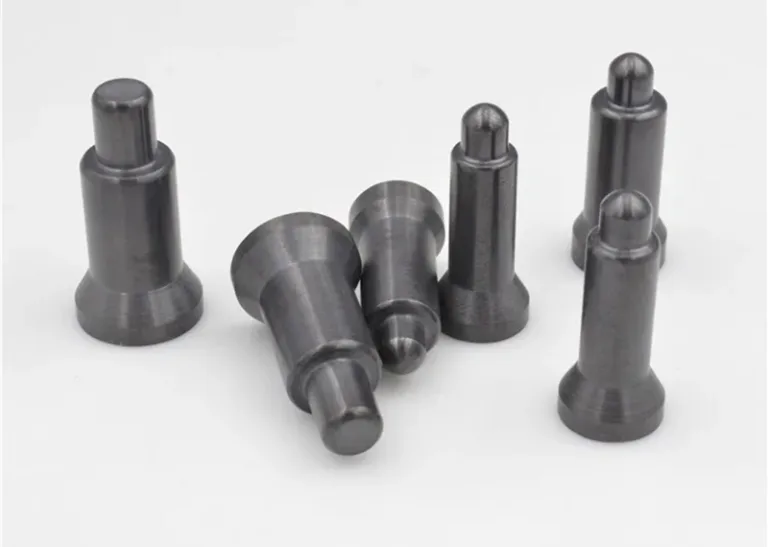
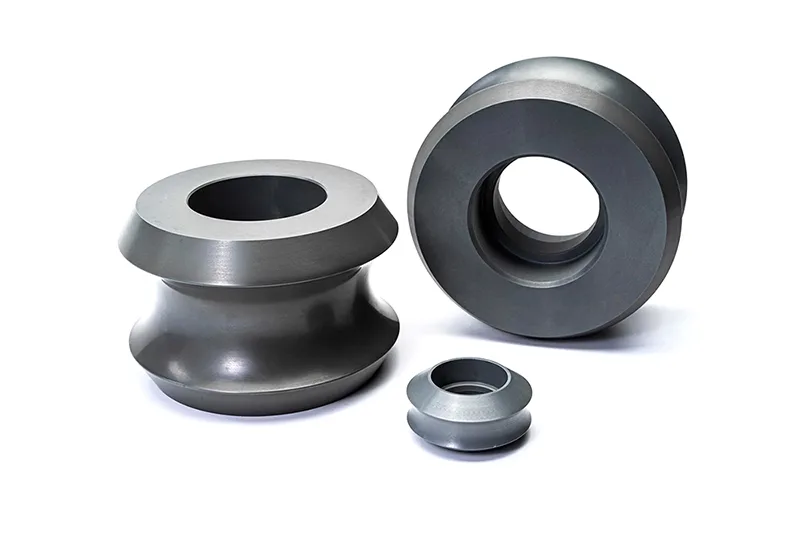
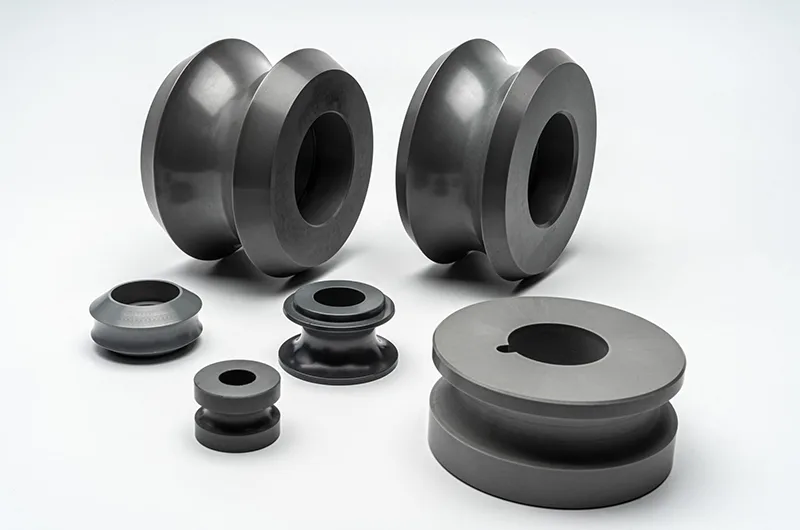
Silicon nitride ceramic welding rollers are industrial roller components made from silicon nitride (Si₃N₄), an advanced non-oxide ceramic known for its strength, hardness and resistance to thermal shock.
- High mechanical strength supports demanding operating loads.
- High hardness and wear resistance help extend service life.
- Electrical insulation supports applications that require non-conductive components.
- Low thermal expansion helps maintain dimensional stability during temperature changes.
- Custom dimensions and roller configurations can address different equipment requirements.
1. What Makes Silicon Nitride Suitable for Industrial Rollers?
Silicon nitride is an advanced non-oxide ceramic with a strong covalent-bonded structure. As a result, it combines high strength, hardness and fracture resistance in a material that remains relatively lightweight.
Furthermore, its low thermal expansion helps control dimensional changes during heating and cooling. This feature matters when a roller must maintain stable geometry and consistent contact with the workpiece.
Unlike ordinary metal components, silicon nitride also provides electrical insulation. Consequently, engineers can consider it for equipment where electrical isolation matters, while application-specific testing should confirm its suitability.
In addition, silicon nitride offers useful wear resistance under suitable contact conditions. However, its ceramic nature means designers must account for brittleness and avoid excessive impact or concentrated loads.
2. Key Advantages of Silicon Nitride Ceramic Welding Rollers
High Strength and Load Resistance
First, silicon nitride provides high flexural and compressive strength for demanding mechanical applications. For example, the supplied material specifications list flexural strength values from 680 to 850 MPa and compressive strength values from 3,000 to 3,800 MPa across the three grades.
Therefore, a properly designed roller can support substantial operating loads. Nevertheless, engineers should calculate contact stress, shaft support and assembly loads rather than relying on material strength values alone.
Wear Resistance and Surface Durability
Next, silicon nitride offers high hardness, which helps resist surface wear during repeated contact and rotation. The supplied specifications show HRA hardness values of 91.5-92 and Vickers hardness values of 1,600-1,650 HV1.
As a result, silicon nitride may help reduce roller wear in suitable operating conditions. However, actual service life also depends on surface finish, contact pressure, lubrication, alignment, operating speed and the material of the opposing component.
Electrical Insulation
Moreover, silicon nitride provides high electrical resistivity and dielectric strength. According to the supplied grade table, volume resistivity at 20°C reaches 1014 Ω·cm, while dielectric strength ranges from 10 to 16 kV/mm.
Consequently, these properties make silicon nitride worth considering for equipment that requires electrical isolation. Even so, the complete roller assembly, operating voltage, temperature and environmental conditions must meet the relevant insulation requirements.
Non-Magnetic Material Characteristics
Additionally, the original product information identifies the roller as non-magnetic. This characteristic can matter in equipment where magnetic interference may affect nearby components or processes.
However, the supplied specification table does not include a magnetic susceptibility or permeability value. Therefore, buyers who require a defined non-magnetic performance level should request confirmation and, where necessary, a material test report for the selected grade.
Thermal Stability and Low Expansion
Furthermore, silicon nitride has a thermal expansion coefficient of 3.2 × 10⁻⁶ K-1 across the three grades in the supplied table. This relatively low value helps limit dimensional changes as temperature varies.
Meanwhile, the listed thermal shock resistance reaches 600°C for AFSN-200 and 800°C for AFSN-300 and AFSN-1000. These figures provide a useful material reference, although the actual thermal shock limit depends on part geometry, heating rate, cooling conditions and test method.
3. Silicon Nitride Material Specifications
The following table summarizes the three silicon nitride grades shown in the supplied product specification. In particular, it helps buyers compare mechanical, thermal and electrical properties before selecting a material for a custom roller.
| Property | Unit | AF SN-200 | AF SN-300 | AF SN-1000 |
|---|---|---|---|---|
| Material | — | Si₃N₄ | Si₃N₄ | Si₃N₄ |
| Color | — | Gray / Black | Gray / Black | Yellow |
| Density | g/cm³ | 3.2 | 3.2 | 3.2 |
| Flexural Strength | MPa | 680 | 850 | 750 |
| Compressive Strength | MPa | 3,000 | 3,800 | 3,000 |
| Young’s Modulus | GPa | 290 | 300 | 300 |
| Fracture Toughness | MPa·m1/2 | 6 | 7 | 7.5 |
| Poisson’s Ratio | — | 0.28 | 0.28 | 0.28 |
| Hardness | HRA | 91.5 | 92 | 92 |
| Vickers Hardness | HV1 | 1,600 | 1,650 | 1,650 |
| Thermal Expansion Coefficient | 10⁻⁶ K⁻¹ | 3.2 | 3.2 | 3.2 |
| Thermal Conductivity | W/(m·K) | 26 | 40 | 70 |
| Thermal Shock Resistance (ΔT) | °C | 600 | 800 | 800 |
| Maximum Use Temperature in Oxidizing Atmosphere | °C | 1,000 | 1,300 | 1,300 |
| Maximum Use Temperature in Reducing or Inert Atmosphere | °C | 1,200 | 1,400 | 1,400 |
| Volume Resistivity at 20°C | Ω·cm | 1014 | 1014 | 1014 |
| Dielectric Strength | kV/mm | 10 | 12 | 16 |
| Dielectric Constant (1 MHz, room temperature) | — | 12 | 11 | 10 |
| Dielectric Loss Angle (frequency requires confirmation) | tan δ | 4 × 10⁻³ | 5 × 10⁻³ | 3 × 10⁻³ |
Note: These values come from the supplied material specification and serve as reference data. Actual properties may vary with production conditions, test methods and material batches. The source table gives conflicting frequency labels for dielectric loss angle (1 MHz in the item description and 1 GHz beside the values); please confirm the correct test frequency with the supplier before technical approval.
4. How to Select the Right Silicon Nitride Grade
Although all three grades use silicon nitride, their listed properties differ. Therefore, buyers should compare the requirements of the complete roller assembly instead of choosing a grade based on one value.
AFSN-200
A listed flexural strength of 680 MPa and thermal conductivity of 26 W/(m·K) provide a starting point for general engineering evaluation.
Maximum use temperature: 1,000°C in an oxidizing atmosphere; 1,200°C in a reducing or inert atmosphere.
AFSN-300
With 850 MPa flexural strength and 7 MPa·m1/2 fracture toughness in the supplied table, this grade has the highest listed flexural strength of the three.
Maximum use temperature: 1,300°C in an oxidizing atmosphere; 1,400°C in a reducing or inert atmosphere.
AFSN-1000
This grade lists the highest fracture toughness at 7.5 MPa·m1/2 and the highest thermal conductivity at 70 W/(m·K).
Maximum use temperature: 1,300°C in an oxidizing atmosphere; 1,400°C in a reducing or inert atmosphere.
For a final selection, engineers should also review roller diameter, length, wall thickness, shaft connection, rotational speed, contact pressure and surface finish. In addition, operating atmosphere and temperature cycles can affect the suitable grade and design.
5. Potential Applications of Silicon Nitride Ceramic Rollers
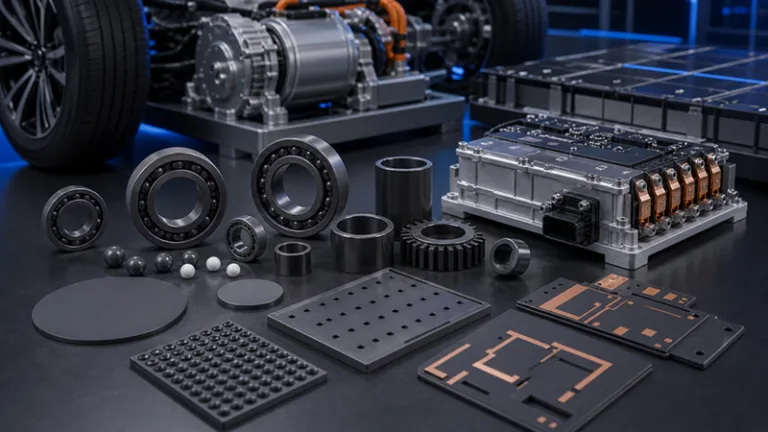
Depending on the equipment design, silicon nitride rollers may serve in industrial processes that need wear resistance, electrical insulation or stable performance during temperature changes.
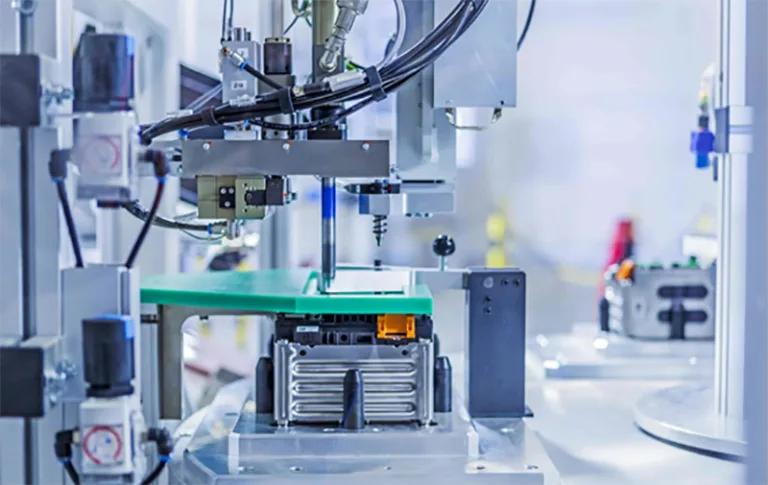
- Welding and joining equipment: Rollers can support controlled contact and material movement where the process design calls for an electrically insulating ceramic surface.
- Electrical and electronic production: High volume resistivity makes silicon nitride a candidate for components that require electrical isolation.
- Precision machinery: High hardness and dimensional stability can benefit roller assemblies that experience repeated contact and rotation.
- High-temperature equipment: Suitable grades may serve in equipment exposed to elevated temperatures, provided the atmosphere and thermal cycle remain within the material limits.
- Special-purpose industrial lines: Custom roller geometry can address equipment layouts that standard metal rollers or off-the-shelf ceramic parts cannot meet.
Nevertheless, silicon nitride does not suit every roller application. For example, severe impact, poor alignment, sharp contact edges or excessive assembly stress can cause ceramic damage. Therefore, engineers should evaluate the complete operating system before replacing a metal roller with a ceramic one.
6. Manufacturing and Design Considerations
Unlike ductile metals, silicon nitride behaves as a hard and brittle engineering material. Consequently, roller design and machining require careful control from the initial drawing through final inspection.
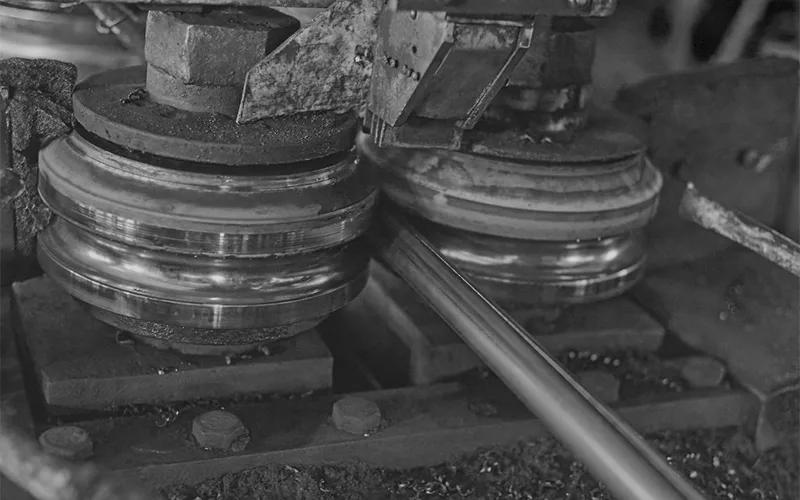
Roller Geometry and Structural Design
First, designers should define the roller’s outer diameter, inner diameter, overall length and working-surface dimensions. Furthermore, they should specify concentricity, roundness, straightness and other geometric tolerances wherever these features affect rotation or contact accuracy.
In addition, rounded transitions and suitable edge chamfers can reduce local stress concentration. Meanwhile, the shaft, sleeve or mounting structure should distribute loads without creating excessive point pressure on the ceramic body.
Joining and Assembly
For multi-part roller designs, the joining method needs particular attention. Although the original product description mentions joining multiple ceramic sections, the appropriate method depends on the geometry, service temperature, mechanical load and material compatibility.
Therefore, buyers should confirm whether the design requires a ceramic-to-ceramic joint, a metal-to-ceramic connection or a mechanically assembled structure. In every case, the joint must withstand the actual operating conditions without introducing damaging residual stress.
Precision Machining and Inspection
Moreover, diamond grinding and controlled finishing help achieve the required dimensions and surface quality. However, excessive machining pressure or unsuitable handling can create edge chips and microcracks.
As a result, inspection should cover critical dimensions, surface condition and any specified geometric tolerances. Where the application requires electrical insulation or other functional performance, the buyer and manufacturer should also agree on the test method and acceptance criteria before production.
7. Custom Silicon Nitride Ceramic Welding Rollers by AOFE MIMCustom
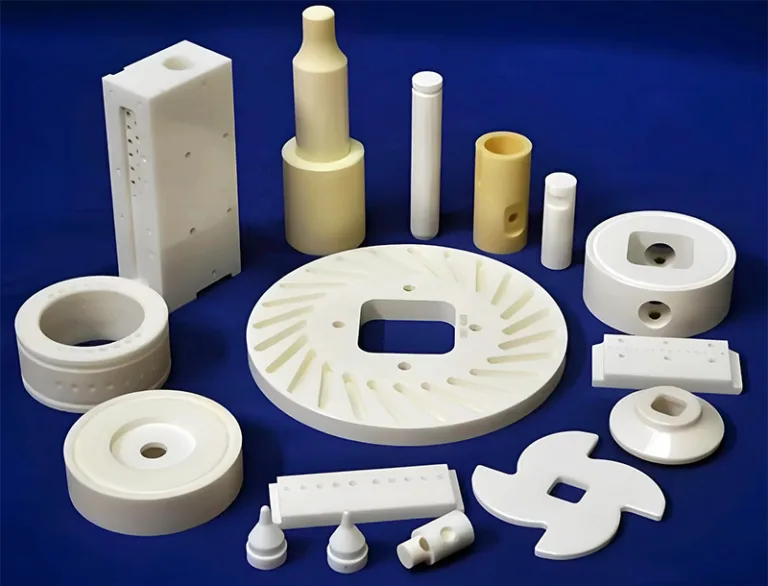
AOFE MIMCustom supports custom manufacturing of silicon nitride ceramic components, including ceramic roller projects developed around customer drawings and equipment requirements.
Instead of relying only on standard dimensions, customers can discuss the roller’s geometry, material grade, working surface and assembly requirements with the team. Furthermore, the supplied AFSN-200, AFSN-300 and AFSN-1000 specifications provide a reference for initial material selection.
For a more efficient technical review, please prepare the following information:
- 2D engineering drawings or 3D CAD files.
- Required material grade, if already specified.
- Roller diameter, length, wall thickness and critical tolerances.
- Surface roughness and working-contact requirements.
- Operating temperature, atmosphere and thermal cycling conditions.
- Rotational speed, contact pressure, load and expected service conditions.
- Quantity, prototype requirements and inspection documentation.
With these details, AOFE MIMCustom can review the project requirements and discuss a suitable material and manufacturing approach. Ultimately, a clear drawing and realistic operating data help reduce quotation delays and avoid design changes during production.
8. Frequently Asked Questions
1. What is a silicon nitride ceramic welding roller?
A silicon nitride ceramic welding roller is an industrial roller component made from Si₃N₄ ceramic. It combines high hardness, mechanical strength, wear resistance and electrical insulation for suitable welding or precision-processing equipment.
2. Why choose silicon nitride instead of a metal roller?
Compared with many conventional metals, silicon nitride offers higher hardness, electrical insulation and lower thermal expansion. Therefore, it may suit applications where wear, electrical isolation or temperature-related dimensional stability matters. However, the final choice depends on load, impact and equipment design.
3. Are silicon nitride ceramic rollers electrically insulating?
Yes. The supplied material table lists a volume resistivity of 1014 Ω·cm at 20°C and dielectric strength of 10-16 kV/mm across the three grades. Nevertheless, the finished component and complete assembly should undergo application-specific insulation evaluation.
4. Are silicon nitride ceramic rollers non-magnetic?
The original product information describes these rollers as non-magnetic. However, the supplied grade table does not show magnetic test results. Therefore, customers with strict magnetic requirements should request confirmation for the selected material and finished component.
5. What is the maximum operating temperature?
According to the supplied specifications, AFSN-200 has maximum use temperatures of 1,000°C in an oxidizing atmosphere and 1,200°C in a reducing or inert atmosphere. Meanwhile, AFSN-300 and AFSN-1000 list 1,300°C and 1,400°C under the respective conditions. Actual limits depend on component design and service conditions.
6. Can AOFE MIMCustom manufacture rollers to custom drawings?
Yes. AOFE MIMCustom supports custom silicon nitride ceramic component manufacturing. Customers can submit drawings, CAD files and operating requirements for a project review.
7. What information should I provide for a quotation?
Ideally, provide a 2D drawing or 3D model, material preference, dimensions, tolerances, surface finish, operating temperature, load, rotational speed, working atmosphere and order quantity. In addition, inspection and packaging requirements help clarify the quotation scope.
8. Can silicon nitride rollers break under impact?
Yes. Although silicon nitride offers better fracture toughness than many traditional technical ceramics, it remains a brittle material. Therefore, designers should control impact loads, avoid sharp stress concentrations and use suitable handling and assembly methods.
9. How do I choose between AFSN-200, AFSN-300 and AFSN-1000?
Start by comparing the required strength, fracture toughness, thermal conductivity and operating atmosphere. For example, AF SN-300 has the highest listed flexural strength, while AF SN-1000 has the highest listed fracture toughness and thermal conductivity. Nevertheless, the best grade must match the complete application rather than one isolated property.
Conclusion
Silicon nitride ceramic welding rollers offer a valuable combination of mechanical strength, hardness, wear resistance, electrical insulation and thermal stability. Consequently, they can provide a practical material option for industrial equipment that requires reliable roller performance under demanding conditions.
Even so, successful application depends on more than material selection. Roller geometry, machining quality, assembly design and operating conditions all influence service performance. Therefore, AOFE MIMCustom encourages customers to share their drawings and application details before finalizing a custom silicon nitride roller project.