Automotive Engineering Technical Series
The Application of Powder Metallurgy in the Manufacturing of Automotive Parts
Discover how advanced powder metallurgy technologies enable high-precision, sustainable automotive component production while driving industry innovation toward lightweight and energy-efficient vehicle designs.
Executive Summary
Moreover, powder metallurgy represents a transformative manufacturing approach that utilizes metal powders to create high-precision, complex automotive components with minimal waste. Meanwhile, the automotive sector consumes approximately 60% of all structural PM parts, making it the primary driver of industry growth. Furthermore, this technology offers superior material utilization rates above 95%, positioning it as a cornerstone of sustainable manufacturing in the era of vehicle lightweighting and electrification.
1. Fundamental Composition of PM Materials
Initially, engineers must understand that powder metallurgy relies on carefully formulated mixtures rather than single-element metals. Specifically, these compositions determine the final mechanical properties, dimensional stability, and performance characteristics of automotive components.
Base Metal Powders
Primarily, iron and steel powders serve as the foundation for most automotive PM parts due to their excellent strength-to-cost ratio. Additionally, manufacturers frequently employ atomized steel powders that offer consistent particle size distribution and superior compressibility. Meanwhile, specialized applications may require stainless steel, titanium, or aluminum base powders depending on corrosion resistance or weight requirements.
Alloying Elements
Subsequently, technicians add alloying elements to enhance specific mechanical properties during the sintering process. For instance, copper improves hardness and tensile strength through liquid phase sintering mechanisms. Similarly, nickel increases toughness and impact resistance, which proves essential for transmission components subjected to dynamic loading. Moreover, molybdenum additions enhance hardenability and high-temperature performance for engine applications.
Lubricants and Additives
Furthermore, organic lubricants like zinc stearate or ethylene bis-stearamide facilitate powder compaction and prevent die wear during pressing operations. Concurrently, solid lubricants such as graphite or molybdenum disulfide provide self-lubricating properties in bearings and bushings. Finally, binders and plasticizers may be necessary for complex geometries requiring metal injection molding techniques.
2. Manufacturing Process for Automotive Components
Consequently, transforming raw powder into finished automotive parts involves a precisely controlled sequence of manufacturing steps. Each stage critically influences the final density, microstructure, and dimensional accuracy of the component.
Powder Blending and Mixing
First, production teams thoroughly blend base powders with alloying elements and lubricants to achieve homogeneous distribution throughout the mixture. This step ensures uniform density and prevents segregation that could cause localized weaknesses. Typically, V-blenders or double-cone mixers operate for 20-40 minutes to optimize homogeneity without causing particle deformation.
Compaction and Pressing
Next, hydraulic or mechanical presses apply tremendous pressure ranging from 400 to 800 MPa to compact the powder mixture into precise die cavities. During this phase, particles mechanically interlock and plastically deform to form a coherent “green” compact with sufficient handling strength. Importantly, engineers must carefully design tooling to account for friction effects and ensure uniform density distribution across complex geometries.
Sintering Operations
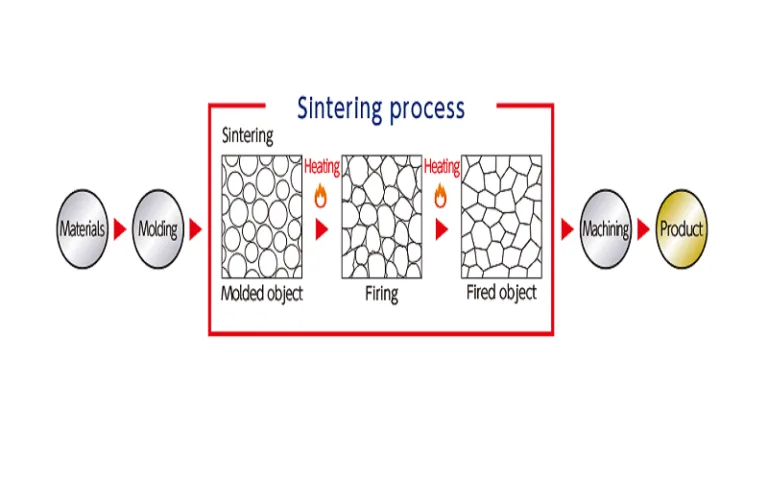
Afterward, furnaces heat the green compacts to temperatures between 1100°C and 1300°C in controlled atmospheres containing hydrogen, nitrogen, or dissociated ammonia. Throughout this thermal cycle, diffusion bonding occurs between particles, eliminating porosity and developing full metallurgical properties. Simultaneously, lubricants burn off during the initial heating zone, while alloying elements diffuse to create homogeneous microstructures.
Secondary Operations
Finally, many automotive components undergo additional processing to meet stringent specifications. For example, sizing or coining operations improve dimensional precision to IT7-IT8 tolerance grades. Likewise, steam treatment creates protective oxide layers that enhance corrosion resistance and seal surface porosity. In some cases, CNC machining adds features impossible to achieve through pressing alone, though this reduces overall material efficiency.
3. Key Automotive Applications and Synchronizer Hubs
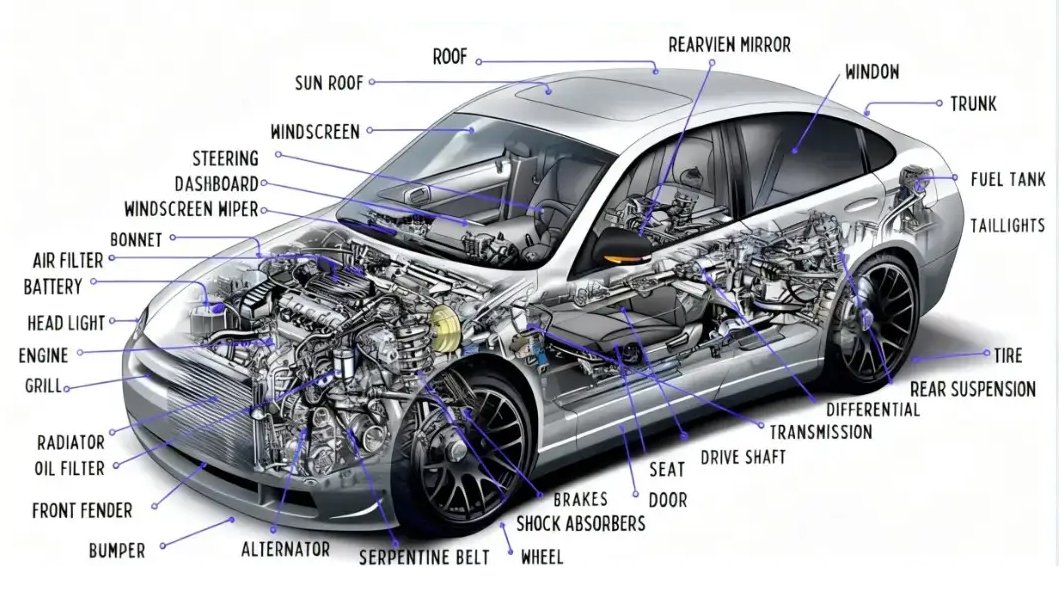
Notably, the automotive industry represents the dominant market for structural powder metallurgy components, accounting for approximately 60% of total PM consumption worldwide. These parts appear throughout modern vehicles, enabling critical functions across multiple subsystems.
Synchronizer Hubs: A Benchmark Application
Specifically, synchronizer hubs exemplify the technical sophistication achievable through powder metallurgy in transmission systems. These complex components feature intricate internal splines, external gear teeth, and precise dimensional tolerances that would require extensive machining if produced via forging. Instead, PM technology manufactures them to near-net shape, dramatically reducing production costs while maintaining excellent fatigue strength and wear resistance.
Engine System Components
Additionally, engine assemblies incorporate numerous PM parts including valve guides, valve seat inserts, timing sprockets, and oil pump gears. Valve seats particularly benefit from PM’s ability to integrate hard-facing alloys directly into the matrix, providing superior heat resistance and wear performance compared to cast alternatives. Meanwhile, connecting rods manufactured through powder forging demonstrate exceptional fatigue properties rivaling wrought steel at lower weights.
Transmission and Drivetrain
Beyond synchronizers, transmissions utilize PM for planetary carriers, clutch plates, and torque converter hubs. These components demand high torsional strength and precise balance characteristics that PM processes consistently deliver. Furthermore, transfer case sprockets and differential side gears leverage PM’s capability to produce complex tooth geometries without expensive hobbing operations.
Steering, Sensors, and Auxiliary Systems
Moreover, steering systems employ PM for rack-and-pinion components, tilt mechanism parts, and power steering pump elements. Concurrently, sensor housings and magnetic tone rings take advantage of soft magnetic composite materials that enable efficient electromagnetic performance. Finally, ABS sensor rings, fuel system components, and turbocharger parts round out the extensive list of automotive PM applications.
4. Strategic Advantages and Green Manufacturing
Undoubtedly, powder metallurgy offers compelling advantages over conventional manufacturing methods, particularly regarding sustainability and economic efficiency. These benefits align perfectly with contemporary automotive industry priorities emphasizing environmental responsibility and cost optimization.
Exceptional Material Utilization
Most significantly, PM processes achieve material utilization rates exceeding 95%, compared to 40-60% typical of machining operations from billet stock. This remarkable efficiency stems from near-net-shape forming capabilities that minimize scrap generation. Consequently, manufacturers reduce both raw material costs and waste disposal expenses, creating substantial competitive advantages in high-volume production environments.
Energy Efficiency and Carbon Footprint
Additionally, powder metallurgy consumes considerably less energy per kilogram of finished product than melting-based processes. Since sintering temperatures remain below melting points, thermal energy requirements decrease substantially. Furthermore, eliminating multiple machining operations reduces electricity consumption associated with cutting tools, coolant systems, and chip management infrastructure.
Design Flexibility and Complexity
Meanwhile, PM enables production of geometrically complex parts that prove difficult or impossible using alternative methods. Internal splines, multi-level profiles, and integrated functional features can be pressed directly without secondary operations. This design freedom allows engineers to optimize component topology for weight reduction and performance enhancement, supporting broader vehicle lightweighting initiatives.
Cost Competitiveness at Scale
Finally, high-speed pressing equipment produces thousands of identical parts per hour with minimal labor input. Once tooling investments are amortized, unit costs drop dramatically, making PM exceptionally economical for volumes exceeding 10,000 pieces annually. Combined with reduced finishing requirements, total landed costs often undercut forged or machined alternatives by 20-40%.
5. Global Market Disparities and Future Outlook
Despite its proven advantages, significant regional variations exist in PM adoption rates across global automotive markets. Understanding these disparities reveals both current challenges and future growth opportunities within the industry.
Current Usage Statistics by Region
Presently, North American vehicles lead global PM consumption with an average of 19.5 kilograms per car, reflecting decades of technology integration and supplier development. European automobiles follow closely at 14 kilograms, driven by stringent emissions regulations favoring lightweight solutions. Japanese manufacturers utilize approximately 9 kilograms per vehicle, balancing PM benefits against alternative technologies. In contrast, Chinese vehicles currently incorporate only 5-6 kilograms of PM parts, indicating substantial untapped potential.
Technical Capability Gaps
Unfortunately, this disparity primarily stems from relatively lower technical capabilities within China’s domestic PM industry. Many local suppliers cannot yet achieve the dimensional precision, density consistency, or mechanical performance required by international OEM standards. As a result, Chinese automakers frequently resort to more expensive forged or machined components despite higher costs and greater environmental impact.
Future Growth Trajectory
Nevertheless, rapid technological advancement promises to close this gap over the coming decade. As domestic manufacturers invest in advanced pressing equipment, atmosphere-controlled furnaces, and quality control systems, product quality will steadily improve. Consequently, Chinese automotive PM usage could potentially triple, representing millions of tons of additional annual demand. This expansion aligns perfectly with national strategies promoting green manufacturing and automotive industry upgrading.
6. Technical FAQ
Q1: What are the primary components of powder metallurgy materials?
Powder metallurgy materials primarily consist of iron or steel base powders, alloying elements like copper and nickel for strength, lubricants such as zinc stearate for ejection, and sometimes solid lubricants like graphite or MoS₂ for self-lubricating properties.
Q2: Why is powder metallurgy considered a green manufacturing technology?
Furthermore, this process achieves material utilization rates exceeding 95%, significantly reducing waste compared to traditional machining. Additionally, it consumes less energy per unit produced and enables near-net-shape forming that eliminates secondary cutting operations.
Q3: How does China’s PM usage compare to developed nations?
Currently, Chinese vehicles use only 5-6 kg of PM parts on average, whereas US vehicles utilize 19.5 kg, European cars use 14 kg, and Japanese models incorporate 9 kg. Consequently, significant growth potential exists as domestic technical capabilities advance.
Q4: Which automotive systems benefit most from PM technology?
Transmission systems derive particular value through synchronizer hubs and planetary carriers, while engines utilize valve seats and oil pump gears extensively. Steering mechanisms, sensors, and auxiliary systems also incorporate numerous PM components for cost and performance advantages.
Q5: What limitations should designers consider when specifying PM parts?
Although PM excels at producing complex shapes economically, designers must avoid sharp corners, thin walls below 1.5mm, and extreme aspect ratios that hinder powder flow during compaction. Additionally, achieving full density throughout thick sections requires careful process optimization to prevent internal porosity gradients.
Advance Your Automotive Manufacturing with PM Technology
Whether you’re designing next-generation transmissions or optimizing engine efficiency, powder metallurgy offers unmatched combinations of precision, sustainability, and cost-effectiveness for high-volume automotive production.