Advanced Ceramics | Bearing Engineering | Material Selection
Comparison of Technical Performance Between Silicon Nitride Bearing Balls and Steel Bearing Balls
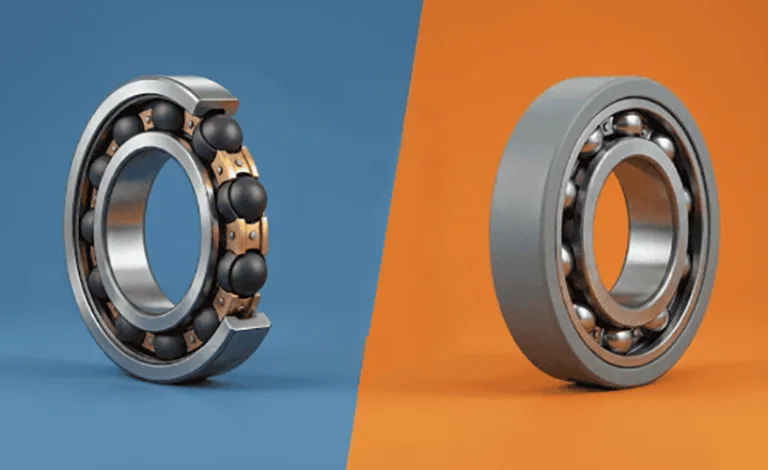
Selecting the right bearing ball material requires more than comparing hardness or purchase price. Instead, engineers must evaluate rotational speed, contact stress, lubrication, temperature, electrical exposure, dimensional stability, and maintenance requirements. Silicon nitride ceramic balls offer several advantages in high-speed and electrically sensitive systems, whereas steel balls remain a practical choice for many conventional and impact-prone applications.
Key Engineering Takeaways
- First, silicon nitride has a typical density of approximately 3.2-3.3 g/cm³, compared with about 7.8 g/cm³ for bearing steel.
- Consequently, ceramic balls reduce rotating mass and centrifugal loading, which can benefit high-speed bearing systems.
- Furthermore, silicon nitride provides high hardness, electrical insulation, low thermal expansion, and good wear resistance.
- However, ceramic balls remain brittle compared with steel and require careful handling, suitable raceway design, and controlled mounting.
- Ultimately, the best material depends on the bearing configuration, load spectrum, operating environment, reliability requirements, and total lifecycle cost.
1. Introduction: Why Bearing Ball Material Matters
Rolling-element bearings support shafts and rotating components while reducing friction between moving surfaces. In addition, their performance influences machine accuracy, energy consumption, vibration, heat generation, and service life.
Traditionally, manufacturers have used bearing steels such as AISI 52100, also known in relevant standards as 100Cr6 or SUJ2, for many rolling-bearing applications. These steels offer high hardness after heat treatment, useful toughness, established manufacturing routes, and competitive cost.
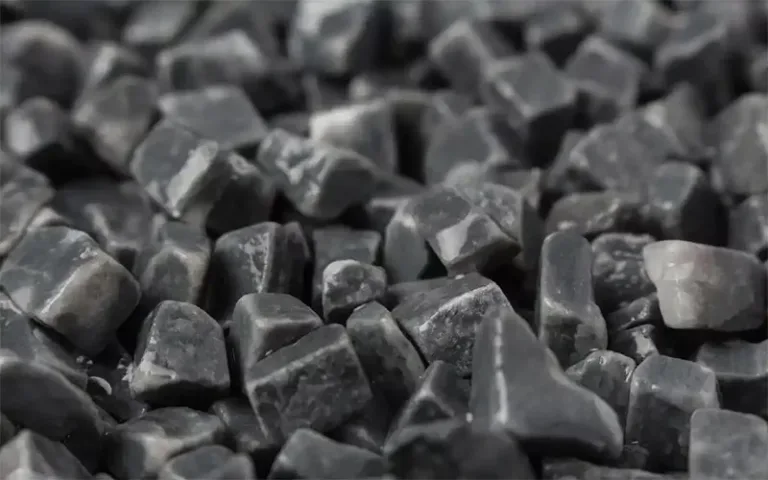
By contrast, silicon nitride (Si₃N₄) is an advanced structural ceramic that combines low density with high hardness, good stiffness, electrical insulation, and strong thermal-shock resistance. Therefore, engineers increasingly consider silicon nitride balls for high-speed spindles, hybrid ceramic bearings, electrically sensitive equipment, and selected demanding industrial systems.
Nevertheless, ceramic does not automatically outperform steel in every operating condition. A reliable material decision must account for contact fatigue, impact loading, lubrication, bearing geometry, installation quality, and the cost of the complete assembly.
2. What Are Silicon Nitride Bearing Balls?
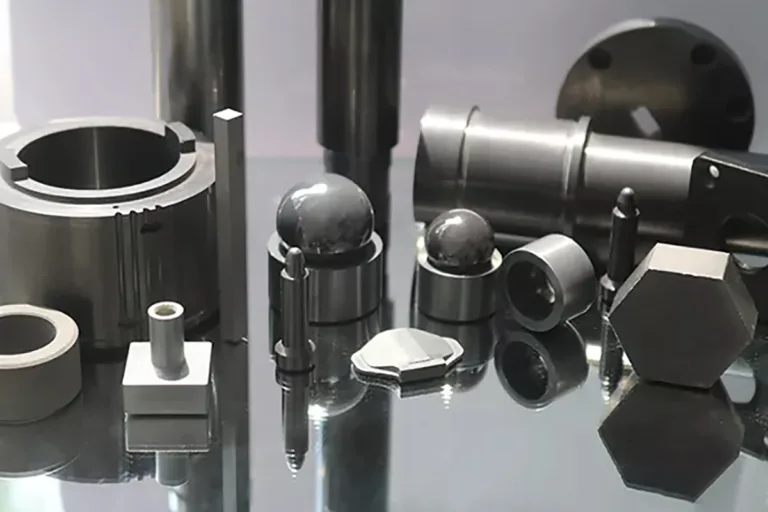
Silicon nitride bearing balls are precision-engineered spherical rolling elements manufactured from silicon nitride ceramic. During bearing operation, each ball rolls between the inner and outer raceways, transmitting load while helping maintain controlled shaft rotation.
Unlike ordinary ceramic spheres used for general-purpose applications, bearing-grade Si₃N₄ balls require stringent control of diameter, roundness, surface finish, internal defects, and dimensional variation. Accordingly, manufacturers use specialized forming, sintering, grinding, and lapping processes to achieve the required precision.
2.1 Main Component Functions
- Rolling contact: The spherical surface moves along the bearing raceways and supports rolling motion.
- Load transmission: Each ball transfers a portion of the radial or axial load through its contact zones.
- Motion control: Accurate ball geometry helps maintain consistent rotation and reduces unwanted vibration caused by dimensional variation.
- Friction management: Appropriate material, finish, lubrication, and bearing design help control friction and operating temperature.
- Electrical isolation: Silicon nitride resists electrical current flow through the ball itself, which can help reduce current-related bearing damage in suitable bearing configurations.
2.2 Full-Ceramic and Hybrid Ceramic Bearings
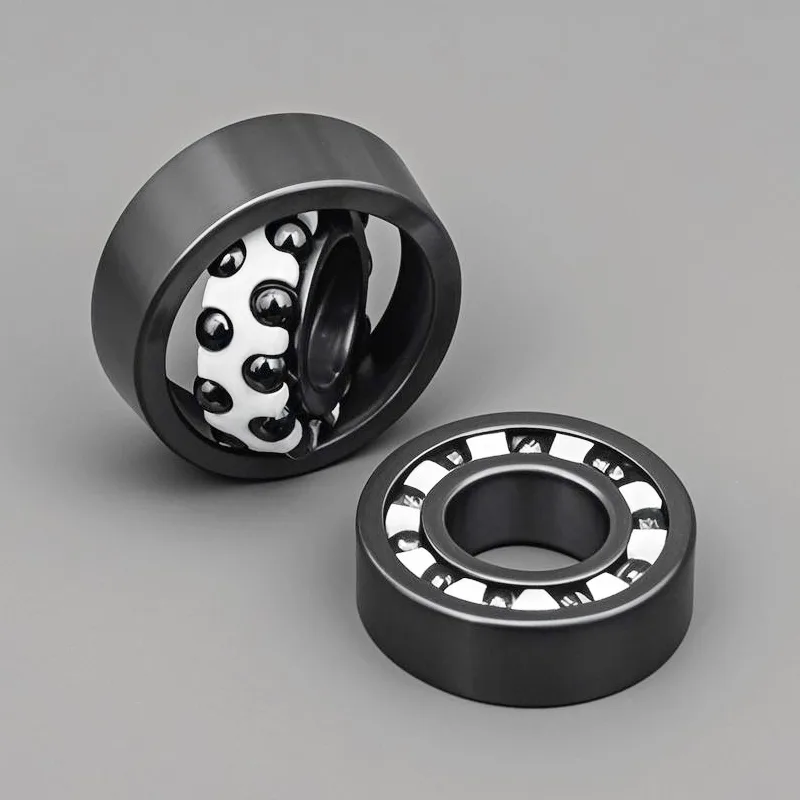
Importantly, a silicon nitride ball does not necessarily mean that the entire bearing uses ceramic. A hybrid ceramic bearing commonly combines silicon nitride balls with steel rings, whereas a full-ceramic bearing uses ceramic rolling elements and ceramic rings.
For this reason, engineers should distinguish the properties of an individual ball from the capabilities of the complete bearing. Raceway material, cage design, lubricant, seals, clearance, preload, and shaft alignment all affect actual system performance.
3. Silicon Nitride Bearing Ball Properties and Technical Data
Material properties provide a useful starting point when engineers compare ceramic and steel rolling elements. However, actual values vary with ceramic grade, sintering route, microstructure, heat treatment, specimen geometry, and testing method.
The following figures represent typical indicative ranges for bearing-grade silicon nitride and conventional bearing steel. They are not guaranteed specifications for every commercial product, and direct comparisons require consistent test conditions.
| Property | Silicon Nitride (Si₃N₄) | Bearing Steel | Engineering Significance |
|---|---|---|---|
| Density | Approximately 3.2-3.3 g/cm³ | Approximately 7.8 g/cm³ | Lower rotating mass and centrifugal loading |
| Vickers hardness | Often approximately 1,400-1,800 HV | Commonly approximately 650–850 HV after suitable heat treatment | Hardness influences indentation and wear behavior |
| Young’s modulus | Approximately 280-320 GPa | Approximately 200-215 GPa | Higher elastic stiffness; contact behavior still depends on both materials and geometry |
| Flexural strength | Often approximately 600-1,000 MPa | Not directly comparable as a simple tensile or flexural value for a finished bearing ball | Ceramic strength depends strongly on defects and test method |
| Fracture toughness | Often approximately 5-8 MPa·m1/2 | Much greater resistance to crack propagation in typical bearing-steel conditions | Steel generally tolerates impact and overload better |
| Thermal expansion coefficient | Approximately 2.8-3.3 × 10⁻⁶/K | Approximately 11-13 × 10⁻⁶/K | Lower expansion can support dimensional stability as temperature changes |
| Thermal conductivity | Often approximately 15-30 W/(m·K); grade dependent | Often approximately 35–50 W/(m·K) | Heat flow depends on the entire bearing and lubrication system |
| Electrical behavior | High electrical resistivity; insulating | Electrically conductive | Ceramic balls can interrupt some electrical current paths |
| Impact tolerance | Limited compared with steel | Generally higher | Steel often suits severe shock and handling conditions |
| Corrosion behavior | Good resistance in many environments; depends on chemistry and grade | Conventional bearing steel can corrode without suitable protection | Environment and cleaning chemicals must be evaluated |
Notably, the density of silicon nitride is approximately 40-42% of bearing steel. Consequently, a silicon nitride ball of the same diameter typically weighs about 58-60% less than its steel counterpart.
Furthermore, silicon nitride combines high hardness with relatively low thermal expansion. These characteristics can improve high-speed bearing behavior and help reduce temperature-driven changes in ball dimensions.
Nevertheless, hardness alone does not establish bearing life. Engineers must also consider surface finish, subsurface defects, raceway hardness, lubrication-film thickness, contact stress, contamination, and the bearing’s load and speed ratings.
Important Note on Material Data
These figures are engineering reference ranges, not product acceptance limits. For design approval, request the supplier’s material data sheet, ball grade, dimensional inspection report, and applicable test results. In addition, confirm the measurement method before comparing hardness, toughness, or strength values from different sources.
4. Density, Ball Mass, and Centrifugal Loading
During high-speed rotation, bearing balls move around the bearing’s pitch circle while contacting the raceways. Because centrifugal force increases with mass and the square of rotational speed, lighter rolling elements can reduce the loads generated by rotation.
Centrifugal Force Relationship
F = m × v² / r
F = centrifugal force; m = ball mass; v = orbital velocity; r = radius of the ball’s circular path.
For a ball operating at the same speed and pitch-circle radius, centrifugal force is directly proportional to ball mass. Therefore, replacing a steel ball with a same-size silicon nitride ball can substantially reduce the ball’s centrifugal contribution to the bearing’s dynamic loading.
In practice, this advantage may reduce ball-raceway interaction losses and improve high-speed operating capability. However, the actual speed limit also depends on cage stability, lubrication, bearing geometry, preload, heat dissipation, and the manufacturer’s rated operating conditions.
As a result, lighter balls can be particularly beneficial in precision machine-tool spindles and other systems where rotational speed and heat generation strongly affect performance. Even so, engineers should verify the complete bearing’s speed rating rather than relying on ball density alone.
5. Technical Performance Comparison: Silicon Nitride vs. Steel
5.1 Density and High-Speed Performance
First, lower density gives silicon nitride balls a clear mass advantage. At high rotational speeds, lighter balls can reduce centrifugal forces and the resulting interaction with the outer raceway.
Consequently, hybrid ceramic bearings can suit high-speed spindle applications where manufacturers carefully match the ceramic balls with steel raceways. Nevertheless, a lighter ball cannot compensate for unsuitable bearing clearance, poor lubrication, excessive preload, or inadequate cooling.
5.2 Hardness, Wear, and Surface Integrity
Silicon nitride generally has higher hardness than bearing steel, which supports resistance to indentation and certain forms of abrasive wear. Moreover, ceramic balls do not rust like conventional bearing steel, although deposits, surface damage, and chemical attack can still occur under unsuitable conditions.
In a properly designed bearing, these characteristics can help maintain rolling-element surface quality over demanding operating cycles. However, wear depends on the complete tribological system, including raceway material, lubrication, contamination, contact stress, and operating temperature.
Conversely, a hard ceramic surface can suffer catastrophic damage if it experiences severe impact or concentrated loading beyond its design limits. Therefore, installation tools, handling procedures, and bearing fits must protect the balls from accidental impact and edge loading.
5.3 Electrical Insulation and Current-Related Damage
Steel conducts electricity, whereas silicon nitride acts as an electrical insulator. This difference matters in inverter-driven motors, variable-frequency drives, and other systems where shaft voltage can discharge through bearing contacts.
Electrical discharge machining, commonly called EDM damage in bearing applications, can produce surface craters, fluting, lubricant degradation, and increased vibration. Accordingly, ceramic rolling elements can help interrupt some current paths in a suitable hybrid bearing arrangement.
However, ceramic balls alone do not guarantee complete electrical isolation. Current may still pass through other conductive paths, and system grounding, shaft voltage, bearing arrangement, lubrication, and motor design remain important. For critical applications, engineers should assess the electrical behavior of the complete assembly.
5.4 Thermal Expansion and Preload Stability
Silicon nitride has a substantially lower coefficient of thermal expansion than conventional bearing steel. Therefore, a ceramic ball generally changes diameter less than a same-size steel ball when both experience the same temperature increase.
This difference can help stabilize contact geometry in some high-speed and temperature-sensitive bearing arrangements. In addition, lower ball mass may reduce certain sources of frictional heating, depending on the bearing design and operating conditions.
Even so, preload stability depends on the thermal expansion of the rings, shaft, housing, cage, and surrounding structures. Engineers should therefore evaluate the entire thermal stack-up rather than treating the ball’s expansion coefficient as the only controlling variable.
5.5 Toughness, Shock Loads, and Mounting
Bearing steel offers useful toughness and can tolerate impact and overload more effectively than silicon nitride in many practical situations. By contrast, silicon nitride is a brittle ceramic, so cracks may initiate when defects, edge contact, severe impact, or excessive tensile stresses occur.
For this reason, ceramic balls require careful handling during transport, assembly, and maintenance. Appropriate raceway geometry, alignment, fit, and loading conditions are essential for reliable operation.
Where equipment experiences frequent severe shock, uncontrolled impacts, or rough handling, steel may remain the more robust and economical option. Alternatively, ceramic balls can be suitable when engineers can control contact stress and protect the assembly from impact.
5.6 Corrosion, Lubrication, and Environmental Resistance
Silicon nitride offers good resistance to many corrosive environments and does not form red rust in the way conventional bearing steel does. As a result, ceramic balls may be useful in selected humid, chemically exposed, or contamination-sensitive systems.
Nevertheless, chemical compatibility depends on the specific medium, temperature, exposure time, and ceramic grade. Furthermore, ceramic balls do not eliminate the corrosion risk of steel rings, cages, or other metal components in a hybrid bearing.
Lubrication also remains essential in most high-performance bearing systems. Although silicon nitride has useful material properties, it does not make every bearing suitable for dry running, and the lubricant must match the speed, temperature, load, and operating environment.
6. Quick Comparison Table for Engineering Selection
| Selection Factor | Silicon Nitride Ball | Steel Ball |
|---|---|---|
| Ball mass | Much lower | Higher |
| High-speed potential | Often advantageous in a properly designed bearing | Suitable for many conventional speed ranges |
| Hardness | Generally higher | High after suitable heat treatment |
| Electrical insulation | Excellent insulating behavior | Conductive |
| Thermal expansion | Low | Higher |
| Shock tolerance | Requires careful impact control | Generally better |
| Initial cost | Usually higher | Usually lower |
| Common design priority | High speed, electrical isolation, low mass, dimensional stability | Cost efficiency, toughness, established general-purpose performance |
Overall, silicon nitride is particularly attractive when its low density, electrical insulation, and thermal properties solve a specific engineering problem. Conversely, steel remains competitive when cost, toughness, and straightforward replacement matter more than the advantages of ceramic.
7. Silicon Nitride Bearing Ball Specifications
Silicon nitride bearing balls are available in multiple diameters and precision grades to suit different bearing designs. However, the required size and tolerance depend on the bearing standard, application, load, speed, and assembly requirements.
The table below provides an overview of common engineering considerations rather than a universal standard. Actual availability, tolerances, and inspection requirements must be confirmed with the manufacturer.
| Specification Item | Typical Consideration | Engineering Note |
|---|---|---|
| Material | Bearing-grade silicon nitride, Si₃N₄ | Confirm grade, material data, and quality requirements |
| Diameter | Available in various sizes, from small precision balls to larger custom sizes | Specify nominal diameter and applicable bearing standard |
| Diameter tolerance | Defined by the required ball grade and applicable standard | Do not assume a generic tolerance applies to every diameter |
| Sphericity and roundness | Controlled according to precision requirements | Important for vibration, contact behavior, and running accuracy |
| Surface finish | Fine-ground and lapped surface as required | Specify surface finish or applicable product grade |
| Ball grade | Select the grade appropriate for the bearing design | Confirm the standard and acceptance criteria with the supplier |
| Inspection documentation | Dimensional and quality records as agreed | Define traceability and test-report requirements before ordering |
7.1 Information Needed for a Custom Quotation
To obtain a technically appropriate quotation, provide the nominal ball diameter, required quantity, material grade, ball grade or applicable standard, dimensional tolerances, and intended bearing application. In addition, share the operating speed, load, temperature, lubrication method, and any electrical insulation requirements.
When replacing steel balls in an existing bearing, engineers should confirm compatibility with the original bearing design before ordering. Even when the nominal diameter matches, material differences can affect contact stress, clearance, preload, and the behavior of the complete assembly.
8. Six Major Applications of Silicon Nitride Bearing Balls
Because silicon nitride combines low mass, high hardness, electrical insulation, and low thermal expansion, engineers use it in selected precision and high-performance bearing systems. Nevertheless, every application requires validation against actual loads, speeds, lubrication, and installation conditions.
1. Machine Tool Spindles
High-speed grinding, milling, and precision machining spindles can benefit from reduced rolling-element mass. Furthermore, lower centrifugal loading may support stable operation when the bearing, preload, lubrication, and cooling system have been designed accordingly.
2. Electric Motors and Generators
In selected motor and generator designs, hybrid ceramic bearings can help reduce the risk of electrical current passing through rolling contacts. However, engineers should also assess shaft grounding, insulation arrangements, inverter behavior, and other possible current paths.
3. Electric Vehicle Drivetrains
Certain electric drivetrain and auxiliary motor applications require high rotational speeds and careful control of electrical effects. Accordingly, silicon nitride bearing balls may offer advantages when the complete bearing system meets the required load, fatigue, and durability targets.
4. Aerospace and Precision Equipment
Precision actuators, selected aerospace mechanisms, and specialized instruments may benefit from low rotating mass and dimensional stability. Nevertheless, aerospace use requires application-specific qualification, traceability, environmental testing, and compliance with the relevant design requirements.
5. Pumps and Compressors
High-speed pumps and compressors can use ceramic-bearing technology where low mass, corrosion resistance, or electrical isolation offers a practical benefit. In addition, engineers must verify lubricant compatibility, contamination control, temperature limits, and the suitability of the rings and cage.
6. Robotics and High-Speed Automation
High-speed robotic joints, precision automation units, and selected motion-control systems may use ceramic rolling elements to reduce rotating mass. Even so, designers must confirm that impact loads, acceleration profiles, bearing stiffness, and maintenance conditions remain within acceptable limits.
9. Silicon Nitride Bearing Ball Manufacturing Process
Producing bearing-grade silicon nitride balls requires controlled powder processing, densification, precision grinding, and surface finishing. Because ceramic strength depends strongly on microstructure and defects, each production stage influences final performance.
Step 1 – Raw Material Selection
Manufacturers select silicon nitride powder and suitable sintering additives according to the required density, microstructure, strength, toughness, and production route.
Step 2 – Powder Preparation and Mixing
Next, controlled milling and mixing help distribute additives and improve powder consistency. Depending on the process, granulation or other conditioning steps prepare the material for forming.
Step 3 – Ball Preform Forming
Depending on the manufacturer’s process, pressing, isostatic pressing, granule-based forming, or another suitable shaping method creates green bodies or preforms. The forming route must account for shrinkage and the geometry of the final ball.
Step 4 – Debinding and Pre-Sintering, Where Required
If the forming method uses organic binders, a controlled debinding cycle removes them before densification. In addition, any pre-sintering step must match the selected material and manufacturing route.
Step 5 – Sintering and Densification
Controlled sintering densifies the ceramic and develops its microstructure. Depending on the grade, manufacturers may use gas-pressure sintering or another qualified densification route to achieve the required material characteristics.
Step 6 – Precision Grinding
After sintering, specialized grinding operations remove excess material and progressively refine the ball diameter. Because silicon nitride is very hard, manufacturers use suitable abrasive tooling and tightly controlled machining parameters.
Step 7 – Lapping and Surface Finishing
Fine lapping improves roundness, diameter consistency, and surface finish. Consequently, the finished ball can meet the precision requirements of the specified bearing grade when the process and inspection criteria are properly controlled.
Step 8 – Inspection, Cleaning, and Packaging
Finally, manufacturers inspect the specified dimensions, surface condition, and other agreed quality characteristics. After cleaning, the balls receive suitable packaging to reduce contamination and prevent damage during storage and transport.
9.1 Quality-Control Points
For precision bearing applications, quality control should address diameter variation, roundness, surface roughness, visible defects, and other acceptance criteria defined by the applicable product specification. Furthermore, material density, microstructure, strength, or traceability records may be required depending on the application.
Since no single inspection plan suits every bearing ball, buyers should agree on the relevant standard, inspection method, sampling plan, and documentation before production begins. This approach improves communication between the bearing designer and ceramic-ball supplier.
10. Limitations and Design Considerations
Although silicon nitride offers several performance advantages, successful implementation requires a realistic assessment of its limitations. In particular, the higher purchase cost and brittle fracture behavior can influence component selection and lifecycle economics.
Higher Initial Cost
Precision ceramic balls generally cost more than conventional steel balls because of specialized raw materials, sintering, grinding, and finishing requirements. However, the total lifecycle cost may still be favorable when ceramic balls reduce downtime, electrical damage, or maintenance in a suitable application.
Brittle Failure Under Impact
Unlike ductile steel, silicon nitride does not plastically deform to the same extent before fracture. Therefore, dropped components, misalignment, edge loading, and severe shock can cause damage that may not be obvious without inspection.
Bearing Compatibility
Replacing steel balls with ceramic balls changes mass, elastic properties, and thermal behavior. As a result, engineers must verify compatibility with raceway geometry, clearance, preload, cage design, and the bearing manufacturer’s recommendations.
Lubrication and Contamination
Finally, hard ceramic surfaces do not eliminate the effects of abrasive contamination, lubricant starvation, or unsuitable operating conditions. Proper seals, lubrication, installation procedures, and maintenance intervals remain necessary for reliable bearing performance.
11. AOFE MIMCustom: Technical Support for Custom Component Requirements
Selecting a ceramic component supplier involves more than comparing a quoted price. Instead, buyers should evaluate technical communication, drawing review, material documentation, dimensional requirements, manufacturing feasibility, and the supplier’s ability to support the intended application.
For AOFE MIMCustom, a practical customer-facing approach can focus on understanding the required material, dimensions, operating conditions, and inspection criteria before confirming a manufacturing solution. This process helps align product requirements with the customer’s engineering objectives.
Potential Areas of Technical Support
- Drawing and specification review: Clarify dimensions, tolerances, surface requirements, material designation, and acceptance criteria before quotation.
- Application-based material discussion: Review speed, load, temperature, electrical exposure, lubrication, and environmental conditions when evaluating ceramic component suitability.
- Manufacturing feasibility: Discuss whether the required geometry, precision, batch quantity, and quality documentation fit the available production route.
- Quality-documentation planning: Define the dimensional inspection report, material data, traceability, and other records needed for the project.
- Custom-order coordination: Establish the technical details that the supplier must confirm before the buyer approves the quotation and production specification.
What Buyers Should Confirm Before Ordering
To reduce technical uncertainty, request confirmation of the exact product scope, manufacturing capability, applicable material grade, available ball sizes, achievable tolerances, and inspection documentation. In addition, clarify lead time, minimum order quantity, packaging, and sample availability where relevant.
These points describe a sound supplier-evaluation process rather than verified claims about specific AOFE MIMCustom certifications, equipment, production capacity, or bearing-ball inventory. Buyers should confirm those company-specific details directly before placing an order.
12. How to Choose Between Silicon Nitride and Steel Bearing Balls
A systematic selection process helps engineers avoid choosing a material based on one attractive property while overlooking other failure mechanisms. First, define the operating envelope; then compare the benefits and limitations of each candidate material.
- Define operating speed: Identify normal and peak rotational speeds, acceleration profiles, and any required high-speed margin.
- Calculate the load spectrum: Evaluate radial load, axial load, contact stress, shock events, and expected duty cycle.
- Assess electrical exposure: Determine whether inverter switching, shaft voltage, or other electrical effects create a meaningful risk of current-related bearing damage.
- Evaluate thermal behavior: Consider operating temperature, heat generation, cooling, thermal expansion, preload, and dimensional stability.
- Review lubrication and contamination: Confirm lubricant type, lubrication method, sealing, cleanliness, and compatibility with the complete bearing system.
- Verify mechanical compatibility: Check ball diameter, grade, raceway material, clearance, cage design, mounting method, and manufacturer recommendations.
- Compare lifecycle cost: Include purchase price, expected service life, maintenance, downtime, replacement labor, and the cost of potential failures.
Practical Material Selection Rule
Choose silicon nitride when low rotating mass, electrical insulation, low thermal expansion, or other ceramic properties provide a measurable system-level benefit and the design can control impact risk.
Choose bearing steel when cost efficiency, toughness, established general-purpose performance, and tolerance of shock or handling loads dominate the design requirements.
13. Frequently Asked Questions About Silicon Nitride Bearing Balls
Q1. What is the main difference between silicon nitride bearing balls and steel bearing balls?
The main differences involve density, electrical behavior, hardness, thermal expansion, toughness, and cost. Silicon nitride balls weigh much less and provide electrical insulation, whereas steel balls generally offer better impact tolerance and a lower initial purchase price.
Q2. Why are silicon nitride bearing balls suitable for high-speed bearings?
Because silicon nitride has a density of approximately 3.2-3.3 g/cm³, a same-size ceramic ball has substantially less mass than a steel ball. Consequently, it can reduce centrifugal loading at the same operating speed, although the complete bearing design determines the actual speed limit.
Q3. Do silicon nitride bearing balls conduct electricity?
Silicon nitride is an electrical insulating ceramic with high electrical resistivity. Therefore, ceramic balls can help interrupt some electrical current paths in hybrid bearings, although the complete system must be evaluated to determine whether additional insulation or grounding measures are necessary.
Q4. Can silicon nitride bearing balls replace steel balls directly?
Not automatically. Even when the nominal diameter matches, differences in density, stiffness, thermal expansion, and fracture behavior can affect bearing operation. Accordingly, confirm compatibility with the bearing manufacturer or a qualified bearing engineer before changing materials.
Q5. Are silicon nitride bearing balls stronger than steel bearing balls?
The answer depends on which property is being compared. Silicon nitride generally provides higher hardness and high compressive capability, but steel usually tolerates impact and crack growth more effectively. Therefore, engineers should distinguish hardness, strength, toughness, and rolling-contact fatigue performance rather than treating them as interchangeable properties.
Q6. Do silicon nitride bearing balls eliminate the need for lubrication?
No. Although silicon nitride has useful wear and thermal properties, lubrication remains important in most high-performance rolling bearings. The appropriate lubricant and lubrication method depend on speed, load, temperature, bearing design, and the operating environment.
Q7. Which silicon nitride bearing ball specifications should buyers provide?
Buyers should provide nominal diameter, quantity, material grade, required ball grade, dimensional tolerance, surface requirements, and applicable standards. Additionally, operating speed, load, temperature, lubrication, electrical exposure, and documentation requirements help the supplier assess suitability.
Q8. How are silicon nitride bearing balls manufactured?
A typical production route includes powder preparation, forming, any required debinding, sintering, precision grinding, lapping, inspection, cleaning, and packaging. However, the exact sequence depends on the ceramic grade, forming technology, required precision, and manufacturer.
Q9. Are silicon nitride bearing balls resistant to corrosion?
Silicon nitride resists many corrosive environments and does not rust like conventional bearing steel. Nevertheless, resistance depends on the chemical medium, temperature, exposure conditions, and ceramic grade, while other metal parts in a hybrid bearing may still corrode.
Q10. Can AOFE MIMCustom provide custom silicon nitride bearing balls?
Buyers should contact AOFE MIMCustom to confirm whether the required bearing-ball material, dimensions, precision grade, quantity, and documentation fall within its current manufacturing and supply capabilities. Providing a drawing, target specifications, and application details will help establish feasibility and quotation requirements.
14. Conclusion: Select the Material for the Operating Conditions
Silicon nitride bearing balls offer a combination of low density, high hardness, electrical insulation, and low thermal expansion. Consequently, they can improve the suitability of a bearing system for selected high-speed, electrically sensitive, and precision applications.
By contrast, bearing steel continues to provide an effective balance of cost, toughness, established manufacturing methods, and broad application suitability. For equipment exposed to severe impact or uncertain handling conditions, steel may offer a more forgiving solution.
Ultimately, the correct choice depends on the complete bearing system rather than a single material property. By comparing the operating envelope, mechanical compatibility, electrical requirements, maintenance strategy, and lifecycle cost, engineers can select a rolling-element material that meets both performance and reliability objectives.
Need Technical Information for a Ceramic Component Project?
Prepare your component drawing, target dimensions, operating conditions, material requirements, and inspection criteria before requesting a quotation. AOFE MIMCustom can then confirm whether the requested product and technical requirements match its current capabilities.
Please confirm material grade, ball precision, availability, lead time, and quality documentation before placing an order.