
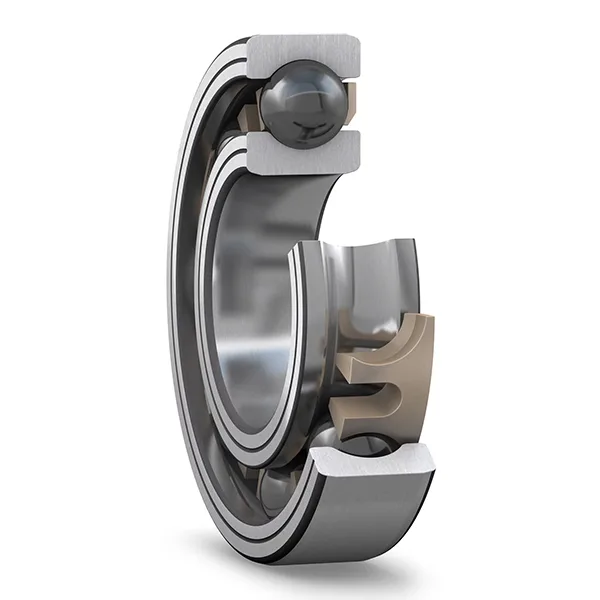
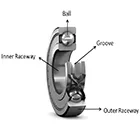
Product images illustrate typical bearing designs; actual construction and specifications depend on the selected model.
PRECISION BEARING SOLUTIONS
Deep Groove Ball Bearings
Reliable Rolling Solutions for Industrial Machinery and Rotating Equipment
Designed for versatile rotating applications, deep groove ball bearings combine a simple internal structure with low-friction operation and broad application potential. Moreover, their raceway geometry allows them to accommodate radial loads and, under suitable conditions, axial loads in both directions.
For OEM projects, AOFE MIMCustom helps buyers evaluate bearing configurations, dimensional requirements, material options, and procurement specifications. Consequently, engineering teams can match the selected bearing to their equipment design instead of relying on a generic product description.
Product Type:
Deep Groove Ball Bearings
Basic Design:
Inner Ring, Outer Ring, Balls and Cage
Load Capability:
Primarily Radial Loads; Limited Axial Loads as Designed
Configuration:
Open or Sealed Designs, Subject to Availability
To speed up quotation, provide the bearing designation, dimensions, quantity, operating conditions, and any special requirements.
What Are Deep Groove Ball Bearings?
In mechanical engineering, a deep groove ball bearing is a rolling-element bearing that uses balls running between inner and outer ring raceways. Because the raceways closely follow the ball geometry, this design supports smooth rotation and accommodates radial loads as well as axial loads in both directions within its operating limits.
Compared with more specialized bearing arrangements, deep groove designs offer a practical balance of simplicity, versatility, and ease of integration. Therefore, engineers frequently consider them for electric motors, pumps, fans, gearboxes, household appliances, and general industrial machinery.
Nevertheless, no single bearing suits every operating condition. Before selecting a model, engineers should evaluate the applied load, rotational speed, shaft and housing fits, internal clearance, lubrication, contamination, temperature, and expected service life.
Quick Engineering Definition
A deep groove ball bearing is a rolling-element bearing that supports radial loads and can accommodate axial loads in either direction within its rated operating conditions. Its suitability depends on bearing geometry, load ratings, speed limits, lubrication, and installation quality.
Main Components of a Deep Groove Ball Bearing
Understanding the internal structure helps buyers specify the right bearing for a particular machine. In a typical design, four main components work together to guide rotation, transfer loads, and maintain the spacing between rolling elements.
1. Inner Ring
The inner ring normally fits onto the rotating shaft and provides an internal raceway for the balls. Consequently, its bore diameter, fit, and surface condition influence installation accuracy and bearing operation.
2. Outer Ring
The outer ring provides the external raceway and usually sits inside the housing. Meanwhile, the housing fit and alignment help determine how the bearing handles operating loads and temperature changes.
3. Rolling Balls
Precision balls roll between the two raceways and transmit loads through their contact zones. Accordingly, ball geometry, material quality, surface finish, and dimensional accuracy contribute to bearing performance.
4. Cage
The cage separates and guides the rolling balls during operation. Depending on the bearing design, manufacturers may use pressed steel, machined metal, or suitable polymer materials.
In addition, some configurations include shields or contact seals to help retain lubricant and limit contamination. However, the appropriate sealing arrangement depends on operating speed, temperature, exposure to dust or moisture, and maintenance requirements.
Key Advantages of Deep Groove Ball Bearings
Deep groove ball bearings remain widely used because their compact structure suits many rotating systems. Furthermore, their broad availability and established design standards can simplify equipment integration and replacement planning.
1. Versatile Load Support
A deep groove raceway can support radial loads and, within the design limits, axial loads in both directions. As a result, one bearing arrangement may satisfy the needs of many general-purpose applications without requiring a more complex configuration.
2. Smooth Rotational Performance
Accurate raceways and properly finished rolling elements help maintain consistent rotation. In addition, suitable lubrication, correct fits, and appropriate alignment help control friction, temperature rise, and vibration.
3. Compact and Practical Design
The straightforward construction makes deep groove bearings convenient for integration into many machine layouts. Consequently, equipment designers can often select from established dimensional series when they need a replacement or a new bearing arrangement.
4. Broad Application Compatibility
Depending on the selected model, deep groove ball bearings can serve motors, fans, pumps, conveyors, appliances, and precision instruments. Nevertheless, engineers must confirm the speed rating, load capacity, sealing arrangement, and temperature limits for every application.
5. Multiple Material and Sealing Options
Depending on supplier availability, buyers may choose different ring and ball materials, cage designs, clearances, lubricants, and sealing arrangements. Therefore, providing complete operating conditions helps the supplier recommend an appropriate configuration instead of relying on a generic standard model.
Selection Note: Deep groove ball bearings do not automatically suit heavy shock loads, severe misalignment, or every high-temperature environment. Instead, compare the actual application conditions against the manufacturer’s technical limits before confirming the bearing.
Common Types of Deep Groove Ball Bearings
Bearing selection often starts with the required protection level, operating environment, and installation dimensions. Accordingly, buyers should distinguish between open, shielded, sealed, and application-specific configurations before requesting a quotation.
 Open Deep Groove Ball Bearings
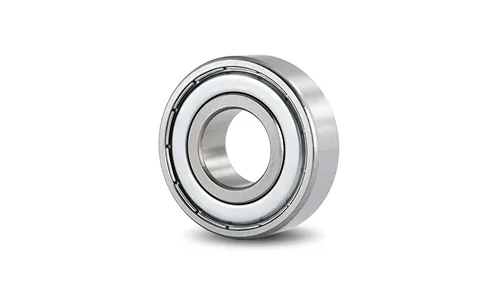 Shielded Ball Bearings
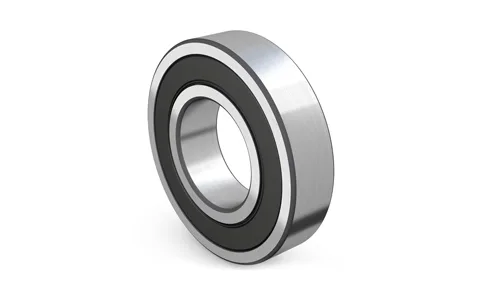 Sealed Ball Bearings
Besides these configurations, miniature, stainless steel, and other application-specific versions may be available from suitable suppliers. Confirm exact designations and availability rather than assuming that every configuration comes in every size.
Industrial Applications of Deep Groove Ball Bearings
Deep groove ball bearings support a wide range of rotating equipment because their design fits many common shaft and housing arrangements. Even so, the correct model depends on the actual operating environment and performance requirements.
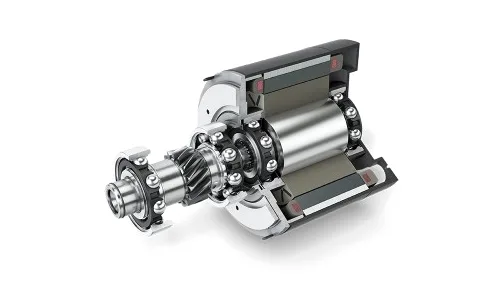 Electric Motors and Fans
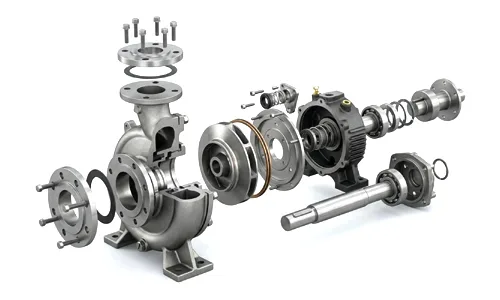 Pumps and Compressors
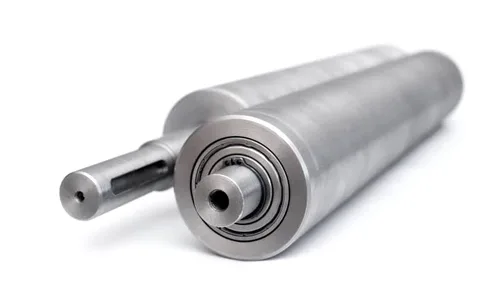 Conveyors and General Machinery
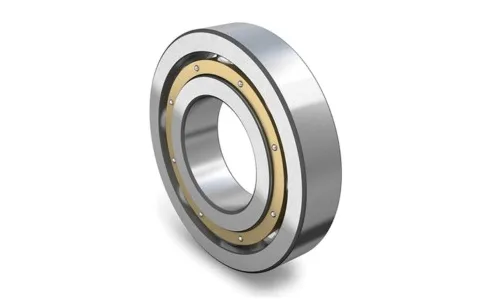 Precision Instruments
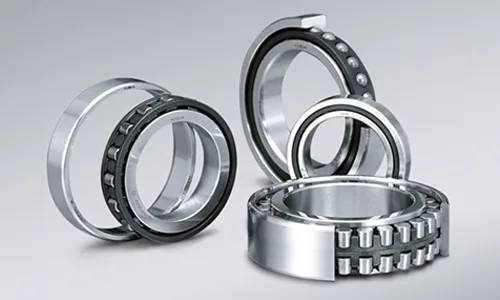 Automotive Equipment
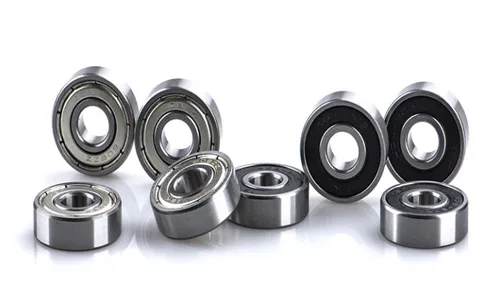 Household Appliances
Deep Groove Ball Bearings: Technical Specifications
Technical specifications determine whether a bearing can operate safely and reliably in a particular assembly. Therefore, buyers should identify the exact model and consult the applicable manufacturer’s catalogue or drawing before approving a purchase.
The following table outlines the principal specification fields that engineering teams should review during product selection.
| Parameter | Specification and Selection Guidance |
|---|---|
| Bearing Design | Single-row deep groove ball bearing or another confirmed configuration. |
| Bore Diameter | Specify the shaft diameter and required bearing bore. |
| Outside Diameter | Confirm the housing space and required outside diameter. |
| Bearing Width | Match the available installation space and the selected model. |
| Ring and Ball Materials | Confirm the actual steel, stainless steel, ceramic, or other available material configuration. |
| Cage Material | Specify the required cage type and material, subject to model availability. |
| Internal Clearance | Confirm the required clearance class according to the operating conditions and fit. |
| Accuracy Class | Specify the applicable accuracy class or dimensional tolerance requirements. |
| Sealing Arrangement | Confirm open, shielded, sealed, or another available configuration. |
| Load Ratings | Review the manufacturer’s basic dynamic and static load ratings for the exact model. |
| Limiting Speed | Check the manufacturer’s speed limits for the selected bearing, lubrication, and operating conditions. |
| Lubrication | Confirm grease or oil requirements, lubricant compatibility, and maintenance needs. |
| Operating Temperature | Verify the allowable temperature range for the complete bearing and lubricant system. |
Technical Notice: This table describes purchasing and engineering criteria rather than certified specifications for a particular bearing. Confirm exact dimensions, ratings, materials, tolerances, and speed limits against the relevant manufacturer documentation.
Bearing Materials and Configuration Options
Material selection influences corrosion resistance, load capacity, wear behavior, temperature suitability, and overall cost. Therefore, buyers should evaluate the operating environment before choosing a bearing material.
Bearing Steel
Suitable bearing steel grades offer established performance for many general industrial applications. In addition, widely used standard designs can simplify model identification and replacement planning.
Stainless Steel
Stainless steel bearing options may help address corrosion concerns in suitable environments. Nevertheless, corrosion resistance and load performance depend on the specific steel grade, heat treatment, finish, and working conditions.
Ceramic Rolling Elements
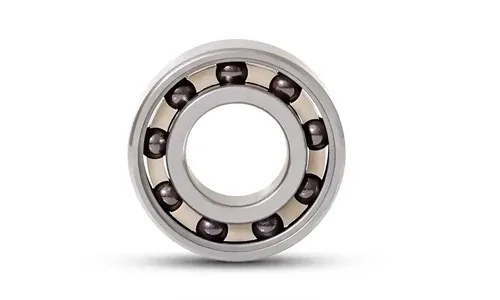
Some bearing configurations use ceramic balls, including silicon nitride, with compatible bearing rings. Such designs may offer lower rolling-element density and electrical insulation, although cost, brittleness, and application compatibility require careful evaluation.
Cage and Seal Options
Depending on the bearing model, cage and sealing materials can influence friction, lubrication retention, contamination protection, and temperature limits. Accordingly, confirm these components along with the main bearing specification.
For demanding equipment, an application review can help narrow the options. In particular, share the operating speed, load, temperature, contamination exposure, lubricant, and required service life before choosing a final configuration.
OEM Deep Groove Ball Bearing Solutions
OEM buyers often need more than a catalogue reference. Consequently, a clear technical brief helps the supplier confirm the required model, material, clearance, sealing arrangement, packaging, and quality documentation.
AOFFEE MIMCustom can review project requirements and discuss suitable sourcing or customization options according to its actual supply capabilities. For components that require metal injection molding, the team should first assess whether MIM fits the part geometry, material, production volume, and engineering function.
Model and Dimensions
Provide the bearing designation, bore, outside diameter, width, and any dimensional requirements that differ from the standard model.
Material and Performance
Identify the preferred material, load requirements, operating speed, temperature, and environmental conditions.
Sealing and Lubrication
Specify the protection level, lubricant type, maintenance strategy, and any restrictions imposed by the application.
OEM Quality Requirements
Explain the expected inspection documents, packaging specifications, traceability requirements, and acceptance criteria.
How to Prepare an OEM Inquiry
For a faster technical review, attach the product drawing or existing bearing reference and state the estimated annual quantity. In addition, explain the equipment function and operating conditions so the supplier can evaluate whether a standard bearing, a special configuration, or another manufacturing route best fits the project.
How to Select the Right Deep Groove Ball Bearing
The most suitable bearing depends on the machine design rather than the product name alone. Therefore, engineering teams should review the following factors before requesting samples or approving a purchase.
- Identify the Bearing Dimensions.
First, confirm the shaft diameter, housing space, bearing width, and available installation clearances. - Calculate the Applied Loads.
Next, evaluate radial and axial loads, shock conditions, and any load changes during startup or operation. - Determine the Required Speed.
Meanwhile, compare the operating speed with the manufacturer’s limits for the selected bearing and lubrication arrangement. - Choose Suitable Materials and Seals.
Then, consider corrosion, dust, moisture, temperature, electrical requirements, and lubricant compatibility. - Check Accuracy and Clearance.
Additionally, specify the required tolerance class, internal clearance, shaft fit, and housing fit. - Review Service Life and Maintenance.
Finally, assess the expected operating hours, maintenance schedule, reliability targets, and total cost of ownership.
For critical machinery, consult a qualified bearing engineer or the bearing manufacturer’s selection tools. This step helps validate load ratings, fatigue life, lubrication, and operating limits before the final specification.
Installation and Maintenance Considerations
Even a correctly selected bearing can fail prematurely if the installation or lubrication process introduces damage. Therefore, technicians should follow the manufacturer’s instructions and use suitable tools during assembly.
- First, keep bearings and surrounding components clean before installation.
- Next, verify shaft and housing dimensions, fits, alignment, and shoulder geometry.
- Furthermore, apply installation forces to the ring receiving the interference fit rather than transmitting unnecessary force through the rolling elements.
- In addition, use the correct lubricant and follow the recommended lubrication quantity and interval.
- Finally, monitor temperature, vibration, noise, and lubrication condition during service.
When unusual vibration, noise, or temperature rise appears, inspect the assembly and operating conditions promptly. Moreover, evaluate contamination, alignment, lubrication, and loading before deciding whether the bearing requires replacement.
Frequently Asked Questions About Deep Groove Ball Bearings
The following answers address common questions from purchasing teams, equipment manufacturers, and engineers evaluating deep groove ball bearings.
What is the main function of a deep groove ball bearing?
A deep groove ball bearing supports a rotating shaft while reducing friction between moving components. Moreover, its design can accommodate radial loads and axial loads in both directions within the bearing’s rated operating conditions.
What loads can deep groove ball bearings support?
These bearings primarily support radial loads and can accommodate axial loads in either direction within their design limits. However, the permissible load depends on the exact model, internal geometry, operating speed, lubrication, and mounting conditions.
What is the difference between open, shielded, and sealed bearings?
Open bearings have no integral shields or seals, while shielded versions use protective shields and sealed versions use sealing elements. Consequently, the appropriate design depends on contamination exposure, lubrication requirements, speed, friction, and operating temperature.
Are deep groove ball bearings suitable for high-speed applications?
Many deep groove ball bearings suit high-speed applications when their design, lubrication, and operating conditions support the required speed. Nevertheless, always verify the manufacturer’s limiting speed and consider temperature rise, cage design, preload, and lubrication.
Which materials are available for deep groove ball bearings?
Depending on the supplier and design, available options may include suitable bearing steels, stainless steels, and specialized ceramic rolling elements. In addition, buyers should confirm the materials of the rings, balls, cage, seals, and lubricant rather than considering only one component.
How do I identify the correct bearing size?
Start with the existing bearing designation or drawing, then verify the bore diameter, outside diameter, and width. Additionally, check clearance, tolerance class, sealing arrangement, load ratings, and speed requirements before confirming a replacement.
Can AOFE MIMCustom support OEM bearing requirements?
AOFE MIMCustom can review project requirements and discuss suitable supply or customization options within its confirmed capabilities. Therefore, buyers should submit the bearing designation, drawing, quantity, application details, and any quality requirements for an accurate feasibility assessment.
What information should I provide when requesting a quotation?
Provide the bearing designation, dimensions, material requirements, sealing arrangement, quantity, and destination. Furthermore, describe the operating speed, loads, temperature, lubrication, and required inspection documents to help the supplier evaluate the request.
How can I improve bearing service life?
Correct selection, clean installation, suitable lubrication, proper alignment, and contamination control all contribute to bearing reliability. However, service life also depends on the applied loads, operating speed, material quality, and maintenance conditions.
Does this product page provide certified bearing specifications?
No, this page provides general product-selection guidance rather than a certified datasheet for a specific model. Accordingly, buyers should request the relevant manufacturer’s catalogue, technical drawing, load ratings, tolerance information, and inspection documents before purchase.
AOFE MIMCUSTOM
Need Deep Groove Ball Bearings for Your Next Project?
Share your bearing model, drawing, quantity, and operating requirements to start a technical discussion. In addition, our team can review your procurement needs and clarify suitable supply or customization options.